|
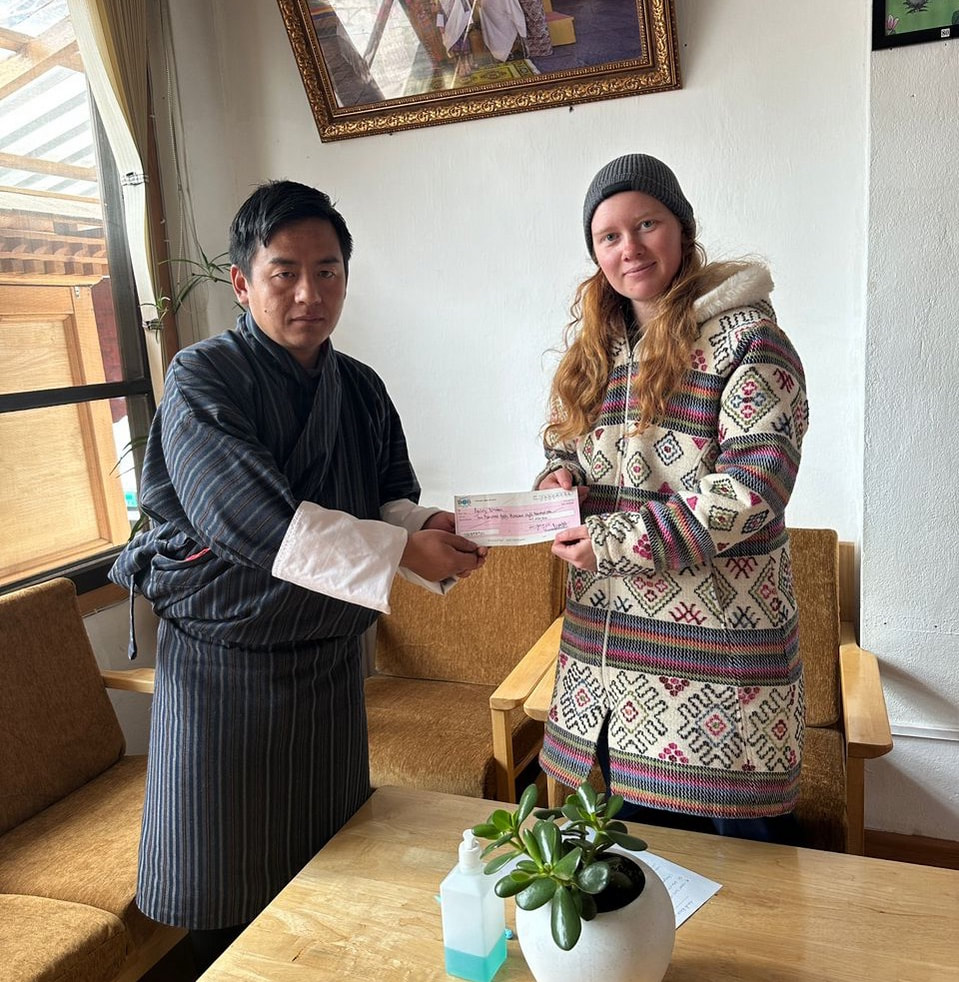
My year in Bhutan has now come to an end. I would like to thank everyone who donated money to support the children with disabilities I had the privilege of working with. Your generosity has made a real difference in their lives.
The largest part of the donations is being used to fund the salary of the social worker at ABS who completed the Qigong Sensory Treatment (QST) course. She has now taken over many of my former clients, as well as new ones, ensuring that this therapy can continue after my departure. This is incredibly important for the long-term sustainability of the project. The donations will cover her salary for the next two years, giving ABS time to gradually integrate this position into its own budget. During this period, she is expected to provide therapy to around 80 children. Another major part of the donations was used to equip four children with cerebral palsy (CP) with tablets/iPads and augmentative and alternative communication (AAC) apps. These devices allow the children to express their thoughts, feelings, needs, and wishes much more accurately, helping them communicate with the people around them and giving them a stronger voice in everyday life. In addition, I ordered several Qigong Sensory Treatment books for parents who wanted to learn more about the therapy so they could better support their children at home. As the books would have been too expensive for most families, I sold them at a highly subsidized price of just 500 Ngultrum (CHF 4.25). The donations also enabled me to provide the social worker with several practical tools to better structure classroom activities and support the children’s development. These included AAC buttons to encourage communication, a Time Timer to help children understand routines and transitions, and chewable sensory aids for children who frequently chew on objects or bite others. These chewables provide a safe alternative and help redirect this sensory need in a more appropriate way. Finally, I would like to express my sincere gratitude to the Society Switzerland Bhutan (SSB) for funding the Qigong Sensory Treatment (QST) training for the social worker. Their support has made it possible for her to continue working with most of my former clients, ensuring that the project can continue long after my year in Bhutan has ended. Thank you once again to everyone who supported this project through donations, encouragement, or kind words. Your generosity will continue to benefit many children and their families for years to come. You can find the overview of the finances here.
0 Comments
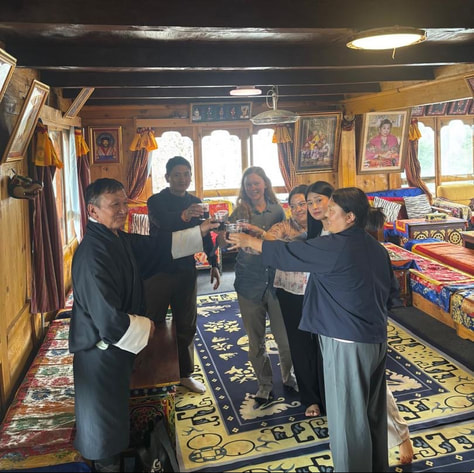 The first farewell came on 30 June during the summer program, when I had to say goodbye to the children and their parents before the summer break. We spent the day at Lampelri Park near Dochula Pass. Little did I know that the day had actually been organized as a farewell for me. While I was playing with the children, I was helping one boy with cerebral palsy so he could join the others in a game of football. Suddenly, some of the parents called me over and gathered around me. That was when I saw they had prepared two farewell cakes. One read, “Safe Travels. Thank You,” and the other, “Thank You for Your Service.” They then presented me with many beautiful Bhutanese handicrafts as a token of appreciation for the work I had done with their children. I was deeply touched by their kindness and gratitude. It was an emotional moment, knowing that the time had come to say goodbye. Several parents asked if I would return one day, and I sincerely hope that I will. The following day I left for my trek, which gave me some distance from the emotions of the farewell and allowed me to immerse myself once more in Bhutan’s beautiful nature. After returning, I travelled to Punakha to spend my last few days with my friends there. They had become like family to me, and Kinley’s homestay truly felt like my second home.  On my last day, I gave them the presents I had brought from Switzerland together with a farewell card. In return, they gave me meaningful Bhutanese gifts that will always remind me of the wonderful time we shared. Saying goodbye was incredibly difficult. During our final lunch together, I could hardly eat a bite. We exchanged long hugs, shed a few tears, and I began the quiet journey back to Thimphu with a heavy heart. From then on, almost every evening was another farewell with friends I had made throughout the year. It is amazing how many close friendships can grow in just one year, and I will miss every one of them. Two days later it was time to say goodbye to my colleagues at the office. They organized a wonderful trip to Tashigang Goenpa, where we spent a lovely day together on my final day of work. I felt immense gratitude towards them for giving me the opportunity to volunteer at ABS and, through that, to experience such an unforgettable year in Bhutan. It was a bittersweet day. After so many months, I realized that this extraordinary chapter of my life was finally coming to an end, and the time had come to leave. 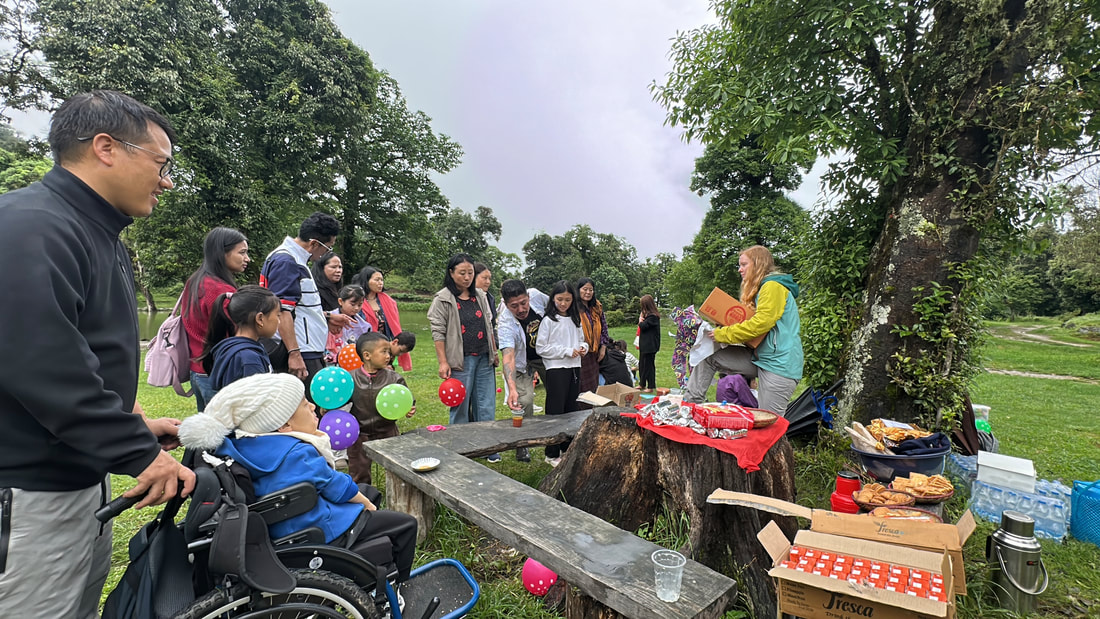 During my second last week before leaving Bhutan, I went on another trek. Once again, the nature was so stunning and beautiful that it was easy for me to get completely lost in that beauty and in the present moment.
The last few weeks had been very busy, with finishing everything off and saying goodbye. A month earlier, I had asked the guide from Himalayan Unique Travels, who by now has become a close friend, to organise this final trek for me with him and his crew. But when it was finally time to go, I started wondering whether I really had time for it, as the trek would take five days. Since everything was already organised and ready, I felt I couldn’t really say that I no longer wanted to go. On the other hand, I also thought it was a good opportunity to get away from the stress of finishing everything, enjoy nature once more, and have time to reflect on my year here in Bhutan. Higher up, the rhododendron bushes were in full bloom, along with many other flowers, so the landscape was incredibly colourful. The Dagala trek is also called the “Thousand Lakes Trek,” and there were indeed many beautiful lakes. There are five main lakes, which are sacred and represent the five daughters of Mount Jomolhari. They are believed to protect the country from invaders. Many people only visit one to three of these five sacred lakes. Even my guide friend had only visited three of them before. But this time he was determined to find the other two as well and take me there. I found it funny because in Switzerland we would simply look at a map to see roughly where the other lakes were located. But here, they don’t really do it like that. Maybe the five lakes are not even marked on a map; I don’t know. My friend said that one of his friends had told him the other lakes were somewhere up behind the third lake. So we went off exploring, looking at the terrain and trying to guess where it would be most likely to find the next lake. I did check whether I could find our location on Google Maps, because I was curious whether it would be accurate enough to show the lakes, but I had no connection, so that was not an option either. In this way, it became much more fun and adventurous. We did not know exactly where to find the last two lakes, so we kept climbing higher, hoping that behind every ridge or plateau there might be another lake. During our search, the clouds, which had been far below us, started rising quickly and wrapped themselves around the route we had taken up. I just hoped it would not be too misty when we climbed back down to the third lake, because I was not sure whether I would find the way in the mist. But my friend was not worried and said he would find it. After about an hour of searching, we had found both of the remaining lakes. We were very happy and also a little proud, as not many people have visited all five sacred lakes. Later, we found out that, from our crew, only the horseman, who had grown up in that area, had visited all five lakes before. In the evenings, we once again played UNO for hours and had a lot of fun. The crew was simply amazing, and I felt in such good hands with them. The food was delicious and varied. Even though I already knew this from my first trek, I was still amazed by the kinds of dishes they could conjure up with the basic kitchen tools they carried with them on the trek. Just like last time, it was an amazing adventure with the crew. 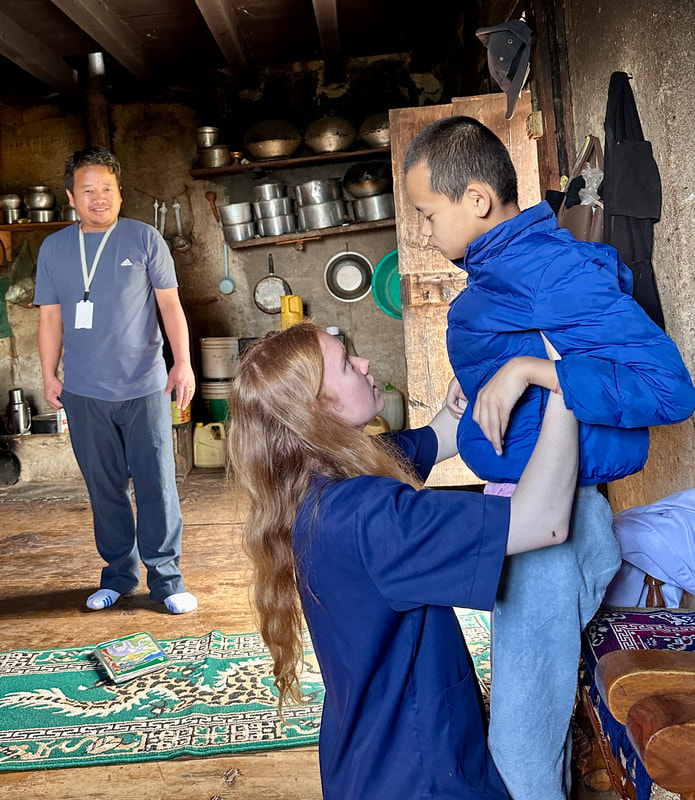 From 19 to 24 June 2026, we went to Wangdue Phodrang for fieldwork. In total, I assessed 26 children and one elderly person.
The focus was mainly on children. However, word spread quickly that there was a foreign physiotherapist at the Primary Healthcare Centre (PHC). Soon, not only the children on our list came, but also people from further away. One man over 80, who had had a stroke, suddenly turned up at the PHC and asked to see the “foreign physiotherapist.” Even though he had to wait for several hours, he stayed. After assessing all the children who needed to be checked for assistive devices and given physiotherapy advice, I also had a look at him. Since his stroke, he had never been to hospital and had never received any exercises or treatment. His shoulder on the hemiparetic side was very stiff and painful, so I showed him some basic exercises. At another PHC, a father came with his child, even though she was actually in hospital a few hours away with fever and had not eaten for five days. He came against the doctors’ recommendation because someone from his area had told him that there might be a foreign doctor who could perhaps operate on his daughter’s legs and make her walk properly. He held on to this small hope, even though the physiotherapists at the hospital had already explained that I was also a physiotherapist and would not be able to operate on his daughter. In the end, I felt very sorry that I could not help the father and child in the way they had hoped. I could not even give them much useful advice. The daughter was not well enough for me to see her normal level of activity, so I could not properly assess her or give her father suitable exercises for home. I tried to give some suggestions based on what I knew about her situation, but the father was too caught up in his disappointment to really listen. So I sent them back to the hospital, as there was nothing more I could do in that situation. This moment showed me how desperate some parents are, but also how little they sometimes understand about their children’s diagnoses. Many do not realise that these conditions cannot simply be cured. In this case, I was not even sure what the child’s exact diagnosis was, as the father did not know. She definitely had seizures, but there was likely another underlying condition as well. With another family, however, I felt I could really make a difference. We visited them at home for the intervention. The parents told us that they carry their 12-year-old son everywhere because he cannot stand or walk. They live in a traditional house with very high thresholds in front of every room, so a wheelchair is not very useful. From what I saw, I was not sure that the boy was truly unable to stand, so I gave it a try. I helped him up from the floor using a kinaesthetic approach, and he immediately activated his muscles and stood up without me carrying his weight. I only supported him for balance. He clearly enjoyed it — he was smiling and did not want to sit down again. I then showed the parents how to practise standing with him, because when the right movement pattern is activated, he can do it. I think the reason he had not stood with them before was that they did not know how to activate these movement patterns. By the end, we even managed to take a few steps forward. I encouraged the parents to practise a lot every day and told them that he will most likely be able to walk from room to room if they continue practising and stop carrying him once he is able to do it himself. The parents were very grateful, as this could also reduce the burden on them in the future, especially as their son grows bigger and heavier. here to edit. 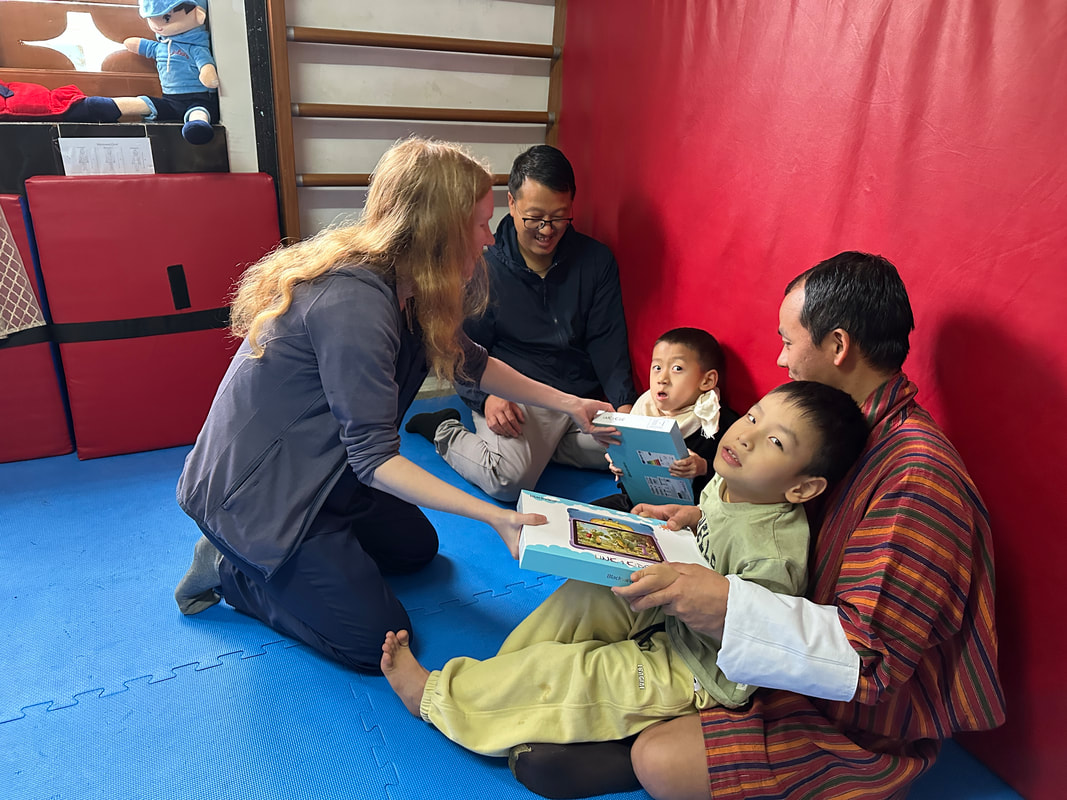 With part of the donation money, I was able to provide four children with a tablet and an AAC app — an Augmentative and Alternative Communication app. These tablets, together with the app, will now belong to each child and become their personal communication tool. For quite a while, I had been trying out different AAC apps with children with cerebral palsy (CP) and other children to find out for whom this kind of support would really make a difference. These four children with CP always enjoyed using my iPad with the AAC app, because it allowed them to communicate so much more. Even during therapy, they often requested by themselves to use the app. When I asked them what they wanted to do, they usually pointed to the table where we sat together to practise with the communication app. These children understand a lot and probably have whole sentences in their minds, but they are only able to verbalise a few slurred words. The person listening then often has to guess what exactly the child means and can only offer a few suggestions, which the child can then confirm by nodding. It is easy to understand how frustrating this must be when no one understands what they want to say. That is why it means so much to them when, through the AAC app, they are suddenly understood and can express themselves in three-word sentences. I was also amazed by how quickly they learned where to find the different vocabulary, as the pictograms are often hidden under three layers. For example, the child first has to click on “things”, then “toys”, and only then can they find a specific toy such as “blocks”, which they want to work with in therapy. Usually, I only had to show them once where to find something, and then they remembered it and could find it again, even a week later. One time, one of the children communicated with the app: “Leanna likes green.” I looked at him in surprise and said, “You remember from last therapy, a week ago, that I told you my favourite colour is green?” He was so proud that I understood what he wanted to say, and that I was amazed he had remembered it. He also communicates during the session: “I want water” and “give me.” Then he drinks the whole glass in one go, and I can see that he was really thirsty. Without the app, I most probably would not have found out what he wanted. I usually know that he wants something, but it is often difficult for me to understand exactly what it is, or what he is trying to say verbally. I am sure that for him, it will make a huge difference when he starts school next year if he is able to communicate with the AAC app. There is even one boy who can hardly use his arms voluntarily, but has much better coordination with his legs. So he uses the AAC app with his big toe — and he is very skilful with it. Today, we set up the individual tablets for these children. Over the next week, the parents will set up the Avaz app — the AAC app the children are using — according to the specific needs and vocabulary of each child. This will take some work for the parents: sorting out unnecessary vocabulary and adding specific words, such as the child’s toys, photos of family members, and other important things from their daily life. I am convinced that these AAC devices will help the children a lot. So thank you so much to all the donors who made it possible to provide these children with their own tablets and communication tools! 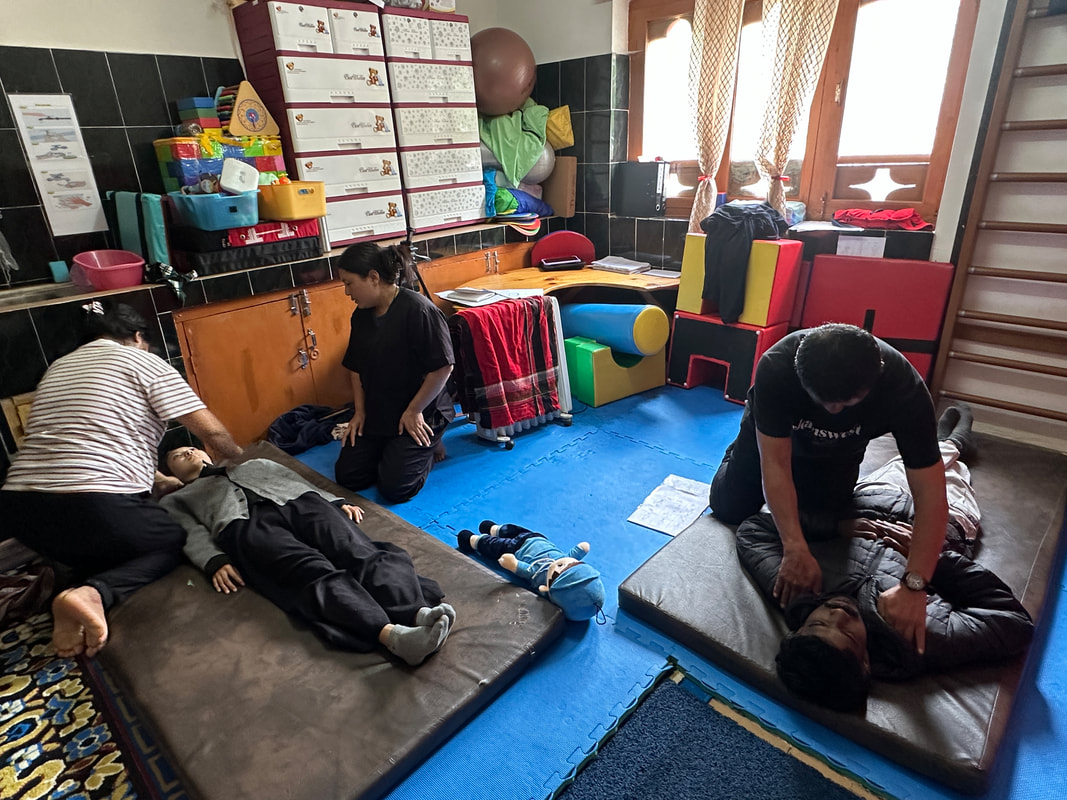 Now that Yeshi has completed the theoretical part of the Qigong massage course for children with autism, I have started to involve her more actively in my sessions. I am coaching her and giving her opportunities for supervised practice.
First, she joined a parent-teaching group where I introduced some new parents to the basics of Qigong massage. The next day, I asked her whether she wanted to watch again, assist me with the teaching, or even take over the session herself. She said she would like to take over, because she felt that this would help her learn the most if I gave her feedback afterwards. So she led the whole parent-teaching session on her own. I only added a few small details, and she remembered most of the things I had taught the parents the previous time. The next time, she even remembered almost all the additional points I had given her as feedback. She always takes notes after the sessions and reviews them beforehand so that she can remember everything. She really is a wonderful student. I appreciate very much how much initiative she takes, how eager she is to learn, and how she uses every opportunity to practise. She often comes to me with questions about things that are not yet clear to her, or to ask for advice. Whenever she has the chance, she practises and asks me to supervise her and give feedback. She sees this as a great opportunity, both for herself and for the children, and I can feel that she really wants to make the very best of it. This will make my departure easier, because I know that there will be a very motivated person at ABS who can continue the Qigong massage therapies after I leave. It means that things will not simply return to how they were before I came. Of course, Yeshi will not be a physiotherapist after this course, but she will at least be able to offer therapeutic sessions using Qigong massage, which has been the tool I have worked with most during my time here. It was quite a struggle to set everything up in a way that would allow her to work therapeutically afterwards, rather than continuing as a social worker in class. ABS needed to be able to free her up so that she could spend the whole day providing therapy for the children. The main challenge was to secure external funding for her salary for two years, so that ABS could hire a new social worker to take over the classroom work she had been doing. The main work ABS provides is still the classes for the children, and this remains the foundation of what ABS does. Being able to offer therapies is a very valuable supplement, but it is not the core of ABS’s work. I therefore wrote several project proposals to support the idea of having someone work therapeutically at ABS. The first proposal, which I wrote to the Society Switzerland-Bhutan, was accepted. They paid for Yeshi’s course fee so that she could take part in the Qigong massage training. I am extremely grateful for this, because without their support, the project of continuing Qigong massage for the children after my departure would not have been possible. This was the first important step. After that, I wrote two more project proposals to secure funding for a person to work therapeutically at ABS. This would be a great benefit for the parents, as it would give them another option besides taking their children to hospital for therapy. However, the main difficulty was always the salary. The organisations we applied to explained that, according to their regulations, they do not pay salaries. But securing the salary for two years was the most important part of the project. At the moment, ABS does not have the capacity to pay an additional salary, and they need time to implement this and include the therapist’s salary in their own budget. I tried to find other options where we might have a chance of receiving salary funding as part of a project to implement something new, but I could not find a suitable solution. This is something ABS often struggles with: starting a project where salary costs are also included. Since I had collected some donations for my work at ABS, I decided to ask some donors whether they would be willing to use the money to pay Yeshi’s salary, so that she can work therapeutically in my place after I leave. I am so thankful to the donors who agreed to this. Thanks to them, we now have enough money to cover Yeshi’s salary for two years. This gives ABS time to integrate her salary into the general ABS salary plan, and it gives me the opportunity to establish a staff member who can continue part of the work I have done here. Thank you to everyone who made this possible. It will help the children at ABS a great deal!!!  On Saturday, a group of staff members and interns from ABS hiked to Paro Taktsang (Tiger’s Nest) in Paro. We had to set off early in the morning, and Passang, our driver, picked up the first part of the group at 5:30 a.m. Once everyone was on the bus, we headed towards Paro. When we arrived at the start of the hike, Tiger’s Nest was still hidden in the clouds, only appearing occasionally between the mist. The path was quite muddy in some places because it had rained earlier that morning, but luckily the rain had stopped by the time we started hiking at around 9:30. I really enjoyed the hike with my colleagues. It was fun, and we had many good conversations along the way. It was nice to spend a day together that had nothing to do with work and to get to know everyone from a different side. We took a break at the large prayer wheel, where there was a bench, and shared tea and snacks together. One thing I really appreciate about the Bhutanese is their generosity and willingness to share. Everyone simply placed the snacks they had brought in the middle of the table, and we all shared everything, including tea and coffee. After our break, we continued with the second half of the climb. Some people carried quite heavy backpacks because they had brought butter and milk as offerings. However, they did not want to divide the weight among others, as carrying the offerings yourself is considered part of the ritual. Along the way, I shared some Swiss chocolate, which everyone enjoyed and which gave us fresh energy for the final stretch. Eventually, we reached the viewpoint and stairs overlooking Tiger’s Nest. Of course, we stopped to take many photos there. Although the viewpoint is actually slightly higher than the monastery itself, reaching the temple on the opposite side of the cliff requires descending around 650 stairs and then climbing another 300 stairs before finally entering the temple complex. Once we arrived, we first changed into kira and gho before handing in our phones at the entrance. We then visited the four main temples as well as several smaller shrines and caves, moving through them one after another. After about an hour, we had completed all the rituals. Afterwards, we hiked a little further uphill to visit another temple. By the time we had finished visiting all the temples, we were quite exhausted, so we slowly made our way back down to the cafeteria. There we had a very late lunch before returning to the bus. Luckily, it only started raining during the last hundred metres of the descent, so we hardly got wet. Back on the bus, we all felt happy and proud of having completed the hike to Tiger’s Nest and of spending such a great day together, although we were also very tired by the end of it. 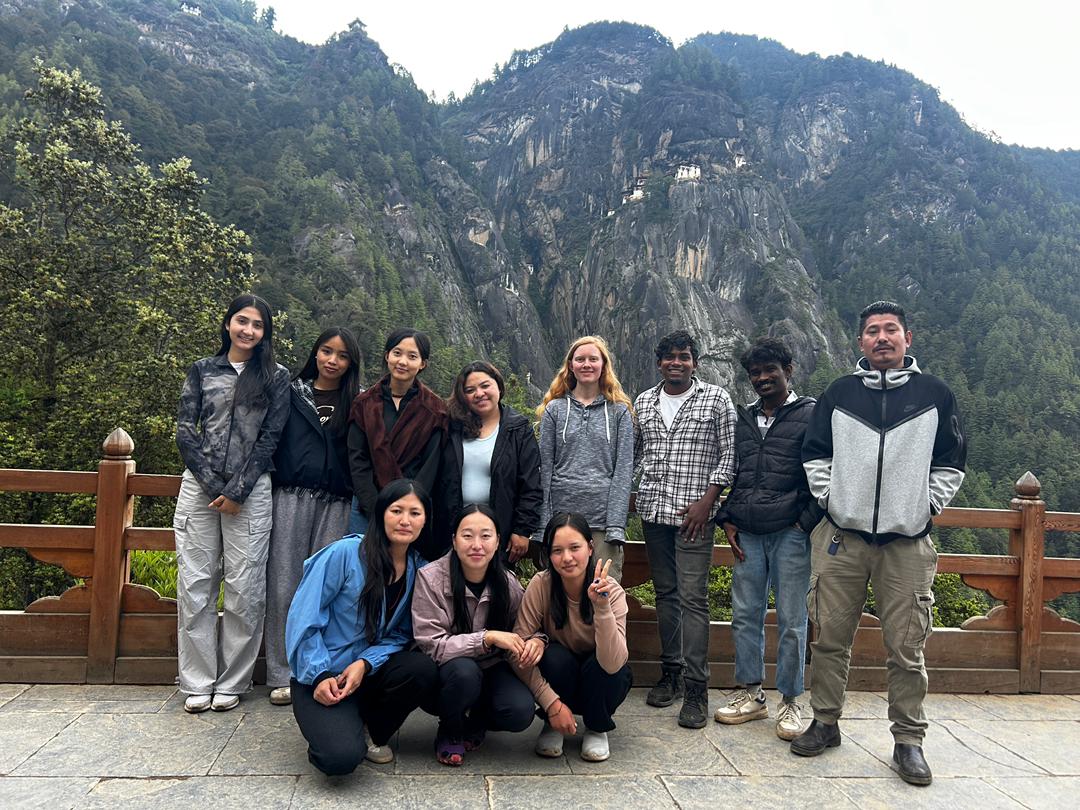 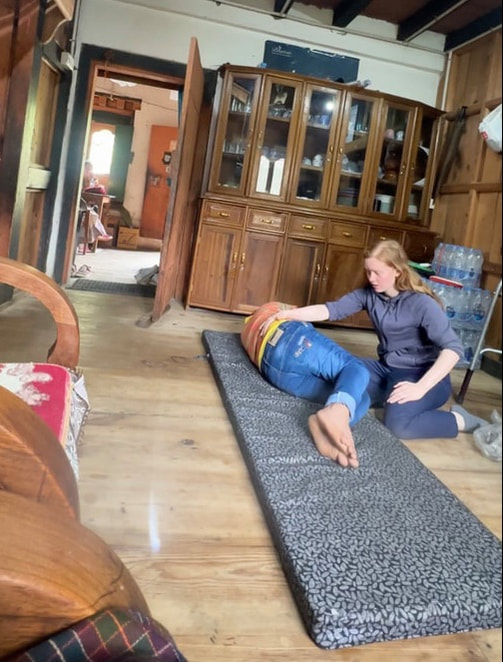 During our field trip to eastern Bhutan (Mongar, Trashiyangtse, and Lhuentse), we assessed children with disabilities in a range of remote communities. The first stop was an assessment camp at a central school in Mongar, where several specialists worked together: an optometrist checked vision, an audiologist assessed hearing and speech-related issues, and a physiotherapist evaluated mobility and assistive device needs. Children requiring further support were referred to Mongar Hospital for regular therapy. Families from across the region brought children listed for assessment to the school. In Bumdeling, Trashiyangtse, assessments took place in the local Gewog (community) centre. As there was no treatment bed, we improvised by placing sofa cushions on the floor so I could assess children with Cerebral Palsy (CP) who could not walk. Some families travelled extraordinary distances to reach us. One family carried their child on the sister’s back for an hour to the Gewog centre as they live far away and have no road access to their house. After the assessment, our project manager drove them home as far as possible. The following day we conducted home visits in more remote areas. Reaching one family required a 20-minute walk along narrow muddy paths through agricultural fields. Their 18-year-old daughter, who has CP and can only walk short distances with heavy assistance, can only reach the road if her father carries her uphill on his back. Although the family hopes for road access, extending the road through the scattered farmland would be difficult and would damage valuable agricultural land. In Switzerland, a family in such circumstances might relocate, but here people are deeply attached to ancestral homes and depend on the surrounding farmland for their livelihood. At other locations we visited schools directly, which allowed me to demonstrate exercises to teachers who could continue supporting the children, particularly in boarding schools. In one case, a family met us halfway because reaching their village was impossible for us. By the time they arrived it was already dark, and I was expected to assess a child with CP on the roadside. The child remained seated in the car during the assessment, limiting what I could properly evaluate. Through speaking with the parents, I realised the boy spent most of his days alone in a room with little stimulation, which was difficult to witness. Conditions often required flexibility and improvisation. In another village, after waiting over an hour at the Gewog centre, we were asked to meet families further down the road instead. I insisted on having at least a suitable place for assessments, so we eventually arranged to use a small roadside café, whose owner kindly provided mats and blankets from his personal space. Two children arrived after another long wait, but for the final child we waited almost three additional hours due to transport problems, bad weather, and roadblocks. When the family finally arrived, I felt a strong responsibility to provide advice that would genuinely help, knowing how much effort they had made to reach the assessment. Fortunately, I believe we were able to give them practical support they could continue using at home. 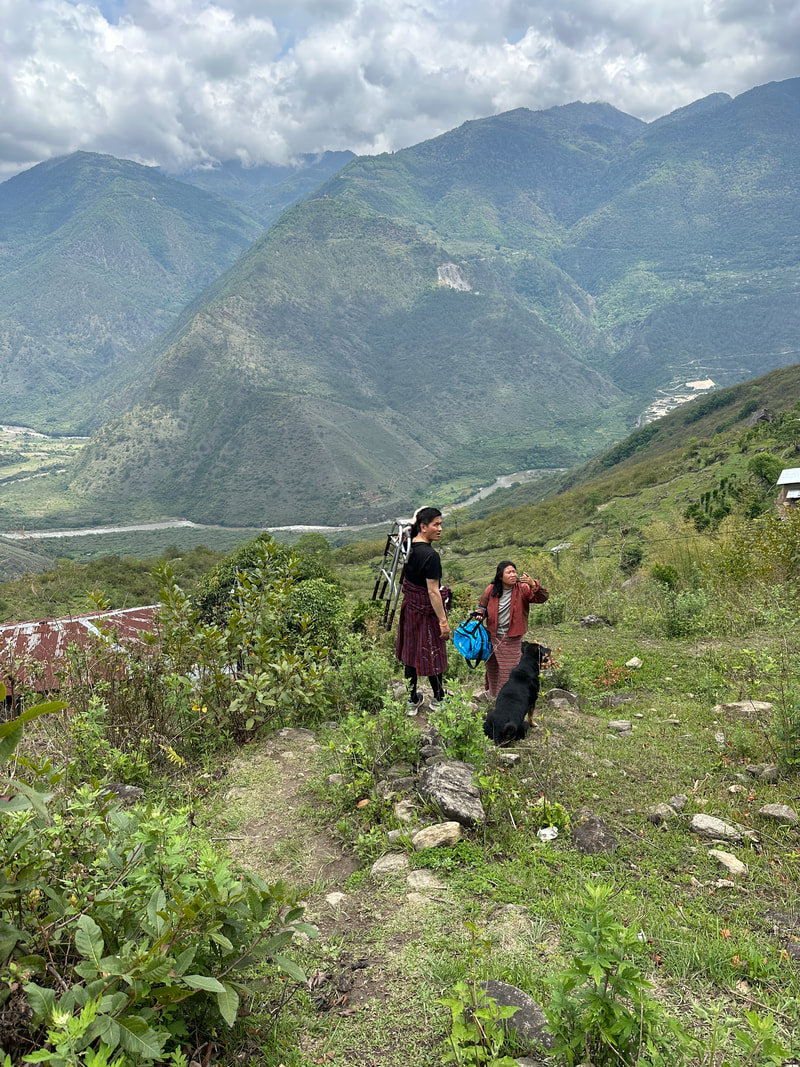 I really enjoy doing these fieldwork trips because it is rewarding to give at least a small amount of help and advice to families whose children have often had little to no therapy so far. Many families are overwhelmed and unsure what their child really needs. At the same time, the work teaches me a lot of patience and flexibility. Assessments often had to be done in whatever place and circumstances were available, and plans changed constantly, sometimes without me realizing until much later.
|
 |  |
At the beginning of March the children returned after a three-month winter break. It was wonderful to see some familiar faces again and to welcome several new ones. A few of the children have now transitioned to school and are taking part in a SEN (Special Educational Needs) programme, which is a big step for them.
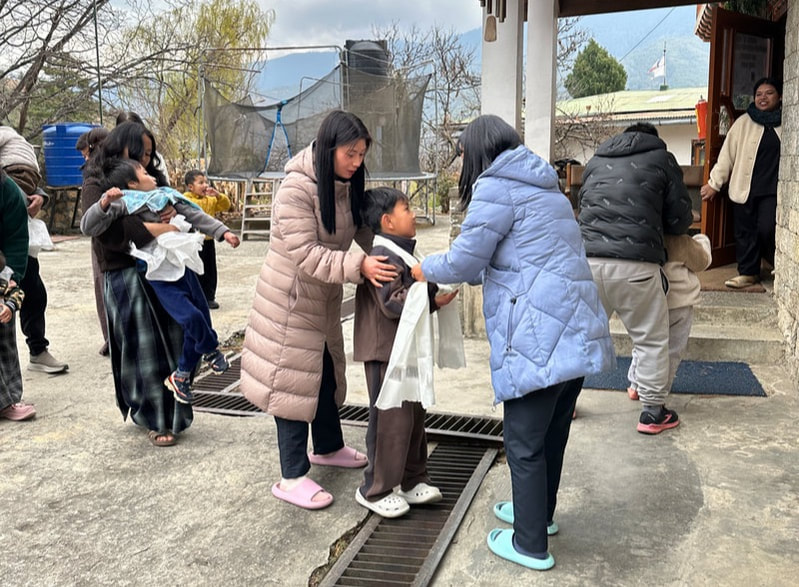
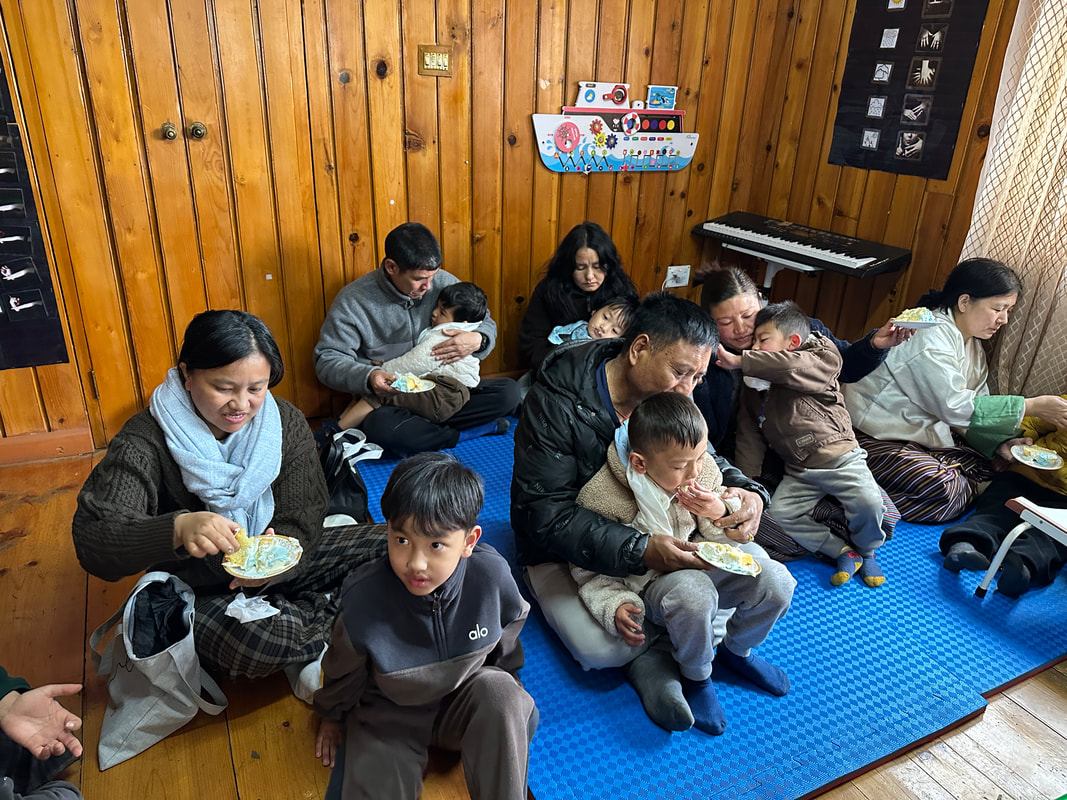
The first day back had a festive atmosphere. Each child was welcomed to ABS with a traditional scarf, and afterwards we all shared a welcome cake together. Over the past two weeks I’ve had the chance to get to know the new children a little better. Last Friday I also held two teaching sessions for parents on Qigong massage—one in the morning and one in the afternoon. Now that the parents have learned the basics, we will start practicing the massage with the children this week. I’m very happy to have more therapy sessions again.
A three-month winter break is quite long, and this can be noticeable in therapy. Some of the children have regressed a little during this time. Many families spent the winter in other districts visiting relatives or going on pilgrimage, so they were unable to come to therapy regularly. For the few families who stayed in Thimphu, I offered therapy sessions during the break, but only a small number made use of the opportunity.
The encouraging part is that children usually regain their skills quickly. Even after just two weeks, many of them are already catching up again.
The first day back had a festive atmosphere. Each child was welcomed to ABS with a traditional scarf, and afterwards we all shared a welcome cake together. Over the past two weeks I’ve had the chance to get to know the new children a little better. Last Friday I also held two teaching sessions for parents on Qigong massage—one in the morning and one in the afternoon. Now that the parents have learned the basics, we will start practicing the massage with the children this week. I’m very happy to have more therapy sessions again.
A three-month winter break is quite long, and this can be noticeable in therapy. Some of the children have regressed a little during this time. Many families spent the winter in other districts visiting relatives or going on pilgrimage, so they were unable to come to therapy regularly. For the few families who stayed in Thimphu, I offered therapy sessions during the break, but only a small number made use of the opportunity.
The encouraging part is that children usually regain their skills quickly. Even after just two weeks, many of them are already catching up again.
 |  |
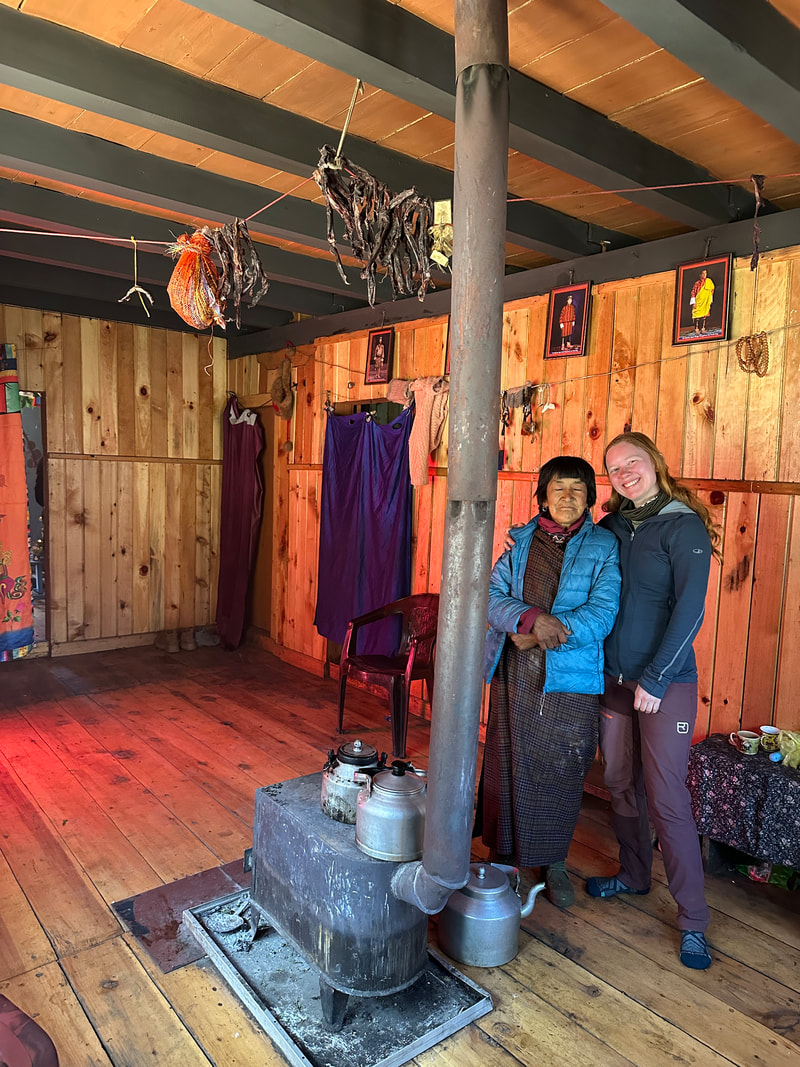
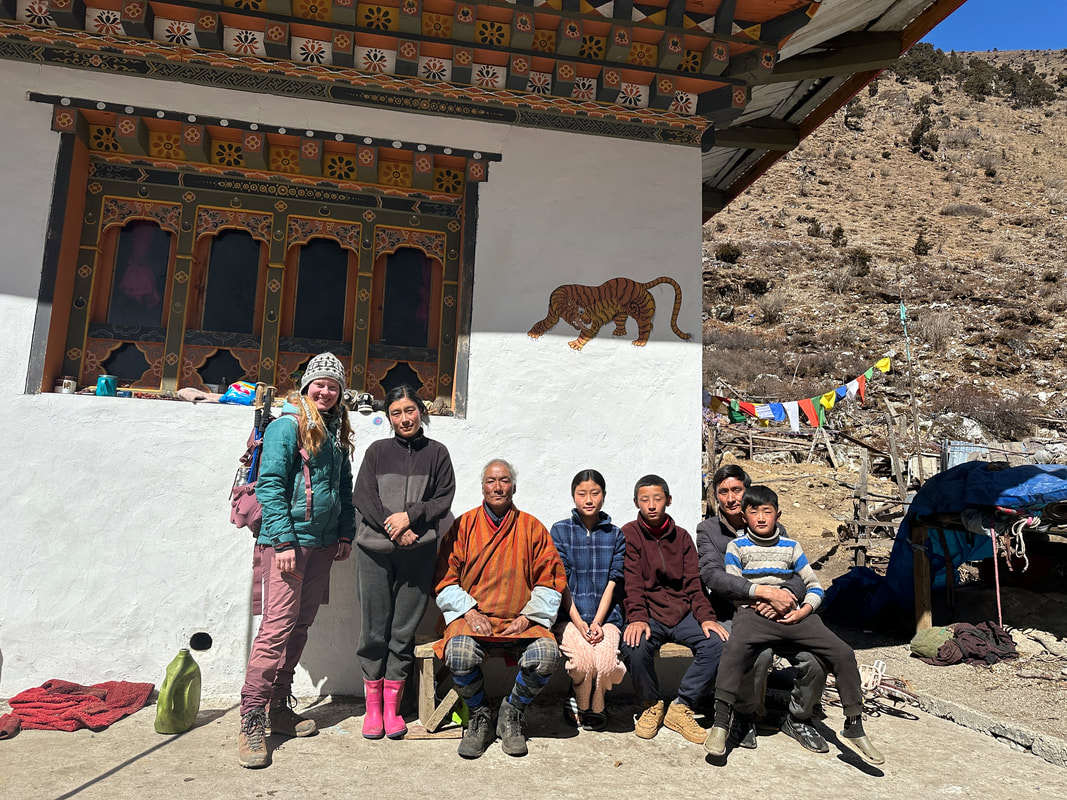
During my trek to Jomolhari Base Camp we came across a yak-herding family living at about 4,000 meters altitude. They kindly invited us into their home for tea. They served us suja (butter tea) made with yak butter. The tea was very nourishing but had quite a strong taste. After one cup I had basically had enough, but they insisted we drink a little more, so we did, along with some biscuits and zao (puffed rice).
The woman of the house told our guide many things about their life, which he then translated for me. They live there year-round, and about once a month someone travels all the way down to Paro to buy essential food and other necessities. Very little grows at that altitude, so most supplies must be purchased and carried up by horses.
The woman of the house told our guide many things about their life, which he then translated for me. They live there year-round, and about once a month someone travels all the way down to Paro to buy essential food and other necessities. Very little grows at that altitude, so most supplies must be purchased and carried up by horses.
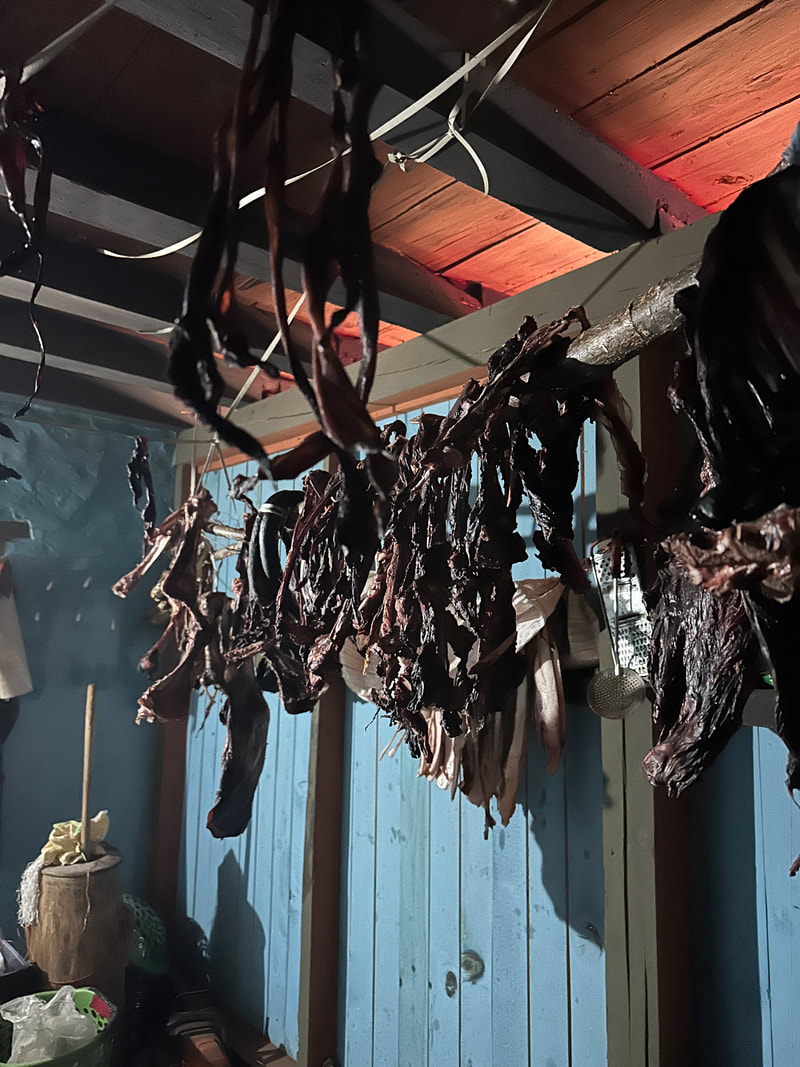 |  |
The family mainly lives from yak products such as cheese, butter, and milk, which they sell. In addition, each household is allowed to send three members to collect cordyceps, a valuable fungus that can be sold for a good price because of its reputed health benefits. Nowadays they no longer slaughter yaks for meat. However, if an animal dies from a fall or is killed by a snow leopard, they collect the meat and dry it for several months so it can be preserved.
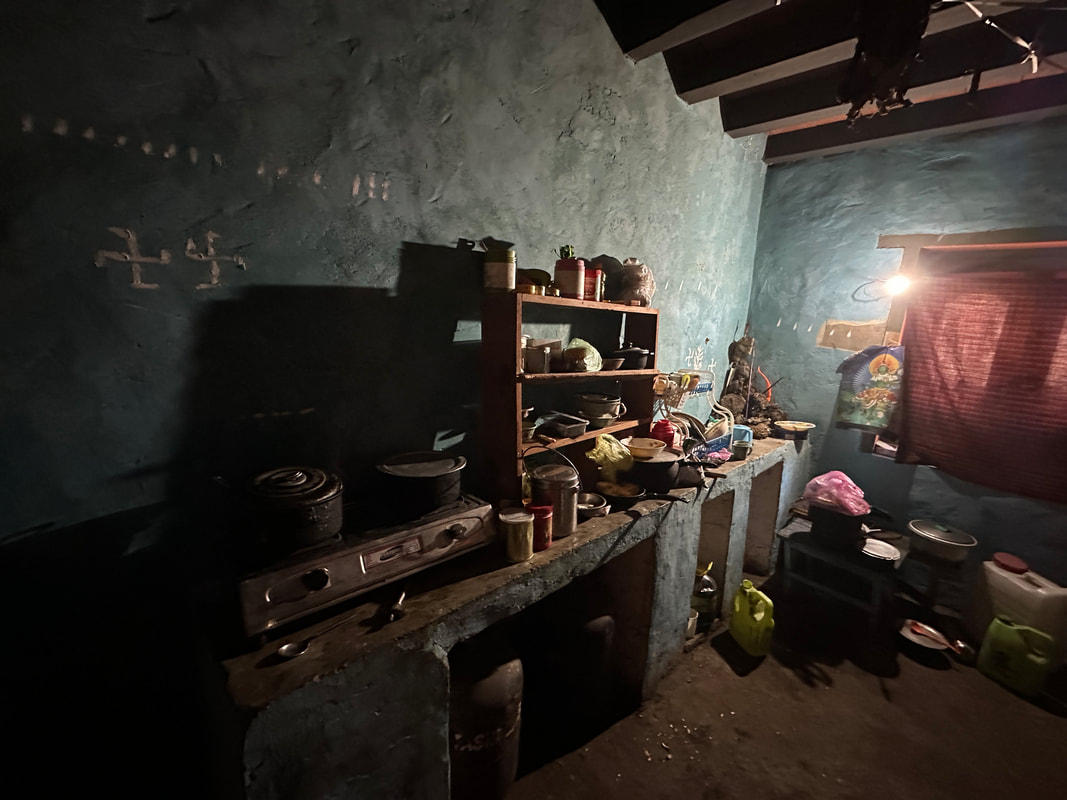
They even showed us the different rooms of their house, which was very interesting. The kitchen was quite dark, lit only by a small and rather weak light source. Dried meat hung from the ceiling, and in another corner they had piled up yak dung, which they use as fuel because there are no trees at this altitude and therefore almost no wood available for fires. I did not stay long in the kitchen because it was extremely cold. In fact, the whole house is cold. The only heating source is a wood stove in the living room. Even in the single sleeping room, where more than seven family members sleep, there is no heating—only warm blankets. Because of this, some of them sleep in the living room near the stove. The only other room in the house serves as a prayer room, with a small but beautiful altar.
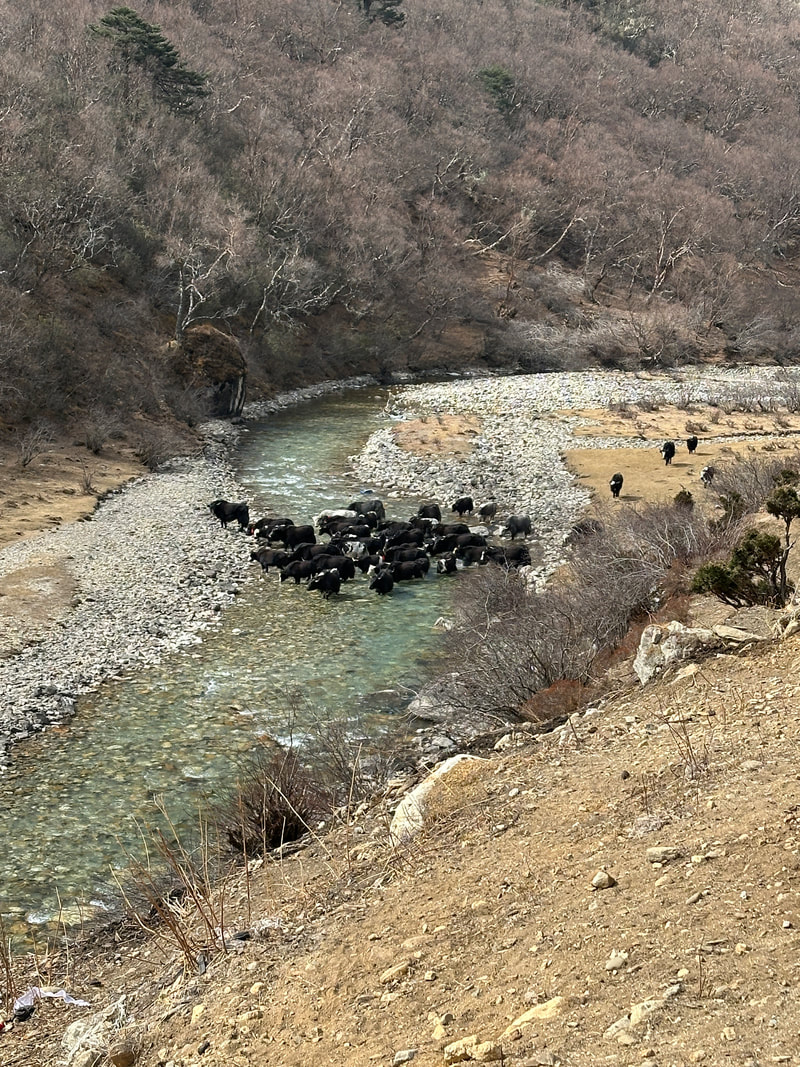 | 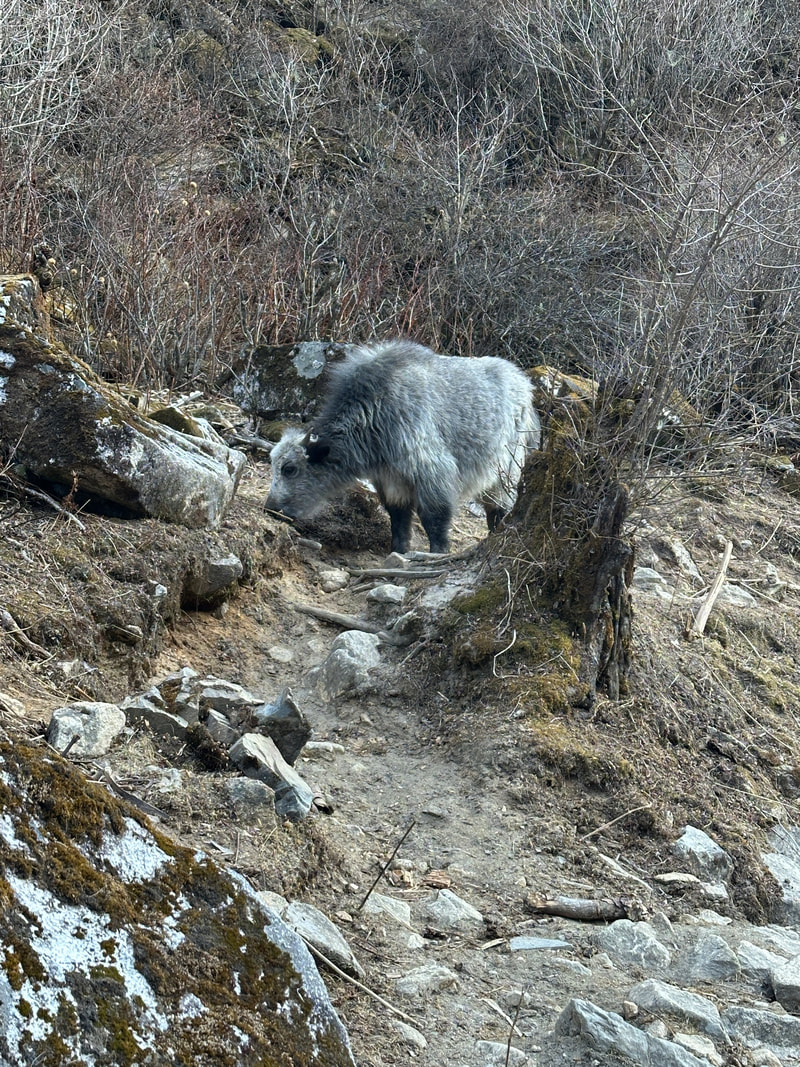 |
Every day they take their 40 yaks out to graze in the meadows and gather them again in the evening. Some of the animals return by themselves, but many do not. Since the yaks are not kept behind fences, the family must call for them and go out to collect them in the evenings. Many families in the area actually own more than 100 yaks.
In this remote and scattered mountain settlement there is a primary school, which the family’s eight-year-old son attends. Every day he walks about half an hour to reach it. Their older daughter has to attend a boarding school in Paro, as there are no further schooling options nearby. Their eldest son is a monk and spends most of his time living in his monastery. It is a tough life—simple, physically demanding, and lived in a harsh mountain environment.
In this remote and scattered mountain settlement there is a primary school, which the family’s eight-year-old son attends. Every day he walks about half an hour to reach it. Their older daughter has to attend a boarding school in Paro, as there are no further schooling options nearby. Their eldest son is a monk and spends most of his time living in his monastery. It is a tough life—simple, physically demanding, and lived in a harsh mountain environment.
As public holidays for Losar and the King’s Birthday were coming up, I decided to use the time to go on a trek. I joined a five-day journey with Himalayan Unique Travels to the base camp of Mount Jomolhari, the second-highest mountain in Bhutan at 7,326 meters. Jomolhari means “Goddess Mountain,” believed to be the abode of a protective female deity. Before mountaineering above 6,000 meters was prohibited in 2003, there were a few attempts to reach the summit, but none succeeded.
We began on 18 February in Shana with our small crew: a guide, cook, assistant, horseman with one mule and five horses, and me. The animals carried our luggage, food, and tents while we hiked along the Paro River through forests draped in moss and lichens. About thirty minutes before reaching camp, we caught our first glimpse of Jomolhari—its snow-covered peak rising magnificently in the distance. After 21 kilometers, we arrived at Thangthangkha Camp (3,594 m).
Dinner that evening exceeded all expectations: vegetable soup, red rice, fried beef with broccoli, ema datshi, eggplant datshi, and an apple for dessert—more delicious than many restaurant meals in town. Afterward, I introduced UNO to the crew. Four of us played for over an hour, laughing and enjoying the simple joy of being together.
The next day we climbed to Jomolhari Base Camp at 4,100 meters, leaving the trees behind. Along the way we saw many yaks and were invited into the home of a yak-herding family. At base camp, we lunched with a direct view of the mountain. Later, hiking further up the valley to about 4,300 meters, I felt as if I could almost touch the peak—yet it still towered more than 3,000 meters above us. The scale felt unreal.
Evenings were filled with delicious meals—once even momos—UNO games, and shared laughter. The night sky was breathtaking: no artificial light, countless stars. But at –15°C, I couldn’t stay outside long and was always grateful for my sleeping bag.
On day three, I woke early to watch sunrise gild Jomolhari in gold. After breakfast, we hiked to Bongteyla Pass (4,900 m), passing twin lakes that reminded me of Switzerland—the first lakes I had seen in Bhutan. We spotted wild blue sheep near the pass, though no snow leopard appeared. The final ascent left me breathless but without altitude sickness. The wind and cold on the pass were intense, yet I loved it.
We began on 18 February in Shana with our small crew: a guide, cook, assistant, horseman with one mule and five horses, and me. The animals carried our luggage, food, and tents while we hiked along the Paro River through forests draped in moss and lichens. About thirty minutes before reaching camp, we caught our first glimpse of Jomolhari—its snow-covered peak rising magnificently in the distance. After 21 kilometers, we arrived at Thangthangkha Camp (3,594 m).
Dinner that evening exceeded all expectations: vegetable soup, red rice, fried beef with broccoli, ema datshi, eggplant datshi, and an apple for dessert—more delicious than many restaurant meals in town. Afterward, I introduced UNO to the crew. Four of us played for over an hour, laughing and enjoying the simple joy of being together.
The next day we climbed to Jomolhari Base Camp at 4,100 meters, leaving the trees behind. Along the way we saw many yaks and were invited into the home of a yak-herding family. At base camp, we lunched with a direct view of the mountain. Later, hiking further up the valley to about 4,300 meters, I felt as if I could almost touch the peak—yet it still towered more than 3,000 meters above us. The scale felt unreal.
Evenings were filled with delicious meals—once even momos—UNO games, and shared laughter. The night sky was breathtaking: no artificial light, countless stars. But at –15°C, I couldn’t stay outside long and was always grateful for my sleeping bag.
On day three, I woke early to watch sunrise gild Jomolhari in gold. After breakfast, we hiked to Bongteyla Pass (4,900 m), passing twin lakes that reminded me of Switzerland—the first lakes I had seen in Bhutan. We spotted wild blue sheep near the pass, though no snow leopard appeared. The final ascent left me breathless but without altitude sickness. The wind and cold on the pass were intense, yet I loved it.
The following day we descended 28 kilometers back the way we had come. Snow began to fall, filling me with childlike joy—it hadn’t snowed in Thimphu all winter. While my Achilles tendons began to ache from the long descent and cold, the beauty of the snowfall distracted me. That evening, the crew lit a bonfire, and for once we felt truly warm.
On the final morning, we returned to Shana and said our goodbyes. Though we had shared only five days, the adventure created a strong bond. We even decided to form an UNO group and meet again at my place to stay in touch.
Being out in nature like this fills me with peace, energy, and gratitude. I felt deeply alive, constantly in awe of nature’s magnificence and raw power. Traveling with such a caring team made all the difference. I am truly thankful for this experience—and I hope it won’t be my last trek in Bhutan.
On the final morning, we returned to Shana and said our goodbyes. Though we had shared only five days, the adventure created a strong bond. We even decided to form an UNO group and meet again at my place to stay in touch.
Being out in nature like this fills me with peace, energy, and gratitude. I felt deeply alive, constantly in awe of nature’s magnificence and raw power. Traveling with such a caring team made all the difference. I am truly thankful for this experience—and I hope it won’t be my last trek in Bhutan.
When I visited the families in Punakha a week ago, I was determined to see one particular young woman again, even though my schedule didn’t allow me to revisit the other three cases. She was the one I had written about in a previous blog post, when I left the therapy session feeling frustrated because I hadn’t achieved much. Her extensor tone was so high that I simply couldn’t reduce it.
Since then, I completed an online course that gave me new tools to better address her hypertonicity and understand her movement patterns. The course focused on primitive reflex integration. With this new knowledge, I now recognize how strongly retained primitive reflexes still shape her movements—reflexes that would normally become dormant after early infancy. This means her body is repeatedly triggered by stimuli and has little chance to move differently.
One example is the Tonic Labyrinthine Reflex (TLR): whenever she extends her head, her entire body shifts into an extension pattern. Her Spinal Galant Reflex is also still active, causing lateral flexion of the spine. This likely contributes, among other factors, to her severe scoliosis. Because she lies in bed most of the day, constant stimulation along her spine repeatedly activates this reflex, increasing muscle tension and reinforcing the scoliotic pattern.
This time, however, I felt intrigued rather than powerless. The course gave me a new lens through which to see her condition and a deeper understanding of the underlying mechanisms. Research suggests that innate rhythmic movements can help lay the foundation for later reflex integration exercises and calm an overactive nervous system, thereby reducing hypertonicity.
During the session, I taught her mother four variations of innate rhythmic movements from the course. As the young woman is older, progress may take time, but we now have a concrete tool to support her. Even during that short session, I sensed that her body responded more positively than before and relaxed intermittently.
I hope to visit the family again in Punakha to continue the therapy. Perhaps, step by step, we can achieve meaningful progress.
Since then, I completed an online course that gave me new tools to better address her hypertonicity and understand her movement patterns. The course focused on primitive reflex integration. With this new knowledge, I now recognize how strongly retained primitive reflexes still shape her movements—reflexes that would normally become dormant after early infancy. This means her body is repeatedly triggered by stimuli and has little chance to move differently.
One example is the Tonic Labyrinthine Reflex (TLR): whenever she extends her head, her entire body shifts into an extension pattern. Her Spinal Galant Reflex is also still active, causing lateral flexion of the spine. This likely contributes, among other factors, to her severe scoliosis. Because she lies in bed most of the day, constant stimulation along her spine repeatedly activates this reflex, increasing muscle tension and reinforcing the scoliotic pattern.
This time, however, I felt intrigued rather than powerless. The course gave me a new lens through which to see her condition and a deeper understanding of the underlying mechanisms. Research suggests that innate rhythmic movements can help lay the foundation for later reflex integration exercises and calm an overactive nervous system, thereby reducing hypertonicity.
During the session, I taught her mother four variations of innate rhythmic movements from the course. As the young woman is older, progress may take time, but we now have a concrete tool to support her. Even during that short session, I sensed that her body responded more positively than before and relaxed intermittently.
I hope to visit the family again in Punakha to continue the therapy. Perhaps, step by step, we can achieve meaningful progress.

Last week I continued my project in Punakha and visited 8 of the 11 gewogs (communities), working with 25 families. This time, we also met many elderly people with disabilities. Some of them had developed remarkably practical and creative ways of coping with their limitations.
One encounter that stayed with me was with a 93-year-old man who had lost the use of his legs due to an illness 23 years ago. The family no longer knows exactly what the illness was. Despite this, he had found a way to remain mobile. In this environment, wheelchairs are simply not practical, as door thresholds are often more than 20 cm high. Instead, the family devised another solution.
He still has good use of his arms and moves by pushing himself along the floor in a seated position. To prevent his skin from being constantly injured, they made a leather seat for him to sit on. He holds this piece of leather in place with a string between his teeth so that he does not slide off while using both hands to move forward. In this way, he can enter the house, reach his room, and even move outside to the place where he spends most of his day sitting. Through this improvised solution, he has managed to stay mobile and avoid being confined to his bed.
One encounter that stayed with me was with a 93-year-old man who had lost the use of his legs due to an illness 23 years ago. The family no longer knows exactly what the illness was. Despite this, he had found a way to remain mobile. In this environment, wheelchairs are simply not practical, as door thresholds are often more than 20 cm high. Instead, the family devised another solution.
He still has good use of his arms and moves by pushing himself along the floor in a seated position. To prevent his skin from being constantly injured, they made a leather seat for him to sit on. He holds this piece of leather in place with a string between his teeth so that he does not slide off while using both hands to move forward. In this way, he can enter the house, reach his room, and even move outside to the place where he spends most of his day sitting. Through this improvised solution, he has managed to stay mobile and avoid being confined to his bed.
 |  |
In another family, the situation was quite different. They had not found a creative solution, so the daughter lifted her elderly mother every day from the bed into the wheelchair and then back again in the evening. This placed a great physical strain on her, as her mother weighs considerably more than she does. While the men in the family work in the fields and the children attend school, the middle-aged daughter is alone at home with her mother throughout the day and is responsible for all her care.
When I offered to show her a way to help her mother transfer into the wheelchair without lifting, she was very open to learning. She told us that her mother had fallen more than ten years ago and broken her leg, and since then she has not been able to walk. As a result, she uses a wheelchair—fortunately, their house is much more suitable for wheelchair use than many others in the area. The main difficulty is transferring her into and out of the wheelchair.
When I first demonstrated the transfer technique, I was slightly nervous about whether it would work safely. There was a risk of the mother losing balance and falling, especially because the bed was significantly higher than the wheelchair. We therefore had to find a way to raise the height of the mother’s feet and used a narrow piece of wood we found outside. In addition, the wheelchair brakes were no longer very reliable, and despite having someone translate for me, there was still a language barrier. The circumstances were far from ideal—but we decided to try.
I first had the daughter practise the movement with me, so she could get a feel for the technique with someone who could react if something went wrong. She then practised with a heavier man before I allowed her to try it with her mother. I was astonished at how quickly she understood the concept of the transfer and how well she managed it the very first time with her mother. I felt a great sense of relief.
Before beginning, I checked whether the mother was still able to bear some weight on her legs, as this would be an important resource during the transfer. Once we established that she could still take some weight—despite being unable to stand fully—she was highly motivated to practise. Using kinaesthetic techniques, the daughter was then able to help her mother into the wheelchair without lifting her weight at all. She was visibly astonished and deeply grateful, and the mother appreciated it just as much, as being carried had never been comfortable for her.
When I offered to show her a way to help her mother transfer into the wheelchair without lifting, she was very open to learning. She told us that her mother had fallen more than ten years ago and broken her leg, and since then she has not been able to walk. As a result, she uses a wheelchair—fortunately, their house is much more suitable for wheelchair use than many others in the area. The main difficulty is transferring her into and out of the wheelchair.
When I first demonstrated the transfer technique, I was slightly nervous about whether it would work safely. There was a risk of the mother losing balance and falling, especially because the bed was significantly higher than the wheelchair. We therefore had to find a way to raise the height of the mother’s feet and used a narrow piece of wood we found outside. In addition, the wheelchair brakes were no longer very reliable, and despite having someone translate for me, there was still a language barrier. The circumstances were far from ideal—but we decided to try.
I first had the daughter practise the movement with me, so she could get a feel for the technique with someone who could react if something went wrong. She then practised with a heavier man before I allowed her to try it with her mother. I was astonished at how quickly she understood the concept of the transfer and how well she managed it the very first time with her mother. I felt a great sense of relief.
Before beginning, I checked whether the mother was still able to bear some weight on her legs, as this would be an important resource during the transfer. Once we established that she could still take some weight—despite being unable to stand fully—she was highly motivated to practise. Using kinaesthetic techniques, the daughter was then able to help her mother into the wheelchair without lifting her weight at all. She was visibly astonished and deeply grateful, and the mother appreciated it just as much, as being carried had never been comfortable for her.

About a month ago, I visited several children and young adults with disabilities in the community of the Gup (local leader) of Punakha. We are now planning to extend this project to other parts of Punakha. Another development that had a significant impact was that, during my stay there in December, the Gup mobilised a journalist to write about the lives of families caring for people with disabilities and the challenges they face. Since then, two articles have been published. The first appeared about three weeks ago, and the second was published just a few days ago. Here is an excerpt from the second article:
“Before dawn breaks in Punakha, 37-year-old Kinzang Wangdi is already awake, preparing for another day that leaves little room for rest. By the time the village stirs, he has bathed and fed his 16-year-old daughter, who lives with cerebral palsy, before setting off to earn the day’s wages that sustain a family of five. … For Kinzang Wangdi, there is no clear line between work and caregiving, only an unbroken routine shaped by responsibility, exhaustion, and quiet resolve. …
‘In rural areas, families like ours are quietly left behind,’ Kinzang Wangdi says. ‘I have never received support from anyone, and I do not expect I ever will. But that does not mean I will stop caring for my daughter.’
Across the country, caregivers of children and adults with cerebral palsy rely largely on family labour, sporadic charity, and personal sacrifice. Specialised healthcare services remain concentrated in urban centres, physiotherapy is scarce outside referral hospitals, and community-based support systems are almost non-existent.”
After the first article was published, an anonymous donor contacted the family featured in the story and donated a substantial amount of money to support their child. The article had described how the mother cannot stay at home to care for her daughter with cerebral palsy because she needs to earn money to support the family. As a result, the grandmother has been the primary caregiver for the girl.
Following the publication of the second article, more people have contacted the Gup to ask how they can financially support these families. This response is very encouraging. Through these articles, the families are becoming more visible, and people are beginning to understand how difficult it is to provide for an entire family while simultaneously caring around the clock for a person with a disability—especially in a country where care centres for children with disabilities are extremely scarce.
“Before dawn breaks in Punakha, 37-year-old Kinzang Wangdi is already awake, preparing for another day that leaves little room for rest. By the time the village stirs, he has bathed and fed his 16-year-old daughter, who lives with cerebral palsy, before setting off to earn the day’s wages that sustain a family of five. … For Kinzang Wangdi, there is no clear line between work and caregiving, only an unbroken routine shaped by responsibility, exhaustion, and quiet resolve. …
‘In rural areas, families like ours are quietly left behind,’ Kinzang Wangdi says. ‘I have never received support from anyone, and I do not expect I ever will. But that does not mean I will stop caring for my daughter.’
Across the country, caregivers of children and adults with cerebral palsy rely largely on family labour, sporadic charity, and personal sacrifice. Specialised healthcare services remain concentrated in urban centres, physiotherapy is scarce outside referral hospitals, and community-based support systems are almost non-existent.”
After the first article was published, an anonymous donor contacted the family featured in the story and donated a substantial amount of money to support their child. The article had described how the mother cannot stay at home to care for her daughter with cerebral palsy because she needs to earn money to support the family. As a result, the grandmother has been the primary caregiver for the girl.
Following the publication of the second article, more people have contacted the Gup to ask how they can financially support these families. This response is very encouraging. Through these articles, the families are becoming more visible, and people are beginning to understand how difficult it is to provide for an entire family while simultaneously caring around the clock for a person with a disability—especially in a country where care centres for children with disabilities are extremely scarce.

Here is the link to the article: https://kuenselonline.com/news/cerebral-palsy-care-out-of-reach-for-rural-families
Last week I had only a handful of therapy sessions, as several were cancelled due to children being ill. This gave me more time to work on the project proposals. In addition, I am currently taking a very interesting online course on innate rhythmic movements and primitive reflex integration. The course focuses on the foundations of development and has an impact across many different fields. I am very excited to start working with the children using these newly learned tools as soon as they are back.
This weekend, I spent a couple of hours at Dochula Pass, one of my favourite places. It has a remarkable sense of calm and beauty, with views of the high Himalayan mountains, many of which rise above 7,000 meters. Dochula Pass is not just a scenic viewpoint; it functions as a ritual landscape, combining memorial architecture, Buddhist symbolism, and the lived experience of travel through Bhutan’s mountains. That mix of remembrance, devotion, and nature is what gives it its distinctive calm and emotional depth. There are 108 white shortens (stupas) arranged in a circular order. They commemorate Bhutanese soldiers who died in a military operation in southern Bhutan and also symbolize Buddhist concepts of purification and merit.
This weekend, I spent a couple of hours at Dochula Pass, one of my favourite places. It has a remarkable sense of calm and beauty, with views of the high Himalayan mountains, many of which rise above 7,000 meters. Dochula Pass is not just a scenic viewpoint; it functions as a ritual landscape, combining memorial architecture, Buddhist symbolism, and the lived experience of travel through Bhutan’s mountains. That mix of remembrance, devotion, and nature is what gives it its distinctive calm and emotional depth. There are 108 white shortens (stupas) arranged in a circular order. They commemorate Bhutanese soldiers who died in a military operation in southern Bhutan and also symbolize Buddhist concepts of purification and merit.
At the moment, there is hardly any therapy taking place, as most of the children are on winter vacation and visiting their families in other parts of Bhutan. During this time, I am therefore working on another major project. The parents find the therapy I am providing here very valuable and have already asked whether there is any possibility of continuing therapy at ABS after I leave next summer.
At present, apart from me, ABS only employs social workers. I agree with the parents that it would be far more sustainable to find a way for ABS to continue offering therapy at the centre on a long-term basis. For this reason, I am using this quieter period to discuss with the management team what options exist to integrate therapy as a permanent service at ABS, even after my volunteer placement ends.
Initially, the management suggested that this discussion could wait for a few months and that there was no urgency. However, I have already realised that establishing such a service is very time-consuming and requires a great deal of work. There are many challenges to address, and project approvals take a long time, with strict timelines that must be followed.
The main challenge is the severe shortage of therapists in the country. In total, there are fewer than 100 physiotherapists and physiotherapy technicians in Bhutan, only four occupational therapists, and fewer than ten speech therapists—serving a population of around 800,000 people. Even if funding were available to hire a therapist, finding a suitable professional would therefore be extremely difficult.
For this reason, I am exploring different approaches and speaking with a wide range of people to gather ideas and assess their feasibility, as I am still becoming familiar with the local system. In the meantime, several concrete ideas have emerged, and I am currently drafting a number of project proposals to submit for potential funding.
At present, apart from me, ABS only employs social workers. I agree with the parents that it would be far more sustainable to find a way for ABS to continue offering therapy at the centre on a long-term basis. For this reason, I am using this quieter period to discuss with the management team what options exist to integrate therapy as a permanent service at ABS, even after my volunteer placement ends.
Initially, the management suggested that this discussion could wait for a few months and that there was no urgency. However, I have already realised that establishing such a service is very time-consuming and requires a great deal of work. There are many challenges to address, and project approvals take a long time, with strict timelines that must be followed.
The main challenge is the severe shortage of therapists in the country. In total, there are fewer than 100 physiotherapists and physiotherapy technicians in Bhutan, only four occupational therapists, and fewer than ten speech therapists—serving a population of around 800,000 people. Even if funding were available to hire a therapist, finding a suitable professional would therefore be extremely difficult.
For this reason, I am exploring different approaches and speaking with a wide range of people to gather ideas and assess their feasibility, as I am still becoming familiar with the local system. In the meantime, several concrete ideas have emerged, and I am currently drafting a number of project proposals to submit for potential funding.
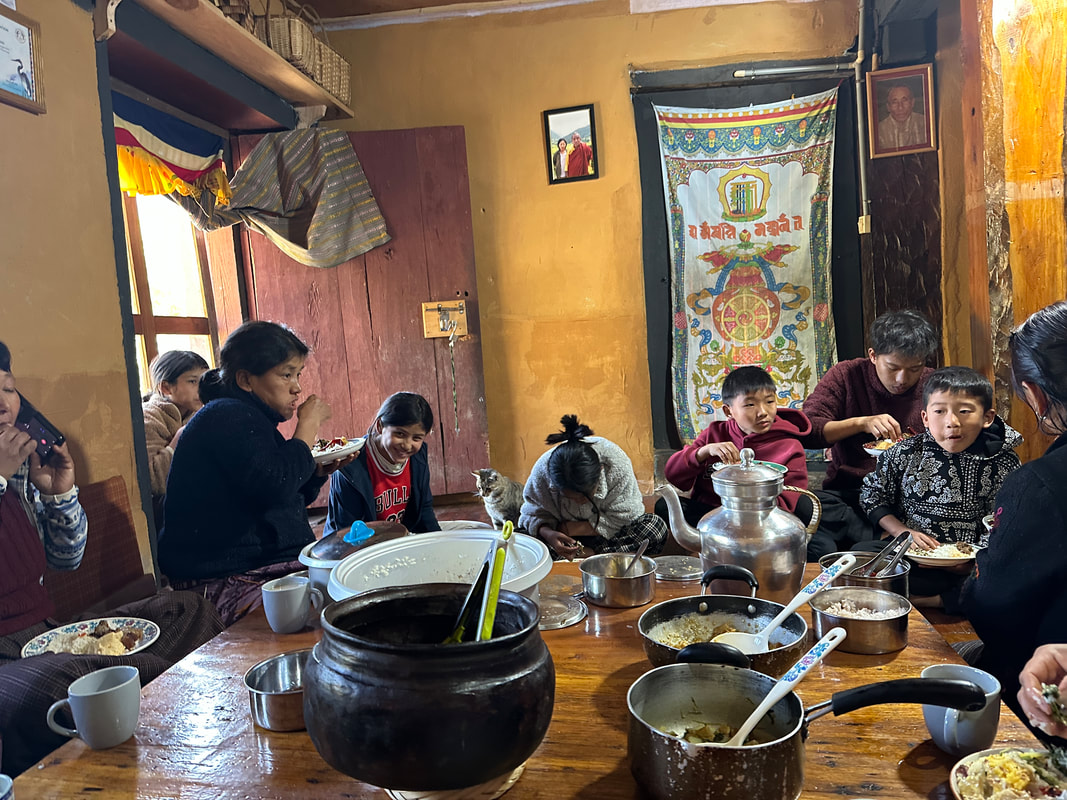
On 2 January, I was invited by my new friends from Punakha to celebrate Nyilo with their family. Nyilo marks the Bhutanese winter solstice and means “the return of the sun.” It is traditionally celebrated with family gatherings, shared meals, and archery tournaments.
The celebrations began the day before with Lolay, when village children go from house to house singing incantations wishing for a prosperous year. In return, villagers offer gifts of food or money. The children collect rice, oil, eggs, meat, vegetables, and other items, which they later use to prepare a picnic and celebrate Nyilo together. That evening, a group of neighborhood children also came to sing for us, and the host filled their bottles with oil and added rice to their containers before they moved on.
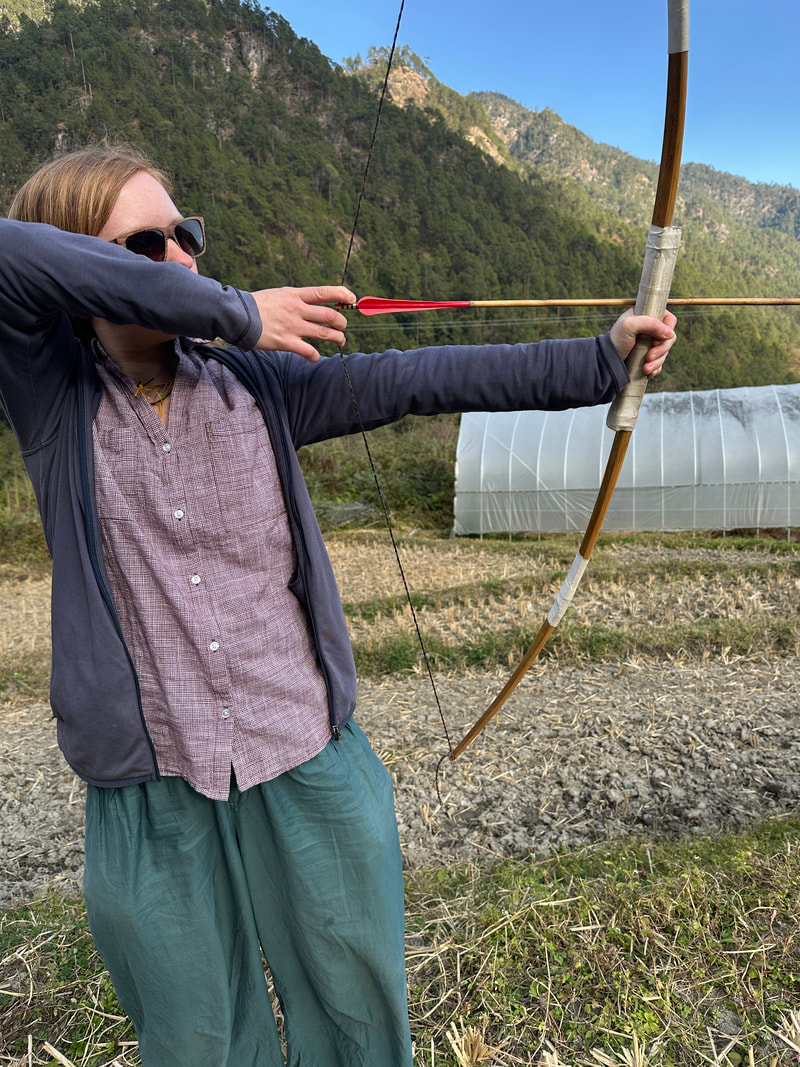
On Nyilo itself, relatives arrived from Thimphu and others from the village, and we shared lunch together. It was a potluck: each family brought one or two curries, creating a generous buffet of delicious dishes. After eating and chatting, Tsering, the host’s son, took me to the fields to show me traditional archery using a bamboo bow. Since I wasn’t used to it, we practiced at a short distance of about ten meters—far less than the traditional range of 140 meters.
The celebrations began the day before with Lolay, when village children go from house to house singing incantations wishing for a prosperous year. In return, villagers offer gifts of food or money. The children collect rice, oil, eggs, meat, vegetables, and other items, which they later use to prepare a picnic and celebrate Nyilo together. That evening, a group of neighborhood children also came to sing for us, and the host filled their bottles with oil and added rice to their containers before they moved on.
On Nyilo itself, relatives arrived from Thimphu and others from the village, and we shared lunch together. It was a potluck: each family brought one or two curries, creating a generous buffet of delicious dishes. After eating and chatting, Tsering, the host’s son, took me to the fields to show me traditional archery using a bamboo bow. Since I wasn’t used to it, we practiced at a short distance of about ten meters—far less than the traditional range of 140 meters.
 | 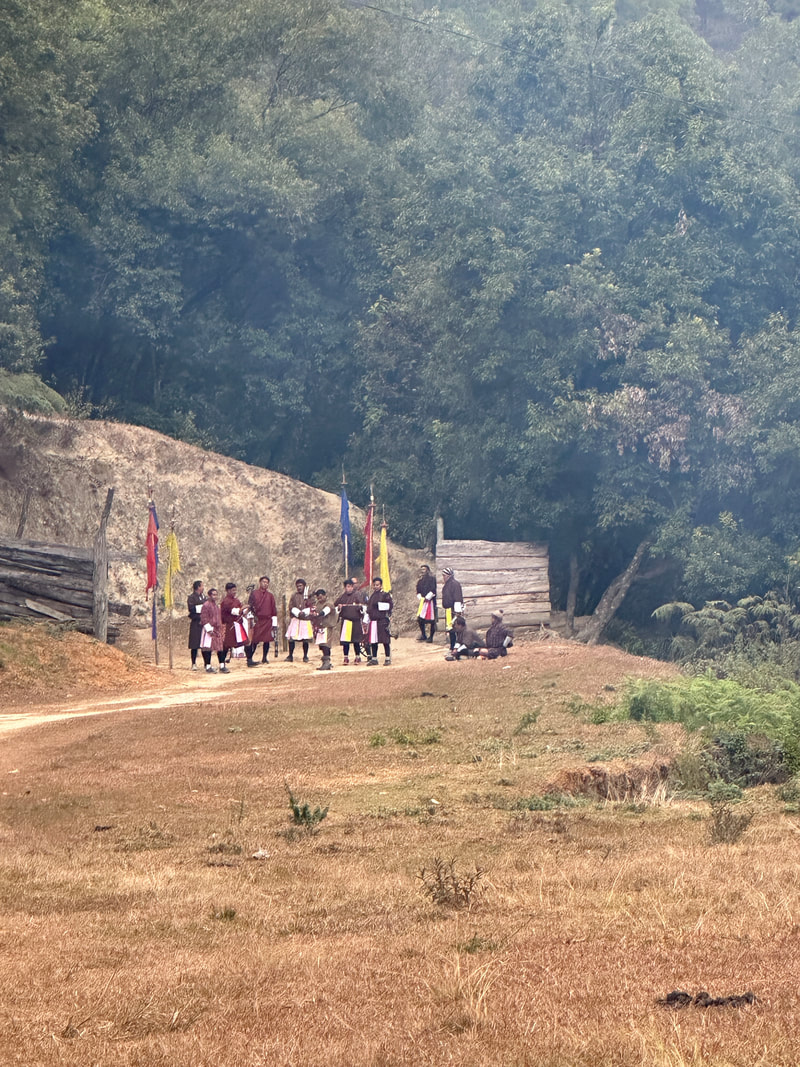 |
Later, Kinley, the owner of the homestay, took me to watch her husband compete in the tournament. Two targets are placed 140 meters apart, one at each end of the range. After every shot, the opposing team signals whether the arrow hit the small target—about 30 centimeters wide—or missed, often teasing the shooters before retreating behind a barricade. I found this ritual both fascinating and lively. Meanwhile, women gathered along the side of the range, drinking ja oma(milk tea) and eating zao (roasted rice). Some began singing and dancing traditional dances and invited me to join. Without knowing the steps, I simply followed along as best I could.
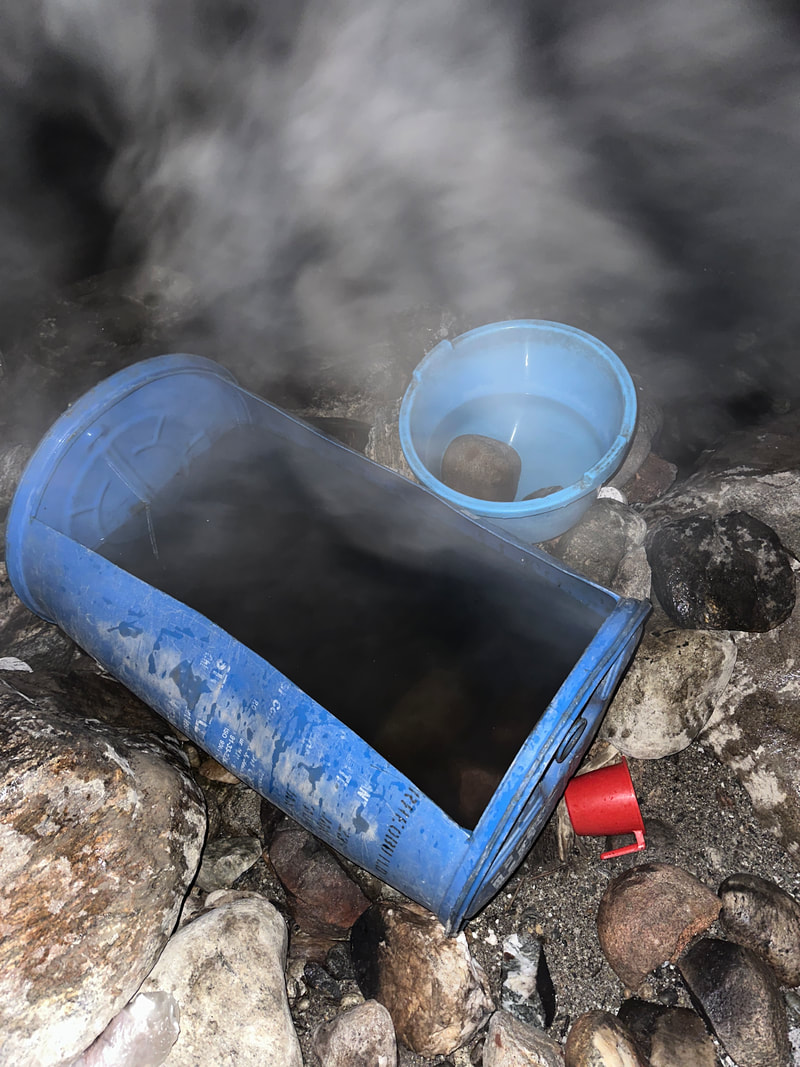
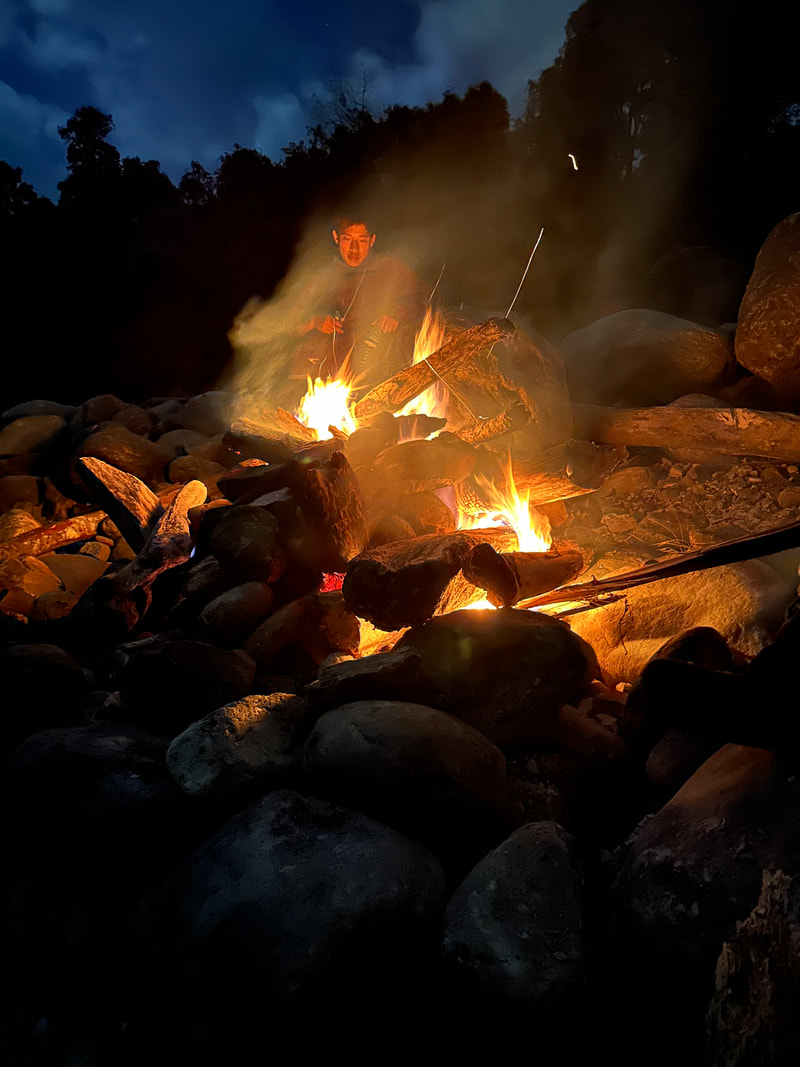
The tournament ended around 5 p.m. as darkness fell, and the home village won—much to Kinley’s husband’s delight. Back at the house, we had dinner, and Tsering had prepared something special for me: a hot stone bath by the river. Sitting in warm river water heated by stones from the fire, listening to the river and watching the bright moon and stars, was deeply relaxing. The bath is also considered medicinal, as minerals are released from the heated stones. It was a perfect way to end a beautiful day spent with Kinley’s family.
The tournament ended around 5 p.m. as darkness fell, and the home village won—much to Kinley’s husband’s delight. Back at the house, we had dinner, and Tsering had prepared something special for me: a hot stone bath by the river. Sitting in warm river water heated by stones from the fire, listening to the river and watching the bright moon and stars, was deeply relaxing. The bath is also considered medicinal, as minerals are released from the heated stones. It was a perfect way to end a beautiful day spent with Kinley’s family.
 |  |
Last week, I spent two days doing fieldwork in Punakha. The gup (local leader), whom I had met at the Laya festival, was very eager to support children and young adults with disabilities in his community and invited me to visit if I had time. As work at the office was relatively quiet, I went on Thursday and Friday.
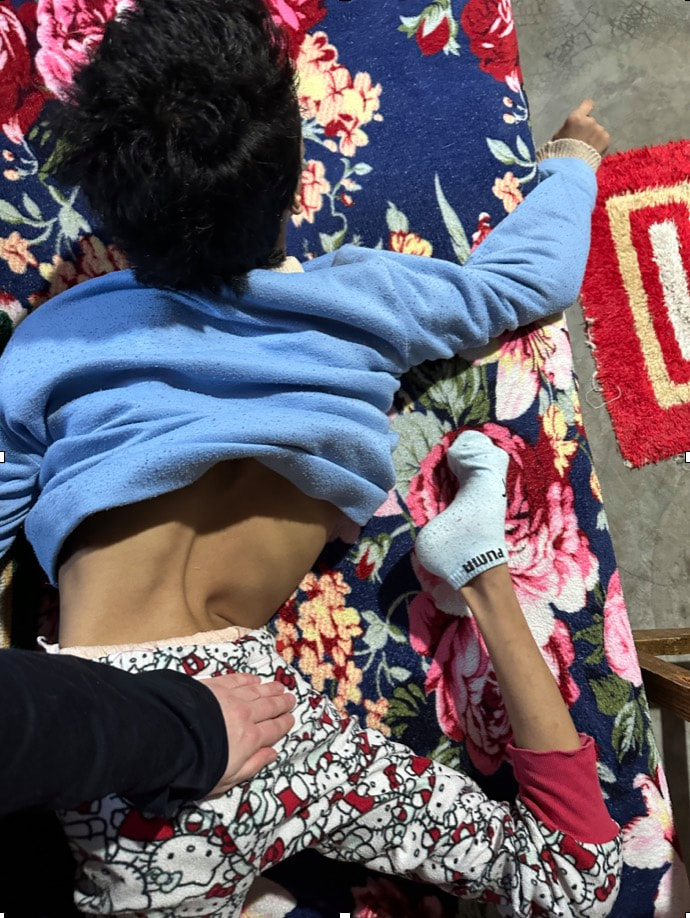
This time, the people I visited were older (15–24 years) than the children I usually work with, and the difference was striking. Their bodies were far less able to respond to therapeutic input and needed much more time to adapt — if they could adapt at all. One 24-year-old woman I visited had severe extensor hypertonicity: her body was constantly stretched into hyperextension, with her neck thrown back and her spine arched into a position that would be painful for most of us. My goal during the session was to reduce this tension and bring her into a more flexed, neutral posture. Despite trying many techniques I had learned, I was unable to reduce her tone or even achieve a neutral spine position during the entire hour.
Her mother is deeply committed to caring for her daughter but lacks the necessary knowledge. Had the girl received therapy earlier, and had her mother been taught proper positioning instead of keeping her lying flat on the bed, the severe extensor tone might have been prevented. This hyperextension now limits any purposeful movement and has led to pronounced scoliosis. She is not even able to sit independently. While regular therapy could lead to some improvement, she has no access to it. I tried to explain to the mother how to work step by step toward a more neutral position, but without being able to demonstrate it physically, this remained largely theoretical.
This time, the people I visited were older (15–24 years) than the children I usually work with, and the difference was striking. Their bodies were far less able to respond to therapeutic input and needed much more time to adapt — if they could adapt at all. One 24-year-old woman I visited had severe extensor hypertonicity: her body was constantly stretched into hyperextension, with her neck thrown back and her spine arched into a position that would be painful for most of us. My goal during the session was to reduce this tension and bring her into a more flexed, neutral posture. Despite trying many techniques I had learned, I was unable to reduce her tone or even achieve a neutral spine position during the entire hour.
Her mother is deeply committed to caring for her daughter but lacks the necessary knowledge. Had the girl received therapy earlier, and had her mother been taught proper positioning instead of keeping her lying flat on the bed, the severe extensor tone might have been prevented. This hyperextension now limits any purposeful movement and has led to pronounced scoliosis. She is not even able to sit independently. While regular therapy could lead to some improvement, she has no access to it. I tried to explain to the mother how to work step by step toward a more neutral position, but without being able to demonstrate it physically, this remained largely theoretical.
The second visit was to a 19-year-old woman who was able to respond to and adapt to the techniques I showed. In her case, however, the main issue is social rather than physical. Her mother must work to support the family, leaving the grandmother as the primary caregiver. The grandmother openly expressed her exhaustion and even said she would not mind if the girl passed away. This deeply shocked and saddened me. At the same time, I can understand how overwhelming it must be to care for someone with special needs around the clock while struggling to earn enough to survive—especially without external support.
It was encouraging that the gup witnessed these situations firsthand and recognized the need to do more for these families. They urgently need political leaders who are willing to truly understand their realities and offer concrete support, rather than looking away. Finally, stigma remains a serious issue in rural areas. Disabilities are still often explained through karma, with the belief that individuals are being punished for past actions and therefore do not deserve special care. This belief makes life even harder for people with disabilities and their families.
It was encouraging that the gup witnessed these situations firsthand and recognized the need to do more for these families. They urgently need political leaders who are willing to truly understand their realities and offer concrete support, rather than looking away. Finally, stigma remains a serious issue in rural areas. Disabilities are still often explained through karma, with the belief that individuals are being punished for past actions and therefore do not deserve special care. This belief makes life even harder for people with disabilities and their families.
On Friday morning, after arriving in Phobjikha the previous day, we visited one of the two local health-care units to speak with a health-care provider about children with disabilities in the area. He told us about four children—diagnosed with cerebral palsy, autism spectrum disorder, meningitis, and severe speech delay—and we decided to visit them.
What we encountered was both deeply moving and profoundly sad. Each of these children showed significant, often hidden potential, yet it is unlikely to be fully realized. Access to therapy is virtually nonexistent, and while the families do everything they can, they simply lack the knowledge and guidance needed to support their children effectively.
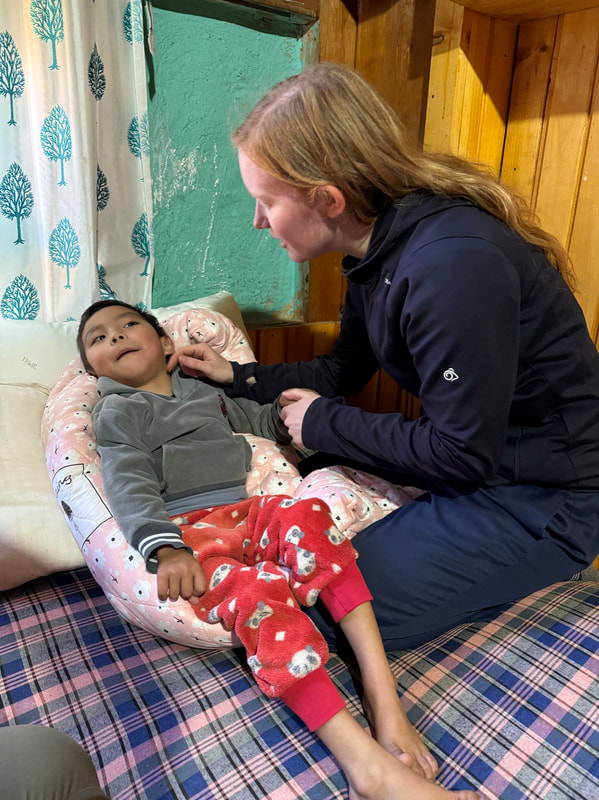
One moment, in particular, stood out. A young boy with cerebral palsy spends most of his day lying flat on his back on a mat. Because the family had never been shown alternatives, this position had become his default. Over time, it had led to pronounced extensor tone: his entire movement pattern was dominated by extension. Whenever he tried to turn onto his side, he extended his head, trunk, and limbs, making the movement impossible. Turning, of course, requires flexion.
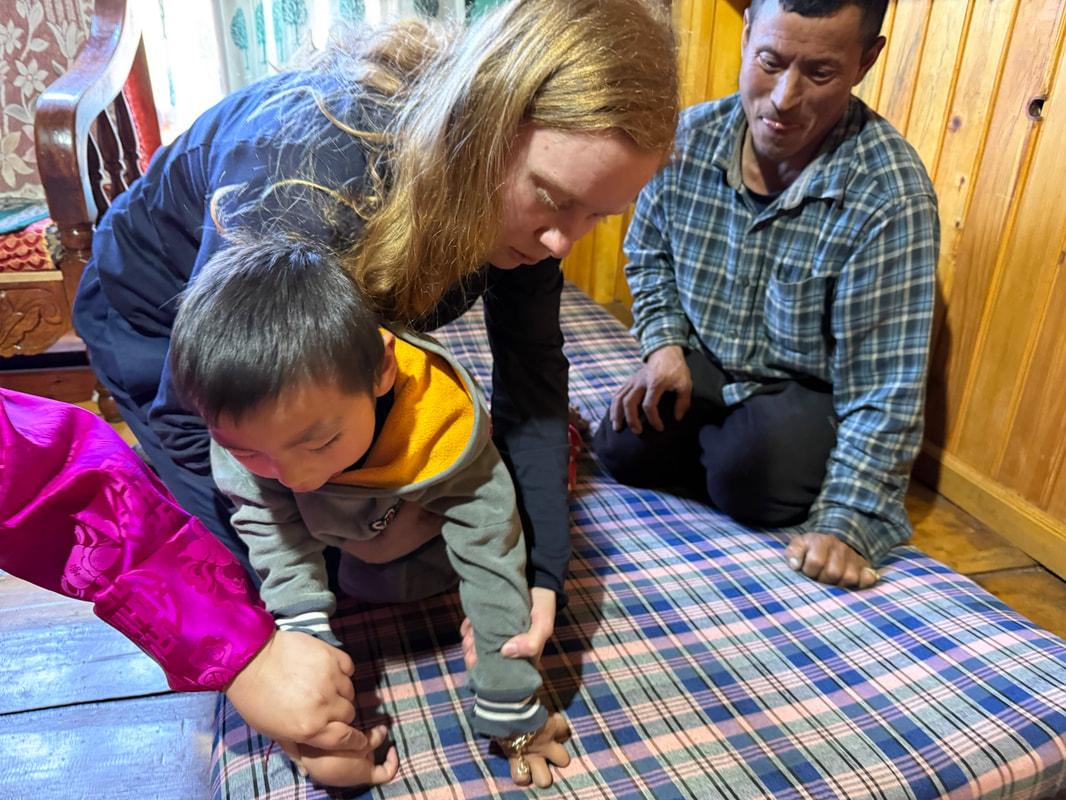
To help the father understand this, I asked him to try the same movement himself—extending his head backward and attempting to roll. He looked at me and said, quite simply, “I can’t do it.” That moment made the problem immediately tangible. I then showed him how to support his son into flexion to enable a more active turn and demonstrated alternative positioning while lying on his back. We rolled a blanket into a nest-like support around the boy’s body and positioned him at about a 40-degree angle using cushions. In this position, he became noticeably more active: his knees flexed, he pushed his heels into the floor, and his feet frequently moved from persistent plantar flexion into a more neutral position. When we explored the prone position, we were all astonished. With minimal support to unload his upper body, he began to lift his hips and crawl with his legs. He was clearly delighted—smiling broadly, eager to continue, and reluctant to stop even when both his father and I grew tired from supporting him. When placed on his side to rest, he immediately tried to turn back onto his stomach to keep going. It was as if discovering this new way of experiencing his body—and a means of moving forward, even with assistance—was profoundly meaningful to him.
His father watched in fascination as I showed him how to support these movements himself. The grandparents, who had been observing quietly, were visibly moved and close to tears. Their gratitude was palpable.
The family has now agreed to come to Thimphu for a month during the winter break specifically to receive therapy and learn how to better support their son. Since the other children will not be present during this period, I will be able to work with him several times a week and make the most of this limited time before he returns home. I am very much looking forward to it.
What we encountered was both deeply moving and profoundly sad. Each of these children showed significant, often hidden potential, yet it is unlikely to be fully realized. Access to therapy is virtually nonexistent, and while the families do everything they can, they simply lack the knowledge and guidance needed to support their children effectively.
One moment, in particular, stood out. A young boy with cerebral palsy spends most of his day lying flat on his back on a mat. Because the family had never been shown alternatives, this position had become his default. Over time, it had led to pronounced extensor tone: his entire movement pattern was dominated by extension. Whenever he tried to turn onto his side, he extended his head, trunk, and limbs, making the movement impossible. Turning, of course, requires flexion.
To help the father understand this, I asked him to try the same movement himself—extending his head backward and attempting to roll. He looked at me and said, quite simply, “I can’t do it.” That moment made the problem immediately tangible. I then showed him how to support his son into flexion to enable a more active turn and demonstrated alternative positioning while lying on his back. We rolled a blanket into a nest-like support around the boy’s body and positioned him at about a 40-degree angle using cushions. In this position, he became noticeably more active: his knees flexed, he pushed his heels into the floor, and his feet frequently moved from persistent plantar flexion into a more neutral position. When we explored the prone position, we were all astonished. With minimal support to unload his upper body, he began to lift his hips and crawl with his legs. He was clearly delighted—smiling broadly, eager to continue, and reluctant to stop even when both his father and I grew tired from supporting him. When placed on his side to rest, he immediately tried to turn back onto his stomach to keep going. It was as if discovering this new way of experiencing his body—and a means of moving forward, even with assistance—was profoundly meaningful to him.
His father watched in fascination as I showed him how to support these movements himself. The grandparents, who had been observing quietly, were visibly moved and close to tears. Their gratitude was palpable.
The family has now agreed to come to Thimphu for a month during the winter break specifically to receive therapy and learn how to better support their son. Since the other children will not be present during this period, I will be able to work with him several times a week and make the most of this limited time before he returns home. I am very much looking forward to it.
Unfortunately I was sick on the International Day of Persons with Disabilities and missed the programme. But Sumitra, one of the social workers, agreed kindly to write a blog post about her experience during that day. Thank you so much Sumitra : )
The International Day of Persons with Disabilities 2025 was celebrated with great joy, energy, and togetherness at Ability Bhutan Society. This year’s celebration was especially meaningful as it brought together 27 parents and children in an atmosphere filled with laughter, learning, and inclusion. Truly, this time it was more fun than ever before.
A Joyful Beginning with Integrated Games
The program began with exciting integrated games where both parents and children participated together. Action songs and group dancing in a circle, including popular songs like “Yu Yu Yu” and “If You’re Happy”. The smiles on the children’s faces and the enthusiastic participation of parents made this session truly heartwarming. This was followed by the highlight of this session, The parachute game, which created a beautiful moment of teamwork and shared happiness.
Sensory Activity Rooms – Learning Through Play
After the group activities, the children were divided into small groups of 5 to 6 children and rotated through four different sensory activity rooms. Each group spent 10 minutes in each room, guided by one dedicated social worker to ensure support, safety, and engagement. The four sensory rooms included:
1. Sensory Bin Play – for tactile exploration and fine motor development
2. Throw Ball Play – for coordination and gross motor skills
3. Foam Play – for sensory stimulation and relaxation
4. Balancing Play – for improving balance and body control
These activities were thoughtfully designed to support children’s sensory needs while making learning fun and engaging.
Special Experience for Parents, Guardians, and Siblings
One dedicated room was set up exclusively for parents, guardians, and siblings. This experiential activity helped them better understand the daily challenges faced by persons with disabilities. Participants wore thick gloves to do beading and were also blindfolded to build a tower using blocks. This powerful activity created deep awareness, empathy, and appreciation for the efforts and strengths of children with disabilities.
Celebration Through Dance and Fellowship
Following the activities, the joyful energy continued with group dances by parents, adding a beautiful cultural and emotional touch to the celebration. The program concluded with a warm tea and snacks session, allowing everyone to relax, share experiences, and strengthen community bonds.
A Day to Remember
The celebration of the International Day of Persons with Disabilities 2025 at Ability Bhutan Society was not only fun-filled but also deeply meaningful. It strengthened the bond between children, parents, and professionals while promoting understanding, inclusion, and acceptance. Every smile, every laugh, and every shared moment reminded us that together, we are stronger when we embrace ability in every form.
We extend our heartfelt gratitude to all the parents, children, Ms. Eleanor, Ms. Leanna and social workers who made this day a great success. We look forward to creating many more inclusive and joyful moments together.
The International Day of Persons with Disabilities 2025 was celebrated with great joy, energy, and togetherness at Ability Bhutan Society. This year’s celebration was especially meaningful as it brought together 27 parents and children in an atmosphere filled with laughter, learning, and inclusion. Truly, this time it was more fun than ever before.
A Joyful Beginning with Integrated Games
The program began with exciting integrated games where both parents and children participated together. Action songs and group dancing in a circle, including popular songs like “Yu Yu Yu” and “If You’re Happy”. The smiles on the children’s faces and the enthusiastic participation of parents made this session truly heartwarming. This was followed by the highlight of this session, The parachute game, which created a beautiful moment of teamwork and shared happiness.
Sensory Activity Rooms – Learning Through Play
After the group activities, the children were divided into small groups of 5 to 6 children and rotated through four different sensory activity rooms. Each group spent 10 minutes in each room, guided by one dedicated social worker to ensure support, safety, and engagement. The four sensory rooms included:
1. Sensory Bin Play – for tactile exploration and fine motor development
2. Throw Ball Play – for coordination and gross motor skills
3. Foam Play – for sensory stimulation and relaxation
4. Balancing Play – for improving balance and body control
These activities were thoughtfully designed to support children’s sensory needs while making learning fun and engaging.
Special Experience for Parents, Guardians, and Siblings
One dedicated room was set up exclusively for parents, guardians, and siblings. This experiential activity helped them better understand the daily challenges faced by persons with disabilities. Participants wore thick gloves to do beading and were also blindfolded to build a tower using blocks. This powerful activity created deep awareness, empathy, and appreciation for the efforts and strengths of children with disabilities.
Celebration Through Dance and Fellowship
Following the activities, the joyful energy continued with group dances by parents, adding a beautiful cultural and emotional touch to the celebration. The program concluded with a warm tea and snacks session, allowing everyone to relax, share experiences, and strengthen community bonds.
A Day to Remember
The celebration of the International Day of Persons with Disabilities 2025 at Ability Bhutan Society was not only fun-filled but also deeply meaningful. It strengthened the bond between children, parents, and professionals while promoting understanding, inclusion, and acceptance. Every smile, every laugh, and every shared moment reminded us that together, we are stronger when we embrace ability in every form.
We extend our heartfelt gratitude to all the parents, children, Ms. Eleanor, Ms. Leanna and social workers who made this day a great success. We look forward to creating many more inclusive and joyful moments together.