Swissphysiobhutan
  • Home
  • How to support
  • Partners
  • Weekly Blog
  • Contact & About
  • Home
  • How to support
  • Partners
  • Weekly Blog
  • Contact & About

Bhutan Physio

and culture blogs

When therapy comes too late

22/12/2025

1 Comment

 
Last week, I spent two days doing fieldwork in Punakha. The gup (local leader), whom I had met at the Laya festival, was very eager to support children and young adults with disabilities in his community and invited me to visit if I had time. As work at the office was relatively quiet, I went on Thursday and Friday.
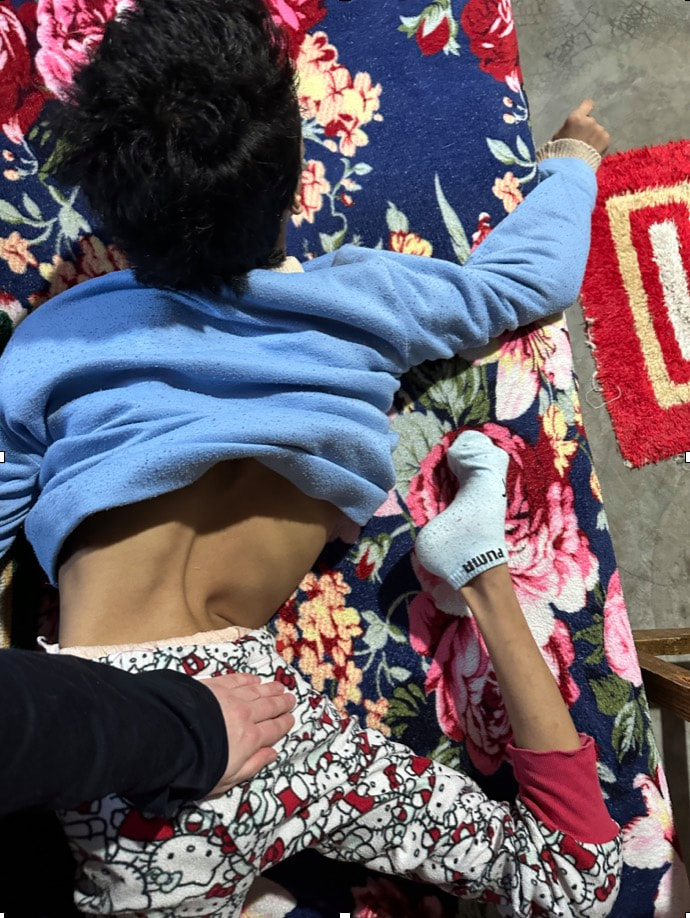
This time, the people I visited were older (15–24 years) than the children I usually work with, and the difference was striking. Their bodies were far less able to respond to therapeutic input and needed much more time to adapt — if they could adapt at all. One 24-year-old woman I visited had severe extensor hypertonicity: her body was constantly stretched into hyperextension, with her neck thrown back and her spine arched into a position that would be painful for most of us. My goal during the session was to reduce this tension and bring her into a more flexed, neutral posture. Despite trying many techniques I had learned, I was unable to reduce her tone or even achieve a neutral spine position during the entire hour.
Her mother is deeply committed to caring for her daughter but lacks the necessary knowledge. Had the girl received therapy earlier, and had her mother been taught proper positioning instead of keeping her lying flat on the bed, the severe extensor tone might have been prevented. This hyperextension now limits any purposeful movement and has led to pronounced scoliosis. She is not even able to sit independently. While regular therapy could lead to some improvement, she has no access to it. I tried to explain to the mother how to work step by step toward a more neutral position, but without being able to demonstrate it physically, this remained largely theoretical.
Picture
The second visit was to a 19-year-old woman who was able to respond to and adapt to the techniques I showed. In her case, however, the main issue is social rather than physical. Her mother must work to support the family, leaving the grandmother as the primary caregiver. The grandmother openly expressed her exhaustion and even said she would not mind if the girl passed away. This deeply shocked and saddened me. At the same time, I can understand how overwhelming it must be to care for someone with special needs around the clock while struggling to earn enough to survive—especially without external support.
It was encouraging that the gup witnessed these situations firsthand and recognized the need to do more for these families. They urgently need political leaders who are willing to truly understand their realities and offer concrete support, rather than looking away. Finally, stigma remains a serious issue in rural areas. Disabilities are still often explained through karma, with the belief that individuals are being punished for past actions and therefore do not deserve special care. This belief makes life even harder for people with disabilities and their families.
1 Comment
Bhanu Ramaswamy
2/1/2026 20:04:02

I think you are doing amazingly Lennie. One of the hardest lessons to learn for any professional who chooses their working life based on the hope of 'helping' others, is the realisation that not everyone can be helped through our skills. You seem to be experiencing both the bitter and the sweet, and both appear to enrich your involvement with the people you are in contact with.

Reply


Leave a Reply.

Copyright by schochworks gmbh. All rights reserved.