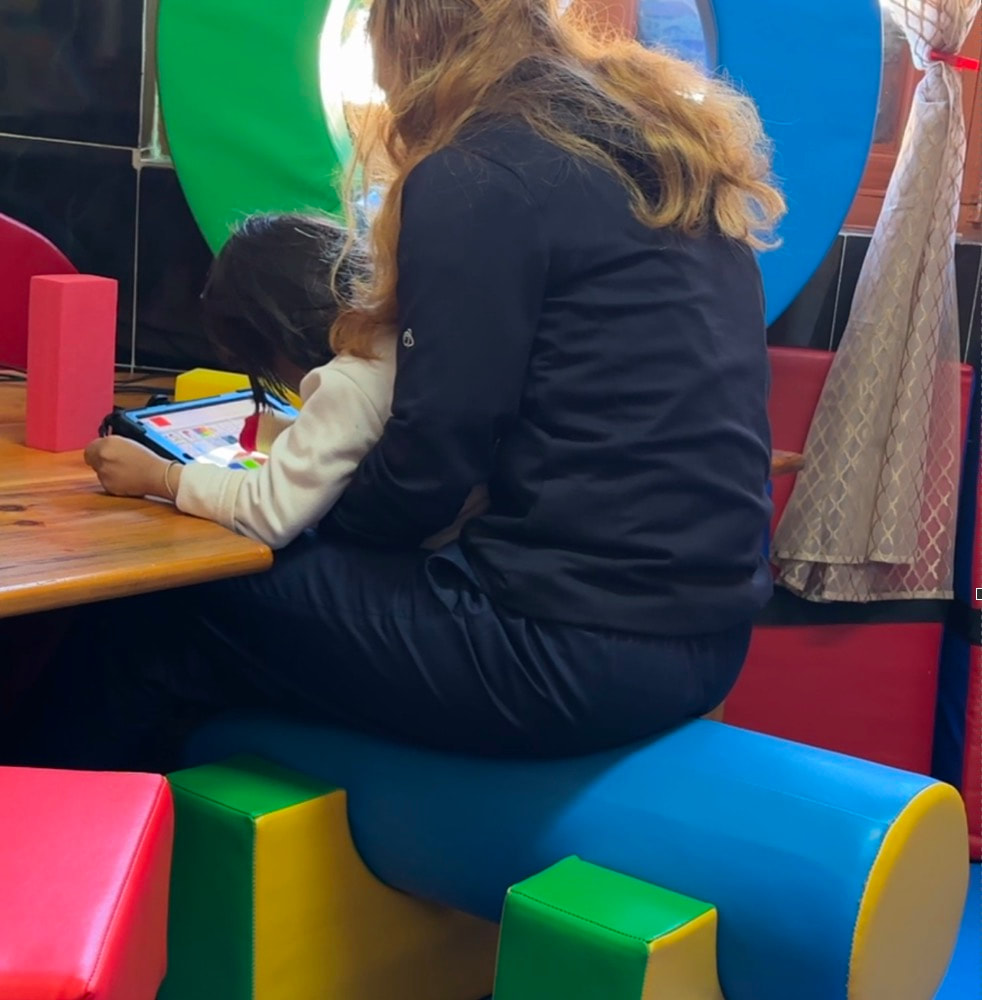
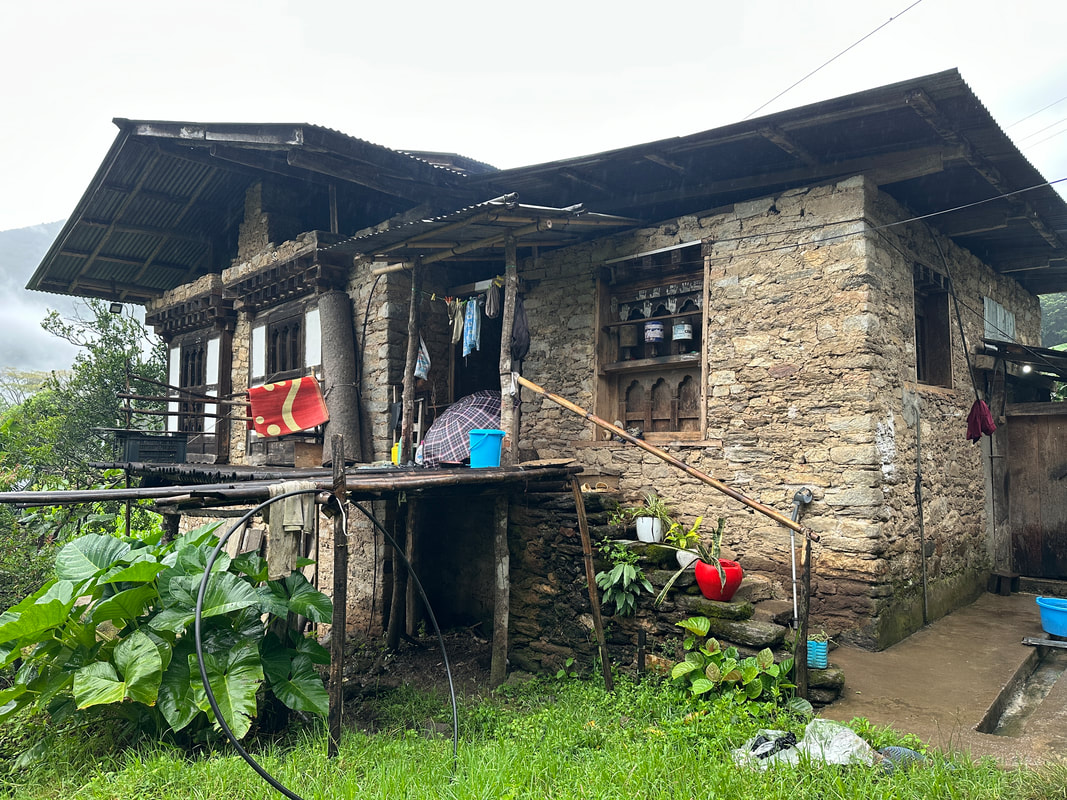
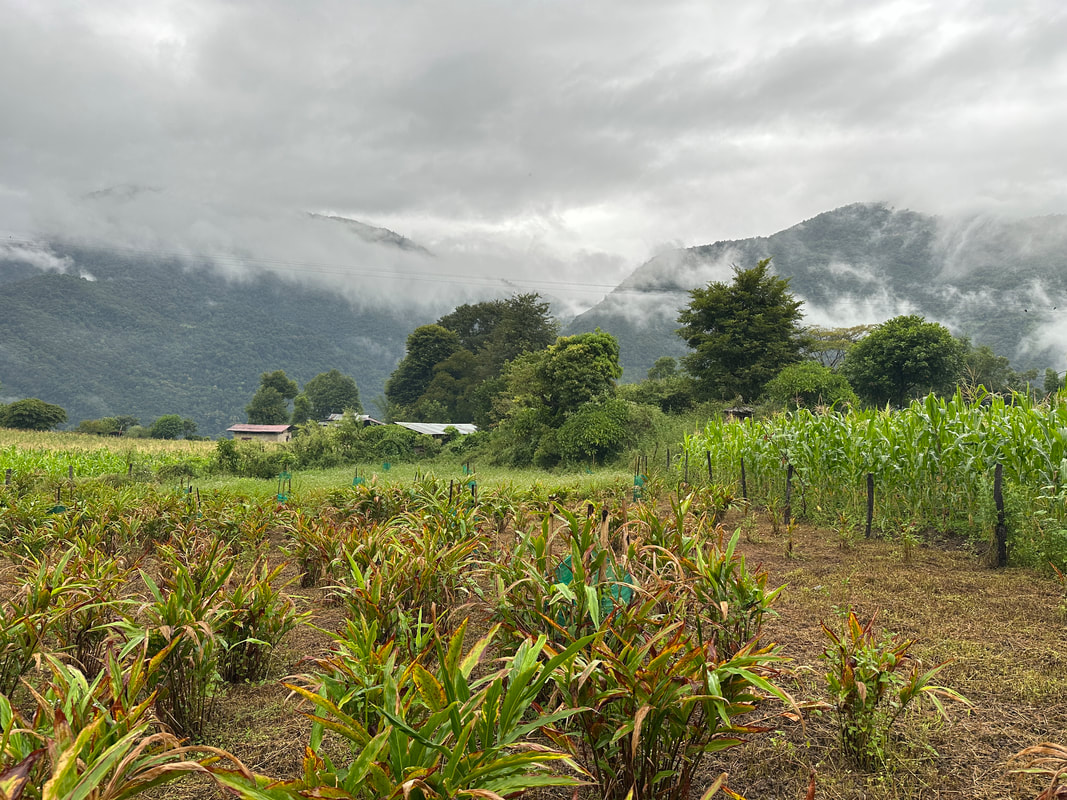
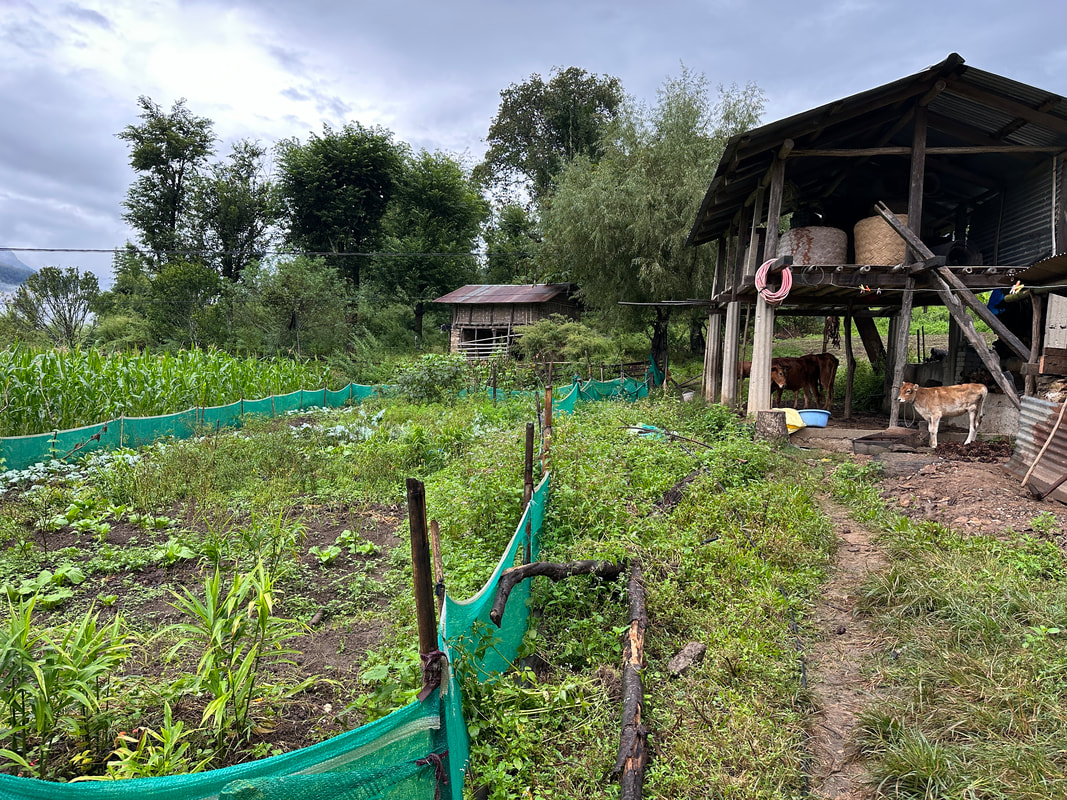
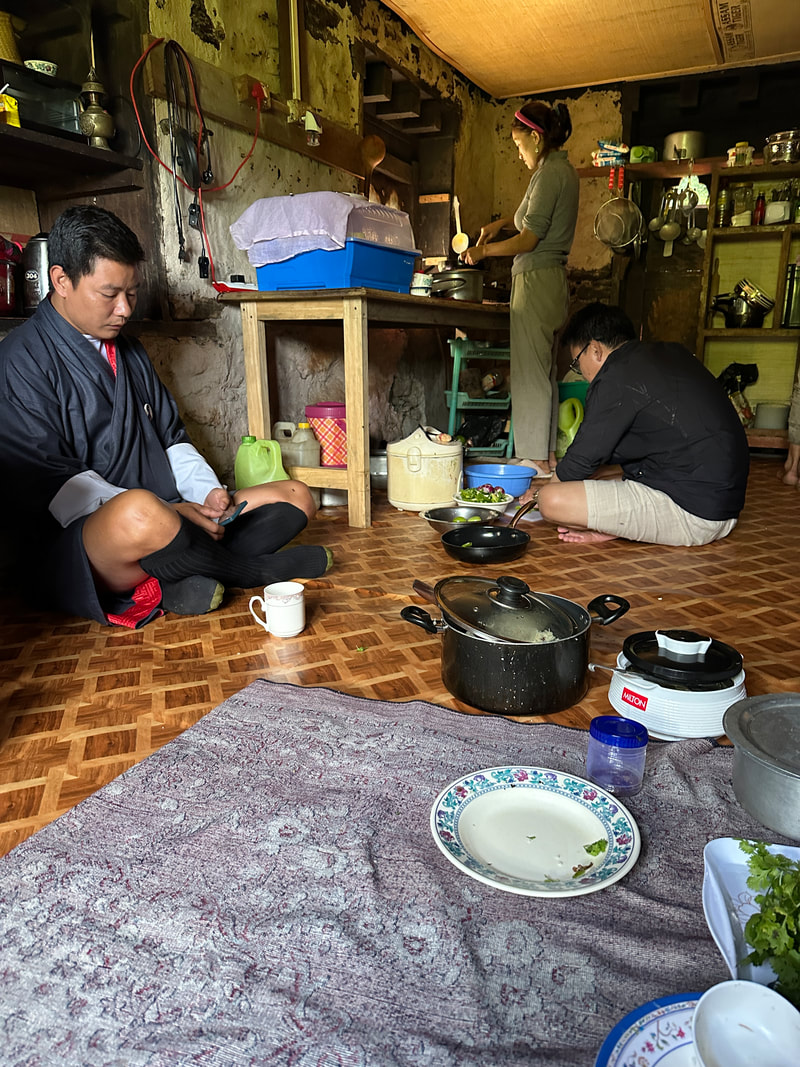
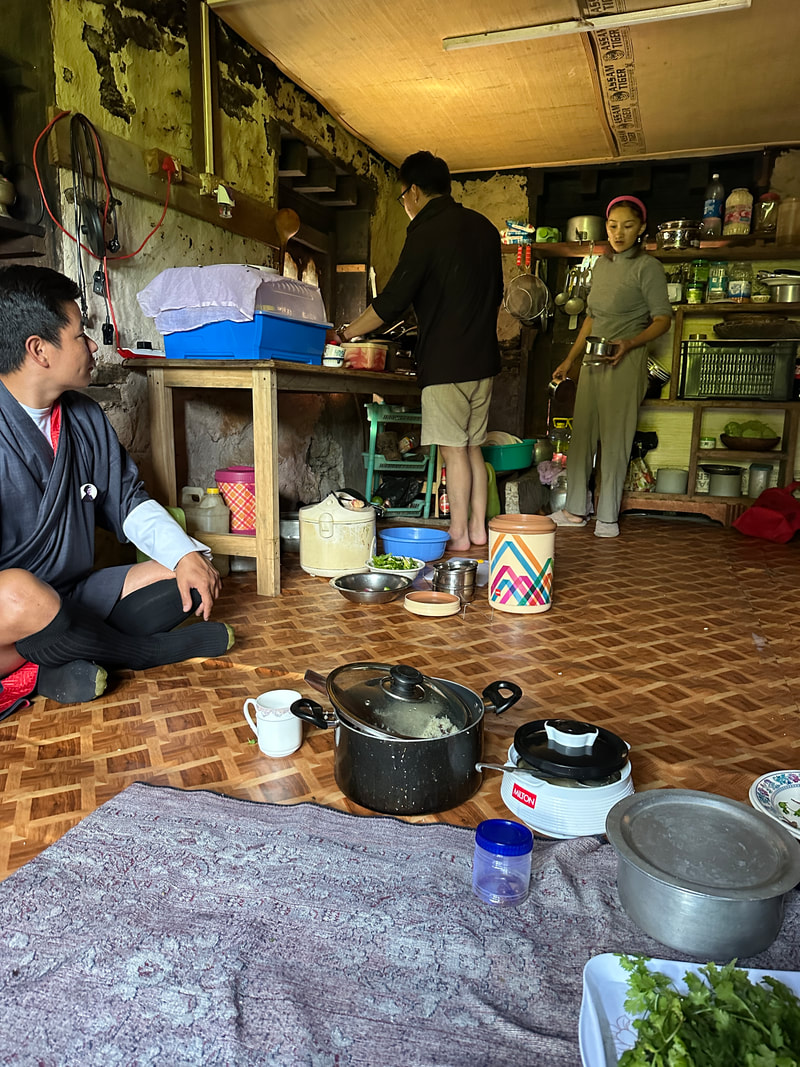
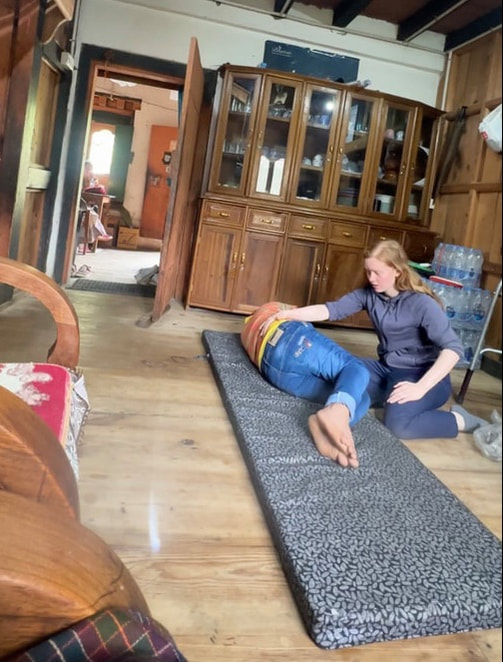
 During our field trip to eastern Bhutan (Mongar, Trashiyangtse, and Lhuentse), we assessed children with disabilities in a range of remote communities. The first stop was an assessment camp at a central school in Mongar, where several specialists worked together: an optometrist checked vision, an audiologist assessed hearing and speech-related issues, and a physiotherapist evaluated mobility and assistive device needs. Children requiring further support were referred to Mongar Hospital for regular therapy. Families from across the region brought children listed for assessment to the school. In Bumdeling, Trashiyangtse, assessments took place in the local Gewog (community) centre. As there was no treatment bed, we improvised by placing sofa cushions on the floor so I could assess children with Cerebral Palsy (CP) who could not walk. Some families travelled extraordinary distances to reach us. One family carried their child on the sister’s back for an hour to the Gewog centre as they live far away and have no road access to their house. After the assessment, our project manager drove them home as far as possible. The following day we conducted home visits in more remote areas. Reaching one family required a 20-minute walk along narrow muddy paths through agricultural fields. Their 18-year-old daughter, who has CP and can only walk short distances with heavy assistance, can only reach the road if her father carries her uphill on his back. Although the family hopes for road access, extending the road through the scattered farmland would be difficult and would damage valuable agricultural land. In Switzerland, a family in such circumstances might relocate, but here people are deeply attached to ancestral homes and depend on the surrounding farmland for their livelihood. At other locations we visited schools directly, which allowed me to demonstrate exercises to teachers who could continue supporting the children, particularly in boarding schools. In one case, a family met us halfway because reaching their village was impossible for us. By the time they arrived it was already dark, and I was expected to assess a child with CP on the roadside. The child remained seated in the car during the assessment, limiting what I could properly evaluate. Through speaking with the parents, I realised the boy spent most of his days alone in a room with little stimulation, which was difficult to witness. Conditions often required flexibility and improvisation. In another village, after waiting over an hour at the Gewog centre, we were asked to meet families further down the road instead. I insisted on having at least a suitable place for assessments, so we eventually arranged to use a small roadside café, whose owner kindly provided mats and blankets from his personal space. Two children arrived after another long wait, but for the final child we waited almost three additional hours due to transport problems, bad weather, and roadblocks. When the family finally arrived, I felt a strong responsibility to provide advice that would genuinely help, knowing how much effort they had made to reach the assessment. Fortunately, I believe we were able to give them practical support they could continue using at home. 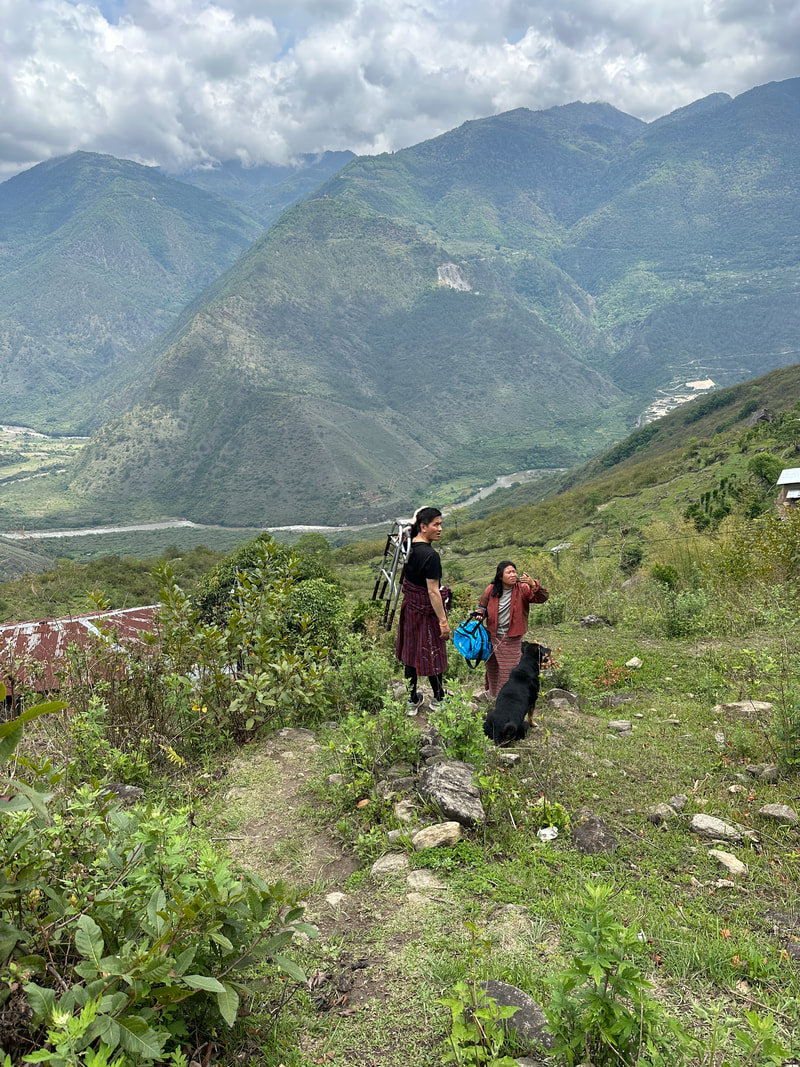
0 Comments
Now my project in the very east of Bhutan has finally begun—the one I have been waiting for so long. I was supposed to fly to Yonphula domestic airport in Trashigang, in the far east of Bhutan, on 18/04, but the flight was cancelled. Flights from Paro to Yonphula are often affected by bad weather. Luckily, when I tried again the next day, everything worked out and I was able to land in Trashigang. In hindsight, I am even glad the first flight was cancelled, as I would otherwise have missed a great opportunity. While waiting at the airport, I spoke with some Bhutanese passengers on the same flight, and it turned out that one of them worked with Draktsho, a vocational training centre for youth with disabilities. I had heard of the centre and had planned to visit it in Thimphu. However, he suggested visiting the larger and more interesting centre in Trashigang. He immediately made a few calls and arranged for us to visit just two hours after landing, even organizing a taxi. Although he could not join us, everything was perfectly set up. The visit was very insightful, and I was impressed by their work. The centre hosts nearly 70 youth and young adults with diverse disabilities. They begin with basic life skills and academic training, including Bhutanese sign language, as many students are deaf. Others use wheelchairs or have Down syndrome, visual impairments, or cognitive challenges. Students can choose to learn tailoring, traditional arts and painting, embroidery, weaving, or wood carving. They progress at their own pace, with individualized support. Their crafts are sold in a shop, and advanced students can earn money from their work. Until recently, graduates had to leave the centre; some managed to sustain themselves, but others returned home without integrating into the job market. Encouragingly, Draktsho East has now created a protected work unit, allowing those who cannot enter the labour market to stay and continue working.
Most students live in boarding facilities, where they also learn daily chores. What stood out most was the strong sense of community. With students aged roughly 10 to 25 and older, the older ones support the younger, creating a noticeably warm and supportive atmosphere. The craftsmanship too was impressive, and it is inspiring to see how the centre enables students to develop skills and confidence—something many might never experience otherwise. However, one notable gap is the absence of integrated therapies, which seems like a missed opportunity. The person who arranged our visit mentioned that attempts had been made to introduce therapy services, but challenges prevented implementation. This is something I plan to explore further once I am back in Thimphu, as it raises important questions about both barriers and potential. Like I mentioned in an earlier blog, I have been working on a solution that would allow ABS to continue providing some form of therapy after I finish my volunteering. Since physiotherapists are extremely rare in this country, there is very little chance of finding one to work at ABS. In addition, the cost of employing a physiotherapist is significantly higher. The idea, therefore, is that—given the lack of qualified human resources—we train a Bhutanese professional from a related field, such as a social worker or massage therapist, and provide them with additional skills by financing relevant training courses. I have written several project proposals to secure funding for this idea, but the response times are very long, which makes planning difficult. One organization has not replied at all, so I assume they will not provide funding. The Bhutan Foundation informed us that decisions will only be made in June. However, in January I submitted a proposal to the Society Switzerland Bhutan to fund a QST-certified trainer course for a Bhutanese staff member at ABS, since the Qigong massage concept has proven to work very well here. As I am not permitted to teach this method myself, it is essential that a member of staff completes the official training. After discussing the proposal at their board meeting, SSB agreed to finance the course. Many, many thanks to SSB! Both ABS and I are very grateful for this support, and I am confident it will benefit many children with disabilities in Bhutan. Since the QST course started at the end of March, we had very little time to decide who would take part. There were essentially two options: either recruit a new massage therapist or social worker, or train someone already working at ABS. Given the limited time and the lack of secured funding for a new salary, recruitment was not a realistic option. The alternative was to have one of the current social workers complete the course and gradually transition into a therapy-focused role, rather than continuing classroom work. After discussing this within the ABS management team, we decided this was the best approach—provided someone was interested. In fact, two social workers expressed strong interest, and we selected one to participate in the QST course. Of course, this person will not become a fully trained physiotherapist or occupational therapist, but through targeted training she will gain practical skills and be able to work within these therapeutic concepts. In this way, ABS will be able to continue offering Qigong massage to the families it serves. If we are able to secure additional funding in the future, we can further develop this role and continue building capacity. The course has now begun, and the social worker is highly motivated. She regularly seeks my guidance, asks to practice together, and is eager to benefit as much as possible from the knowledge I can share. 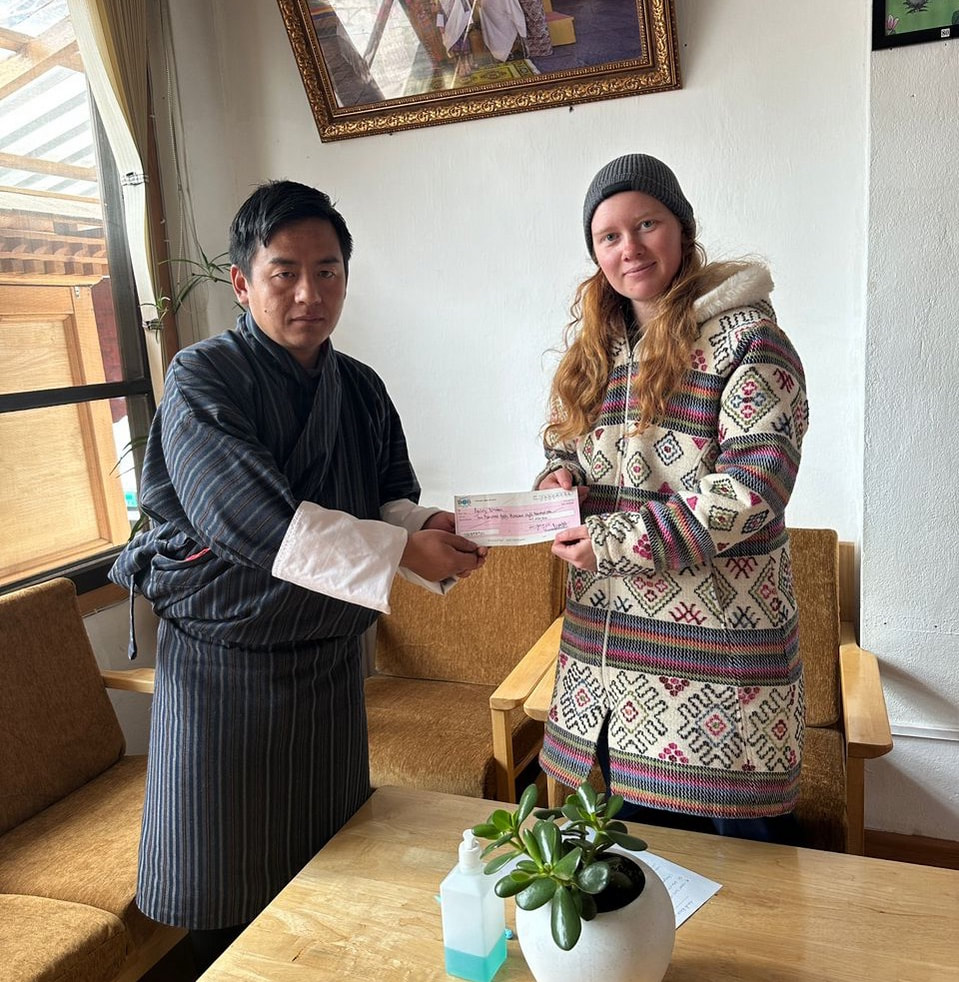 The Society Switzerland Bhutan hands over the check to fund the trainer course. I would like to share a moment in which I was able to witness the impact of Qigong massage.
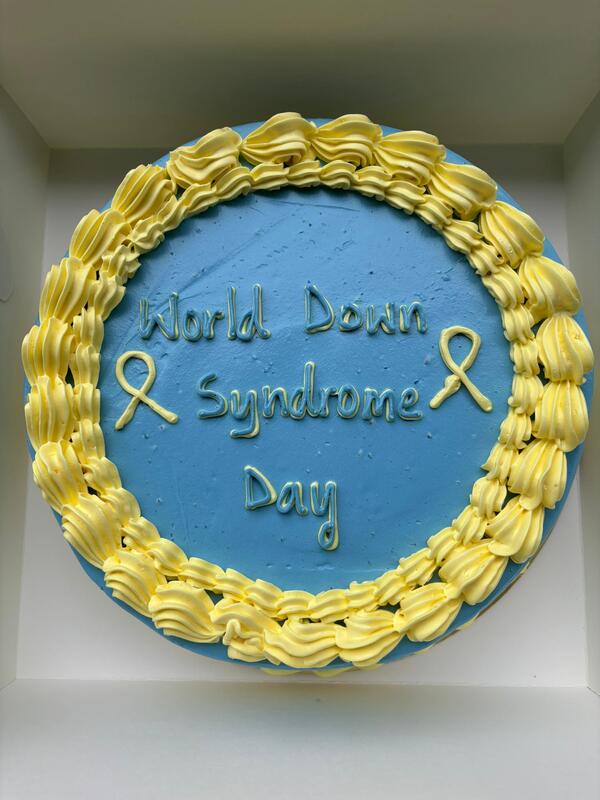
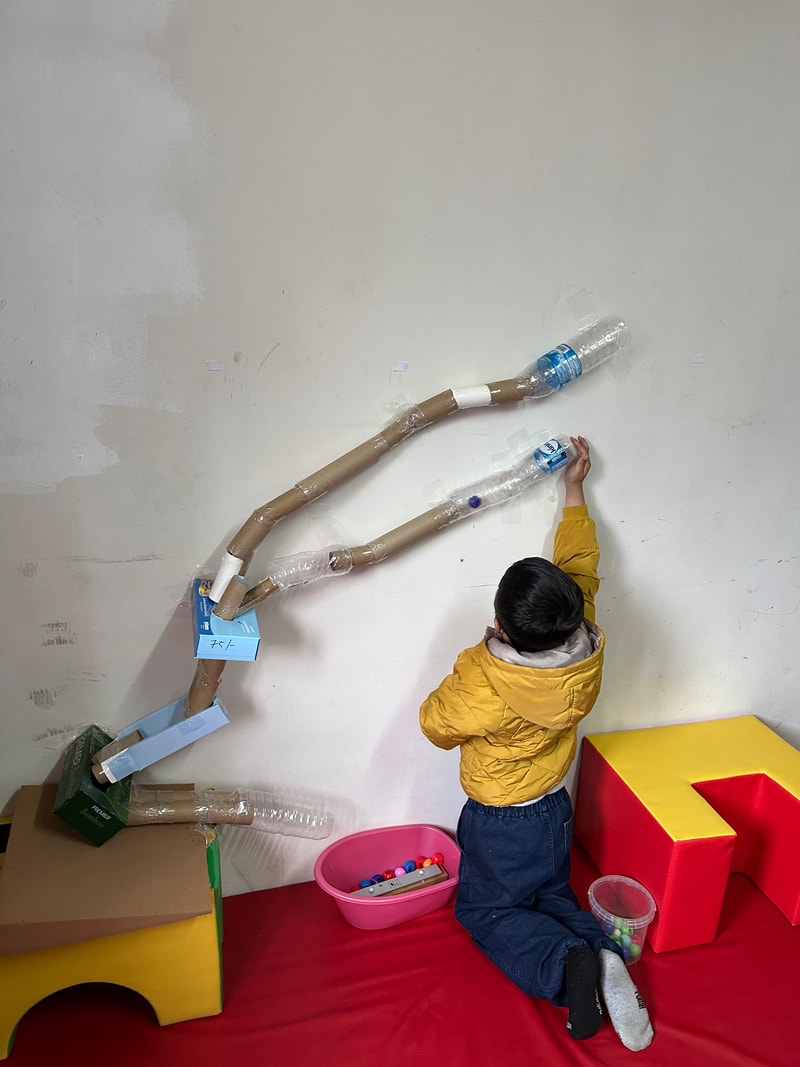
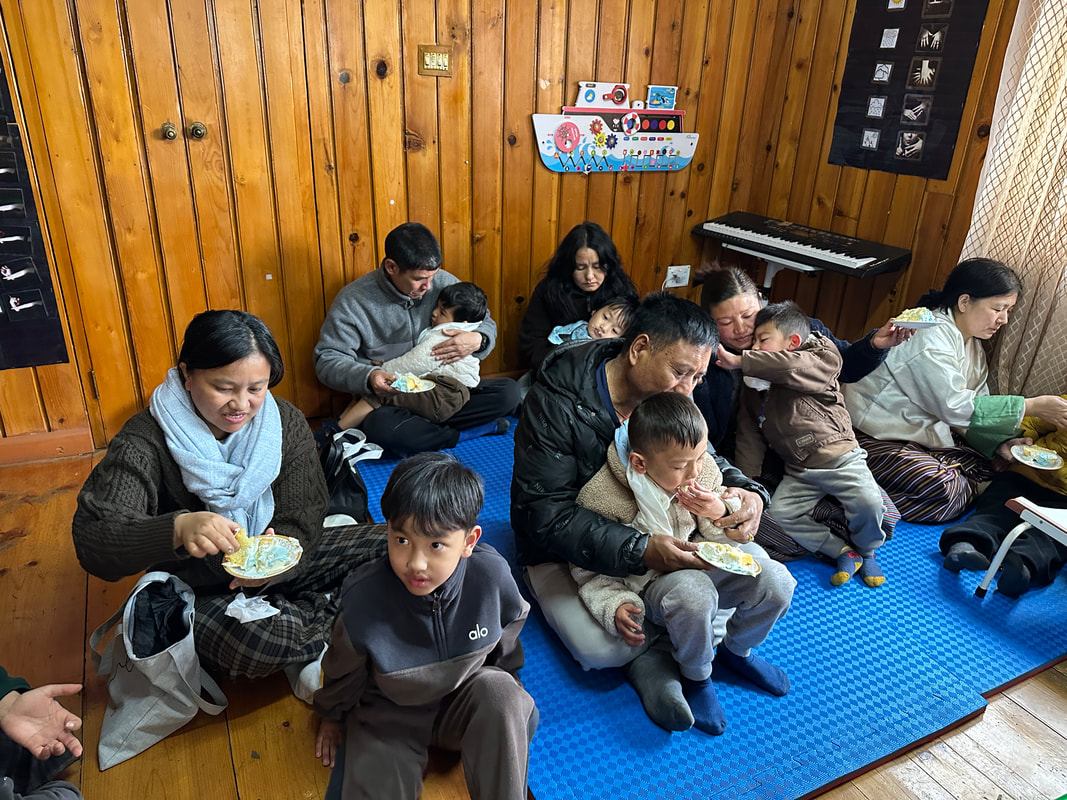
A couple of weeks ago, one of the children with ASD was having a very difficult time at home due to several major changes. These affected him so strongly that he became highly dysregulated. Starting the day already at such an elevated stress level meant that even small triggers in class would upset him, leading to intense meltdowns that lasted a long time and were very difficult to resolve. In addition to crying, he would pinch, hit, and kick others, which made the situation particularly challenging in the classroom. His mother also struggled to calm him. One day at the centre, he experienced an even more intense meltdown than usual during class. The situation escalated further at snack time, when the children went outside to eat. He became increasingly distressed and was unable to calm himself. Neither time in the sensory room nor running on the treadmill had any regulating effect. I was in the physio room and, after hearing him cry for more than five minutes, went to see if I could help. Fortunately, he was willing to come into the physio room. As usual, he would have needed to take off his shoes because of the mats, but this time he refused. Although he clearly wanted to enter and understood the rule, he seemed unable to comply. Since this is typically not an issue for him, I suspected that his feet might have been particularly sensitive that day and that being without shoes felt overwhelming. I knew from previous experience that applying firm pressure to his chest can help him regulate. I stood behind him and placed my hands on his chest, providing deep, steady pressure as used in Qigong massage. This began to calm him slightly, although he still intermittently tried to pinch me, which understandably upset his mother. I chose not to react and continued the deep-pressure input. After about three minutes, he gradually calmed down and stopped crying. I then slowly sat down and held him on my lap, maintaining the deep pressure. With one hand, I gently held his foot and applied slow, firm pressure through his Crocs, as practiced in Qigong massage. After about a minute, I was able to remove his shoe, which he now tolerated, as his sensitivity had decreased. I then guided his mother to do the same with the other foot. She also began tapping his legs rhythmically from the hips down to the feet, which further supported his regulation. Throughout the process, we spoke to him in a calm and soothing manner. After about ten minutes, he appeared significantly more settled, and we were able to move into the physio room. There, he began playing with the marble run—which, interestingly, is still in use since the Down Syndrome Day activities. His mother then asked if they could have their snack in the physio room, as he seemed much calmer there and she was concerned that leaving the space might trigger another escalation. I agreed. However, he initially struggled to sit still and repeatedly got up and wandered around. I again applied gentle, firm pressure to his chest while sitting with him, and we offered him his snack. With this support, he was able to remain seated, relax, and focus on eating. This experience once again demonstrated to me how effective Qigong massage techniques can be in helping children regulate when they feel overwhelmed in their bodies and highly stressed. His mother was also amazed at how much these interventions helped him calm down and how successfully snack time concluded. For those interested—whether professionals or parents—here is a link to further information and training in Qigong massage: https://www.qsti.org/ Last Saturday, we celebrated World Down Syndrome Day. To mark the occasion, all children and their parents were invited to a special programme at ABS. The main event of the day was a medical camp conducted by Project DANTAK. DANTAK is a major initiative of India’s Border Roads Organisation (BRO), established in 1961 in collaboration with Bhutan to develop infrastructure across the country. While it is best known for building roads, the Paro Airport, and supporting hydropower projects, it also organises medical camps for different communities. For this event, their team carried out general medical and dental check-ups for all the children, and they were even able to provide minor treatments on site when needed. 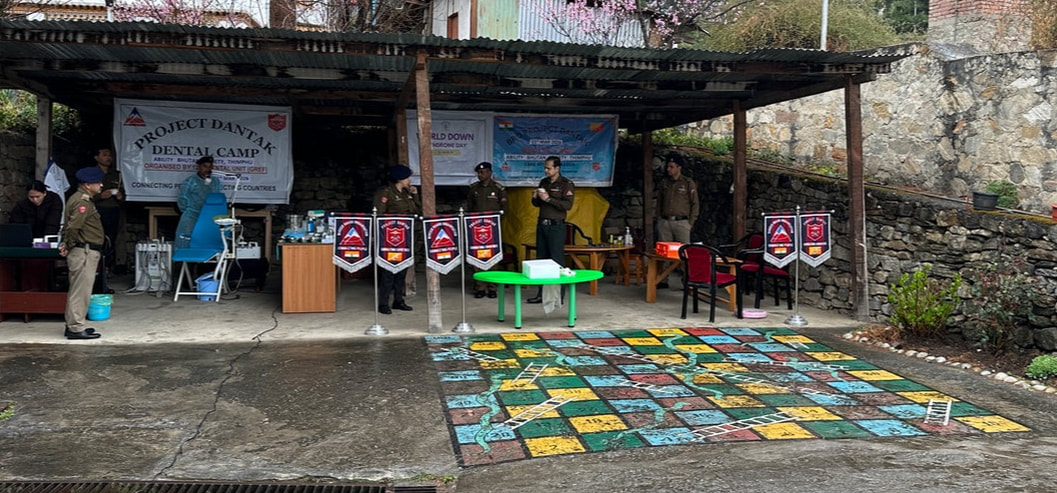 The day began with a small opening ceremony. The Executive Director of ABS and the Chief Officer of DANTAK both gave short speeches of appreciation. Afterwards, two children with Down syndrome from ABS had the honour of cutting the celebration cake. Many participants were dressed in blue and yellow, the colours associated with World Down Syndrome Day, which created a festive and unified atmosphere. Following the opening, the programme began. The children were called one by one for their check-ups. While waiting, they could either attend a music class or join activities upstairs in the conference room, where I led a session. In my room, I introduced parents and children to different forms of innate rhythmic movements. I explained their importance for development and demonstrated how parents can incorporate them into everyday routines. In another room, a social worker and I had set up a marble run for the children. Many of them enjoyed playing with it. I had expected it to fall apart fairly quickly, as it was not very stable, but I was pleasantly surprised to see that it remained intact until the end of the day. The children handled it with great care—even when the marbles got stuck, they did not pull at the structure but tried to resolve the problem gently. Once families had completed the check-ups, they were offered lunch before heading home. After the programme ended and everything was tidied up, the staff also shared a meal together.
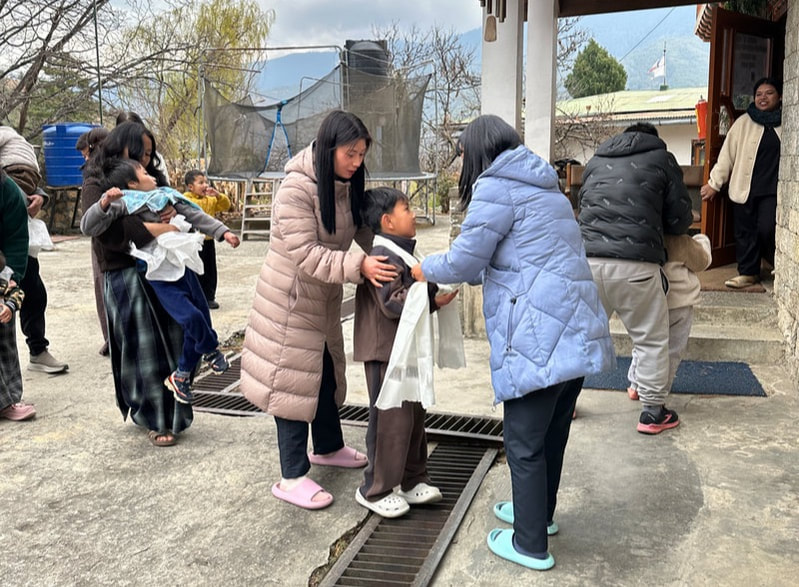
At the beginning of March the children returned after a three-month winter break. It was wonderful to see some familiar faces again and to welcome several new ones. A few of the children have now transitioned to school and are taking part in a SEN (Special Educational Needs) programme, which is a big step for them. The first day back had a festive atmosphere. Each child was welcomed to ABS with a traditional scarf, and afterwards we all shared a welcome cake together. Over the past two weeks I’ve had the chance to get to know the new children a little better. Last Friday I also held two teaching sessions for parents on Qigong massage—one in the morning and one in the afternoon. Now that the parents have learned the basics, we will start practicing the massage with the children this week. I’m very happy to have more therapy sessions again. A three-month winter break is quite long, and this can be noticeable in therapy. Some of the children have regressed a little during this time. Many families spent the winter in other districts visiting relatives or going on pilgrimage, so they were unable to come to therapy regularly. For the few families who stayed in Thimphu, I offered therapy sessions during the break, but only a small number made use of the opportunity. The encouraging part is that children usually regain their skills quickly. Even after just two weeks, many of them are already catching up again.
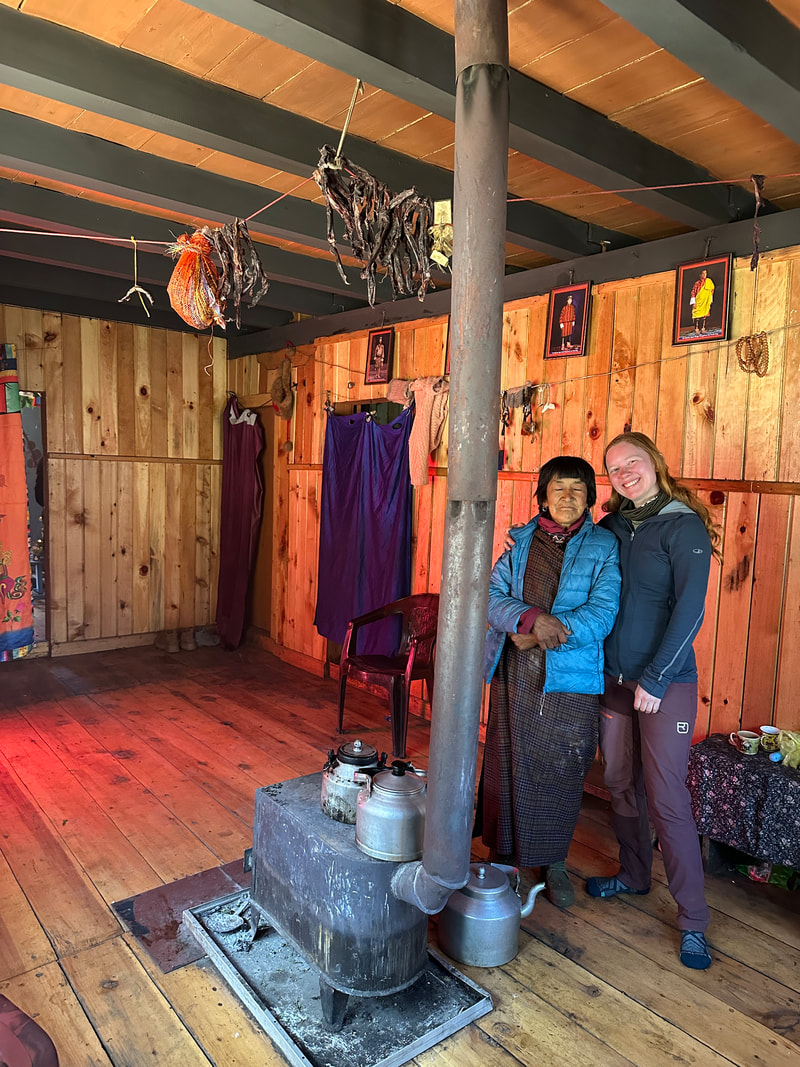
During my trek to Jomolhari Base Camp we came across a yak-herding family living at about 4,000 meters altitude. They kindly invited us into their home for tea. They served us suja (butter tea) made with yak butter. The tea was very nourishing but had quite a strong taste. After one cup I had basically had enough, but they insisted we drink a little more, so we did, along with some biscuits and zao (puffed rice). The woman of the house told our guide many things about their life, which he then translated for me. They live there year-round, and about once a month someone travels all the way down to Paro to buy essential food and other necessities. Very little grows at that altitude, so most supplies must be purchased and carried up by horses.
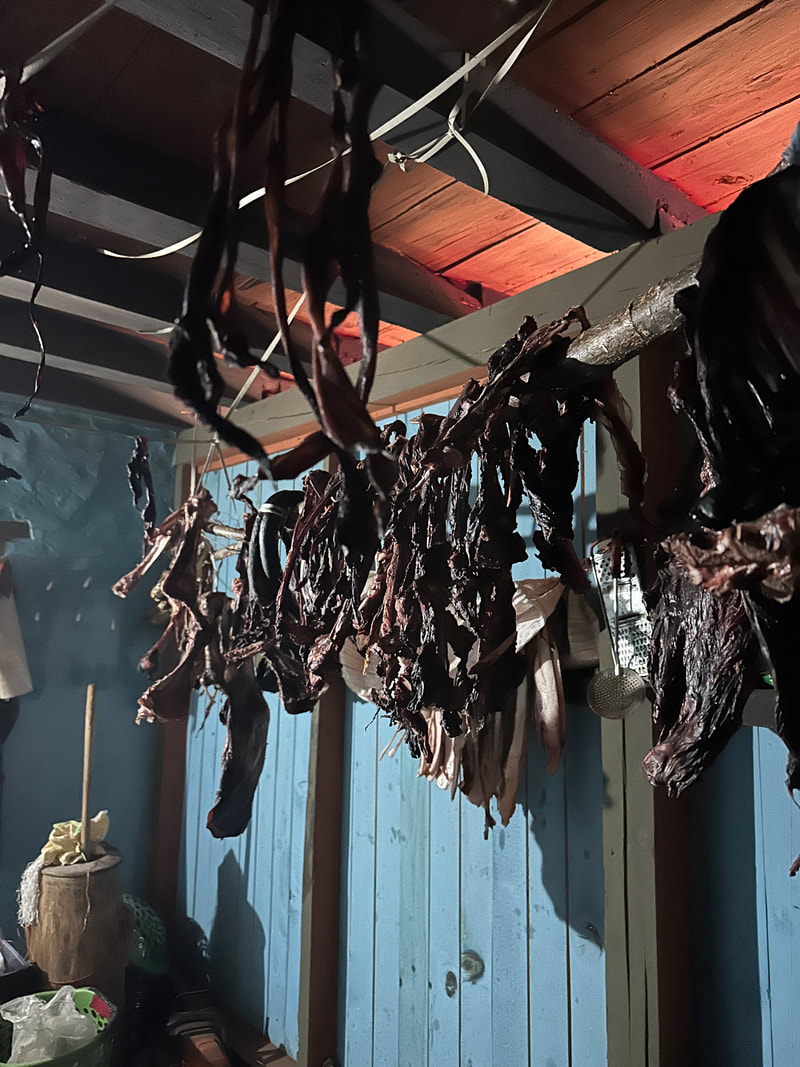
The family mainly lives from yak products such as cheese, butter, and milk, which they sell. In addition, each household is allowed to send three members to collect cordyceps, a valuable fungus that can be sold for a good price because of its reputed health benefits. Nowadays they no longer slaughter yaks for meat. However, if an animal dies from a fall or is killed by a snow leopard, they collect the meat and dry it for several months so it can be preserved. 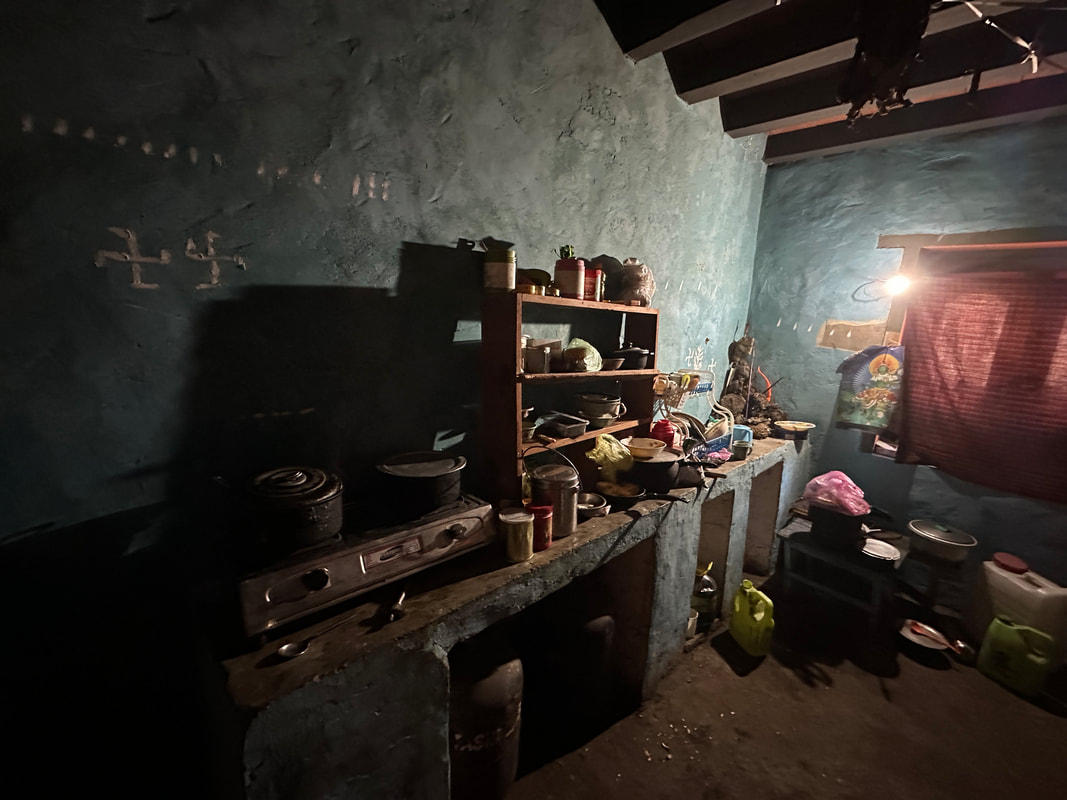 They even showed us the different rooms of their house, which was very interesting. The kitchen was quite dark, lit only by a small and rather weak light source. Dried meat hung from the ceiling, and in another corner they had piled up yak dung, which they use as fuel because there are no trees at this altitude and therefore almost no wood available for fires. I did not stay long in the kitchen because it was extremely cold. In fact, the whole house is cold. The only heating source is a wood stove in the living room. Even in the single sleeping room, where more than seven family members sleep, there is no heating—only warm blankets. Because of this, some of them sleep in the living room near the stove. The only other room in the house serves as a prayer room, with a small but beautiful altar.
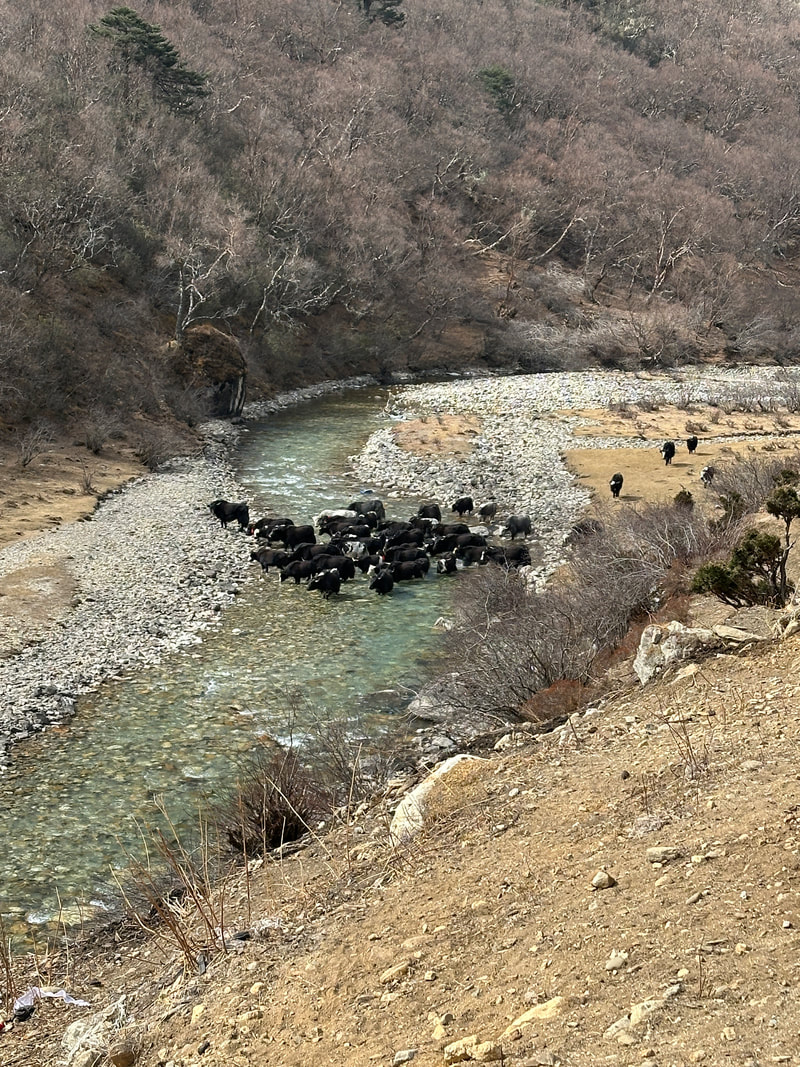
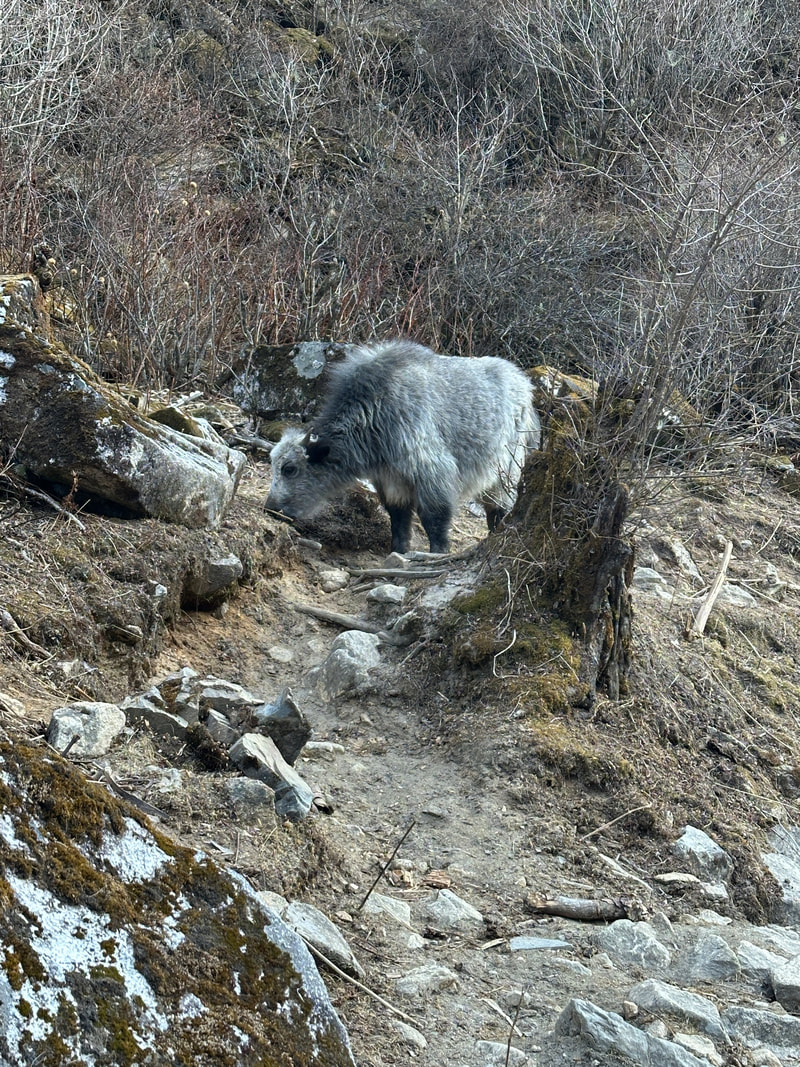
Every day they take their 40 yaks out to graze in the meadows and gather them again in the evening. Some of the animals return by themselves, but many do not. Since the yaks are not kept behind fences, the family must call for them and go out to collect them in the evenings. Many families in the area actually own more than 100 yaks. In this remote and scattered mountain settlement there is a primary school, which the family’s eight-year-old son attends. Every day he walks about half an hour to reach it. Their older daughter has to attend a boarding school in Paro, as there are no further schooling options nearby. Their eldest son is a monk and spends most of his time living in his monastery. It is a tough life—simple, physically demanding, and lived in a harsh mountain environment. 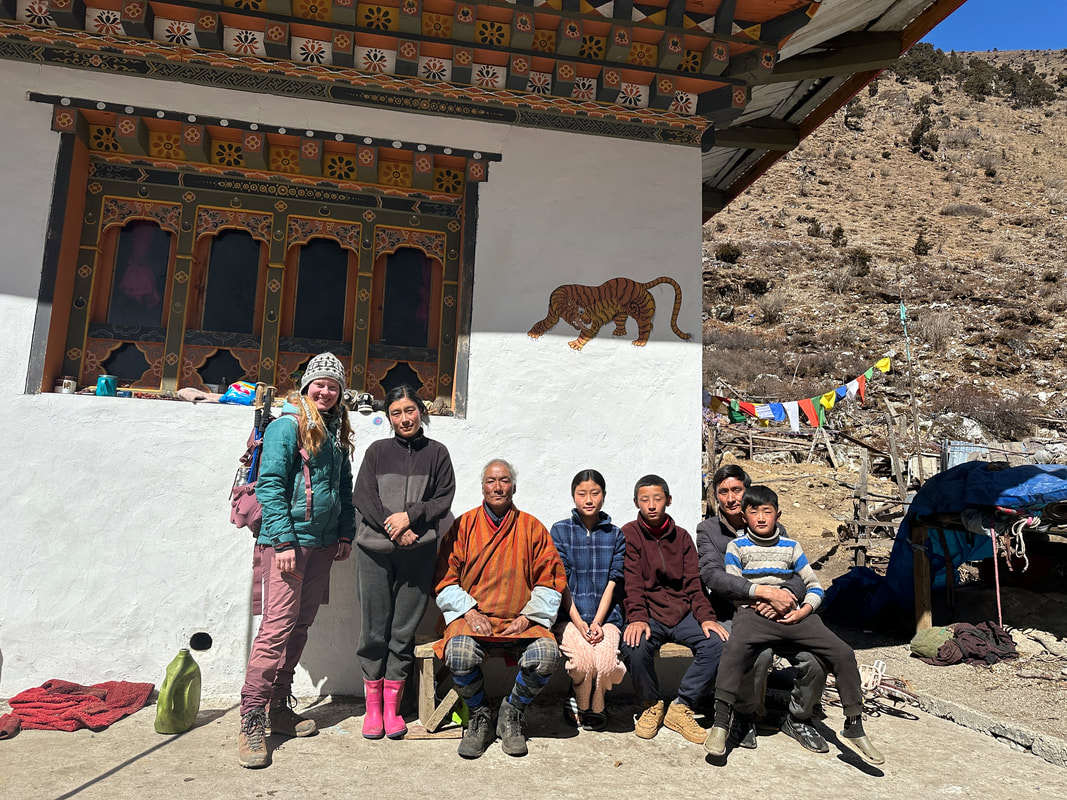 As public holidays for Losar and the King’s Birthday were coming up, I decided to use the time to go on a trek. I joined a five-day journey with Himalayan Unique Travels to the base camp of Mount Jomolhari, the second-highest mountain in Bhutan at 7,326 meters. Jomolhari means “Goddess Mountain,” believed to be the abode of a protective female deity. Before mountaineering above 6,000 meters was prohibited in 2003, there were a few attempts to reach the summit, but none succeeded. We began on 18 February in Shana with our small crew: a guide, cook, assistant, horseman with one mule and five horses, and me. The animals carried our luggage, food, and tents while we hiked along the Paro River through forests draped in moss and lichens. About thirty minutes before reaching camp, we caught our first glimpse of Jomolhari—its snow-covered peak rising magnificently in the distance. After 21 kilometers, we arrived at Thangthangkha Camp (3,594 m). Dinner that evening exceeded all expectations: vegetable soup, red rice, fried beef with broccoli, ema datshi, eggplant datshi, and an apple for dessert—more delicious than many restaurant meals in town. Afterward, I introduced UNO to the crew. Four of us played for over an hour, laughing and enjoying the simple joy of being together. The next day we climbed to Jomolhari Base Camp at 4,100 meters, leaving the trees behind. Along the way we saw many yaks and were invited into the home of a yak-herding family. At base camp, we lunched with a direct view of the mountain. Later, hiking further up the valley to about 4,300 meters, I felt as if I could almost touch the peak—yet it still towered more than 3,000 meters above us. The scale felt unreal. Evenings were filled with delicious meals—once even momos—UNO games, and shared laughter. The night sky was breathtaking: no artificial light, countless stars. But at –15°C, I couldn’t stay outside long and was always grateful for my sleeping bag. On day three, I woke early to watch sunrise gild Jomolhari in gold. After breakfast, we hiked to Bongteyla Pass (4,900 m), passing twin lakes that reminded me of Switzerland—the first lakes I had seen in Bhutan. We spotted wild blue sheep near the pass, though no snow leopard appeared. The final ascent left me breathless but without altitude sickness. The wind and cold on the pass were intense, yet I loved it. The following day we descended 28 kilometers back the way we had come. Snow began to fall, filling me with childlike joy—it hadn’t snowed in Thimphu all winter. While my Achilles tendons began to ache from the long descent and cold, the beauty of the snowfall distracted me. That evening, the crew lit a bonfire, and for once we felt truly warm. On the final morning, we returned to Shana and said our goodbyes. Though we had shared only five days, the adventure created a strong bond. We even decided to form an UNO group and meet again at my place to stay in touch. Being out in nature like this fills me with peace, energy, and gratitude. I felt deeply alive, constantly in awe of nature’s magnificence and raw power. Traveling with such a caring team made all the difference. I am truly thankful for this experience—and I hope it won’t be my last trek in Bhutan. When I visited the families in Punakha a week ago, I was determined to see one particular young woman again, even though my schedule didn’t allow me to revisit the other three cases. She was the one I had written about in a previous blog post, when I left the therapy session feeling frustrated because I hadn’t achieved much. Her extensor tone was so high that I simply couldn’t reduce it. Since then, I completed an online course that gave me new tools to better address her hypertonicity and understand her movement patterns. The course focused on primitive reflex integration. With this new knowledge, I now recognize how strongly retained primitive reflexes still shape her movements—reflexes that would normally become dormant after early infancy. This means her body is repeatedly triggered by stimuli and has little chance to move differently. One example is the Tonic Labyrinthine Reflex (TLR): whenever she extends her head, her entire body shifts into an extension pattern. Her Spinal Galant Reflex is also still active, causing lateral flexion of the spine. This likely contributes, among other factors, to her severe scoliosis. Because she lies in bed most of the day, constant stimulation along her spine repeatedly activates this reflex, increasing muscle tension and reinforcing the scoliotic pattern. This time, however, I felt intrigued rather than powerless. The course gave me a new lens through which to see her condition and a deeper understanding of the underlying mechanisms. Research suggests that innate rhythmic movements can help lay the foundation for later reflex integration exercises and calm an overactive nervous system, thereby reducing hypertonicity. During the session, I taught her mother four variations of innate rhythmic movements from the course. As the young woman is older, progress may take time, but we now have a concrete tool to support her. Even during that short session, I sensed that her body responded more positively than before and relaxed intermittently. I hope to visit the family again in Punakha to continue the therapy. Perhaps, step by step, we can achieve meaningful progress.  Last week I continued my project in Punakha and visited 8 of the 11 gewogs (communities), working with 25 families. This time, we also met many elderly people with disabilities. Some of them had developed remarkably practical and creative ways of coping with their limitations. One encounter that stayed with me was with a 93-year-old man who had lost the use of his legs due to an illness 23 years ago. The family no longer knows exactly what the illness was. Despite this, he had found a way to remain mobile. In this environment, wheelchairs are simply not practical, as door thresholds are often more than 20 cm high. Instead, the family devised another solution. He still has good use of his arms and moves by pushing himself along the floor in a seated position. To prevent his skin from being constantly injured, they made a leather seat for him to sit on. He holds this piece of leather in place with a string between his teeth so that he does not slide off while using both hands to move forward. In this way, he can enter the house, reach his room, and even move outside to the place where he spends most of his day sitting. Through this improvised solution, he has managed to stay mobile and avoid being confined to his bed.
In another family, the situation was quite different. They had not found a creative solution, so the daughter lifted her elderly mother every day from the bed into the wheelchair and then back again in the evening. This placed a great physical strain on her, as her mother weighs considerably more than she does. While the men in the family work in the fields and the children attend school, the middle-aged daughter is alone at home with her mother throughout the day and is responsible for all her care. When I offered to show her a way to help her mother transfer into the wheelchair without lifting, she was very open to learning. She told us that her mother had fallen more than ten years ago and broken her leg, and since then she has not been able to walk. As a result, she uses a wheelchair—fortunately, their house is much more suitable for wheelchair use than many others in the area. The main difficulty is transferring her into and out of the wheelchair. When I first demonstrated the transfer technique, I was slightly nervous about whether it would work safely. There was a risk of the mother losing balance and falling, especially because the bed was significantly higher than the wheelchair. We therefore had to find a way to raise the height of the mother’s feet and used a narrow piece of wood we found outside. In addition, the wheelchair brakes were no longer very reliable, and despite having someone translate for me, there was still a language barrier. The circumstances were far from ideal—but we decided to try. I first had the daughter practise the movement with me, so she could get a feel for the technique with someone who could react if something went wrong. She then practised with a heavier man before I allowed her to try it with her mother. I was astonished at how quickly she understood the concept of the transfer and how well she managed it the very first time with her mother. I felt a great sense of relief. Before beginning, I checked whether the mother was still able to bear some weight on her legs, as this would be an important resource during the transfer. Once we established that she could still take some weight—despite being unable to stand fully—she was highly motivated to practise. Using kinaesthetic techniques, the daughter was then able to help her mother into the wheelchair without lifting her weight at all. She was visibly astonished and deeply grateful, and the mother appreciated it just as much, as being carried had never been comfortable for her.  About a month ago, I visited several children and young adults with disabilities in the community of the Gup (local leader) of Punakha. We are now planning to extend this project to other parts of Punakha. Another development that had a significant impact was that, during my stay there in December, the Gup mobilised a journalist to write about the lives of families caring for people with disabilities and the challenges they face. Since then, two articles have been published. The first appeared about three weeks ago, and the second was published just a few days ago. Here is an excerpt from the second article: “Before dawn breaks in Punakha, 37-year-old Kinzang Wangdi is already awake, preparing for another day that leaves little room for rest. By the time the village stirs, he has bathed and fed his 16-year-old daughter, who lives with cerebral palsy, before setting off to earn the day’s wages that sustain a family of five. … For Kinzang Wangdi, there is no clear line between work and caregiving, only an unbroken routine shaped by responsibility, exhaustion, and quiet resolve. … ‘In rural areas, families like ours are quietly left behind,’ Kinzang Wangdi says. ‘I have never received support from anyone, and I do not expect I ever will. But that does not mean I will stop caring for my daughter.’ Across the country, caregivers of children and adults with cerebral palsy rely largely on family labour, sporadic charity, and personal sacrifice. Specialised healthcare services remain concentrated in urban centres, physiotherapy is scarce outside referral hospitals, and community-based support systems are almost non-existent.” After the first article was published, an anonymous donor contacted the family featured in the story and donated a substantial amount of money to support their child. The article had described how the mother cannot stay at home to care for her daughter with cerebral palsy because she needs to earn money to support the family. As a result, the grandmother has been the primary caregiver for the girl. Following the publication of the second article, more people have contacted the Gup to ask how they can financially support these families. This response is very encouraging. Through these articles, the families are becoming more visible, and people are beginning to understand how difficult it is to provide for an entire family while simultaneously caring around the clock for a person with a disability—especially in a country where care centres for children with disabilities are extremely scarce.  Here is the link to the article: https://kuenselonline.com/news/cerebral-palsy-care-out-of-reach-for-rural-families Last week I had only a handful of therapy sessions, as several were cancelled due to children being ill. This gave me more time to work on the project proposals. In addition, I am currently taking a very interesting online course on innate rhythmic movements and primitive reflex integration. The course focuses on the foundations of development and has an impact across many different fields. I am very excited to start working with the children using these newly learned tools as soon as they are back. This weekend, I spent a couple of hours at Dochula Pass, one of my favourite places. It has a remarkable sense of calm and beauty, with views of the high Himalayan mountains, many of which rise above 7,000 meters. Dochula Pass is not just a scenic viewpoint; it functions as a ritual landscape, combining memorial architecture, Buddhist symbolism, and the lived experience of travel through Bhutan’s mountains. That mix of remembrance, devotion, and nature is what gives it its distinctive calm and emotional depth. There are 108 white shortens (stupas) arranged in a circular order. They commemorate Bhutanese soldiers who died in a military operation in southern Bhutan and also symbolize Buddhist concepts of purification and merit. At the moment, there is hardly any therapy taking place, as most of the children are on winter vacation and visiting their families in other parts of Bhutan. During this time, I am therefore working on another major project. The parents find the therapy I am providing here very valuable and have already asked whether there is any possibility of continuing therapy at ABS after I leave next summer.
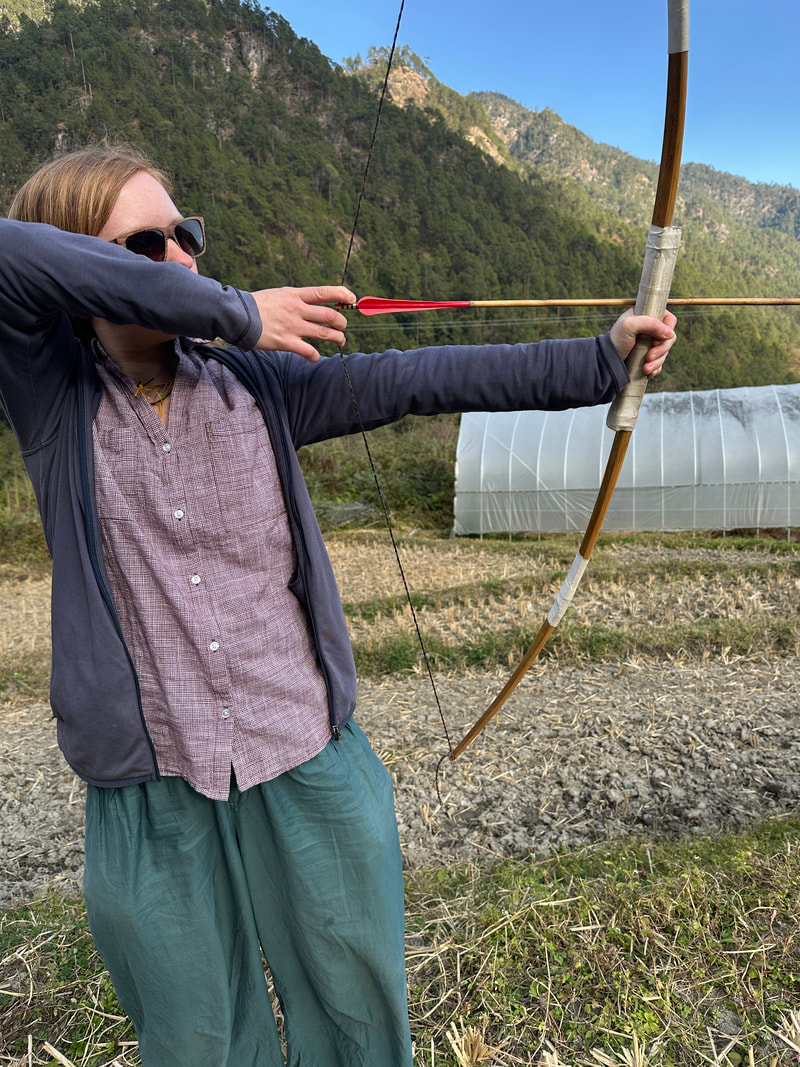
At present, apart from me, ABS only employs social workers. I agree with the parents that it would be far more sustainable to find a way for ABS to continue offering therapy at the centre on a long-term basis. For this reason, I am using this quieter period to discuss with the management team what options exist to integrate therapy as a permanent service at ABS, even after my volunteer placement ends. Initially, the management suggested that this discussion could wait for a few months and that there was no urgency. However, I have already realised that establishing such a service is very time-consuming and requires a great deal of work. There are many challenges to address, and project approvals take a long time, with strict timelines that must be followed. The main challenge is the severe shortage of therapists in the country. In total, there are fewer than 100 physiotherapists and physiotherapy technicians in Bhutan, only four occupational therapists, and fewer than ten speech therapists—serving a population of around 800,000 people. Even if funding were available to hire a therapist, finding a suitable professional would therefore be extremely difficult. For this reason, I am exploring different approaches and speaking with a wide range of people to gather ideas and assess their feasibility, as I am still becoming familiar with the local system. In the meantime, several concrete ideas have emerged, and I am currently drafting a number of project proposals to submit for potential funding. 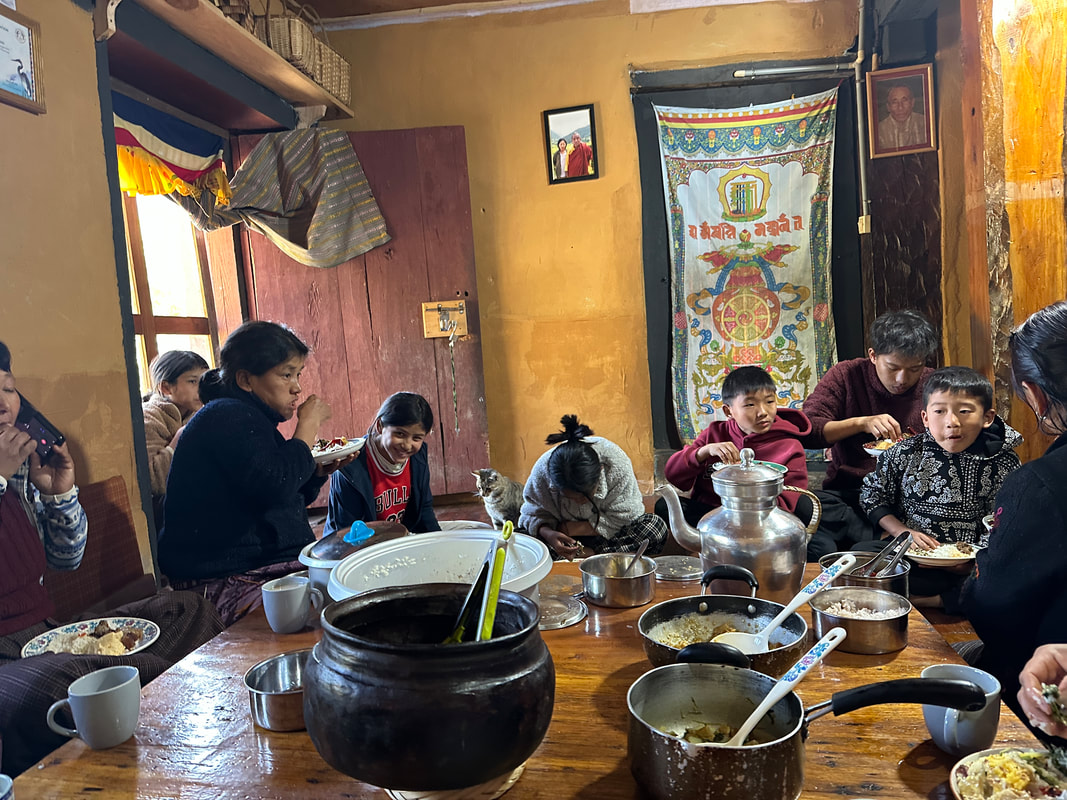 On 2 January, I was invited by my new friends from Punakha to celebrate Nyilo with their family. Nyilo marks the Bhutanese winter solstice and means “the return of the sun.” It is traditionally celebrated with family gatherings, shared meals, and archery tournaments. The celebrations began the day before with Lolay, when village children go from house to house singing incantations wishing for a prosperous year. In return, villagers offer gifts of food or money. The children collect rice, oil, eggs, meat, vegetables, and other items, which they later use to prepare a picnic and celebrate Nyilo together. That evening, a group of neighborhood children also came to sing for us, and the host filled their bottles with oil and added rice to their containers before they moved on. On Nyilo itself, relatives arrived from Thimphu and others from the village, and we shared lunch together. It was a potluck: each family brought one or two curries, creating a generous buffet of delicious dishes. After eating and chatting, Tsering, the host’s son, took me to the fields to show me traditional archery using a bamboo bow. Since I wasn’t used to it, we practiced at a short distance of about ten meters—far less than the traditional range of 140 meters.
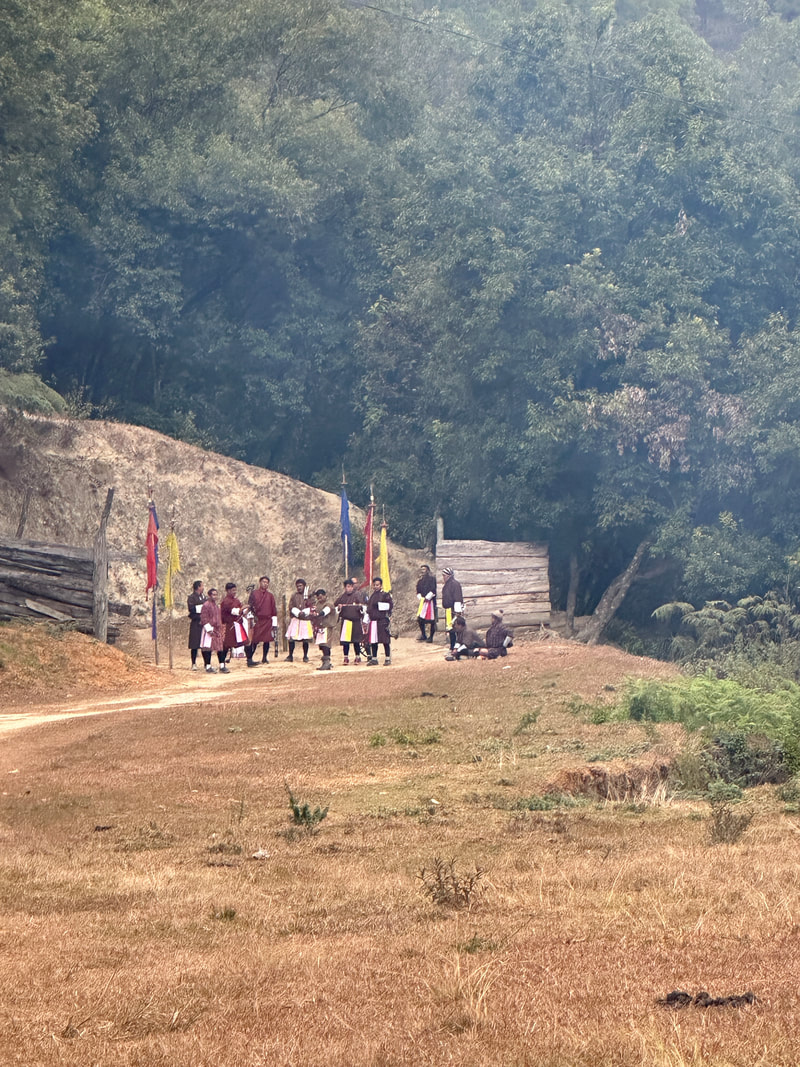
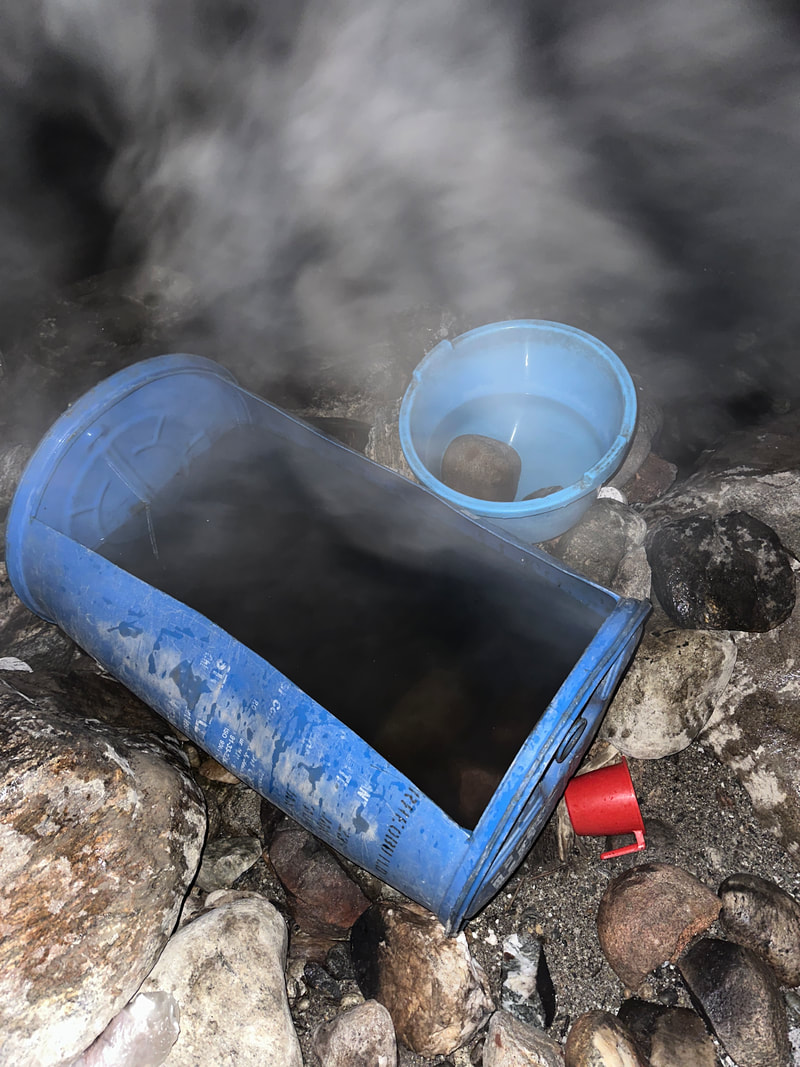
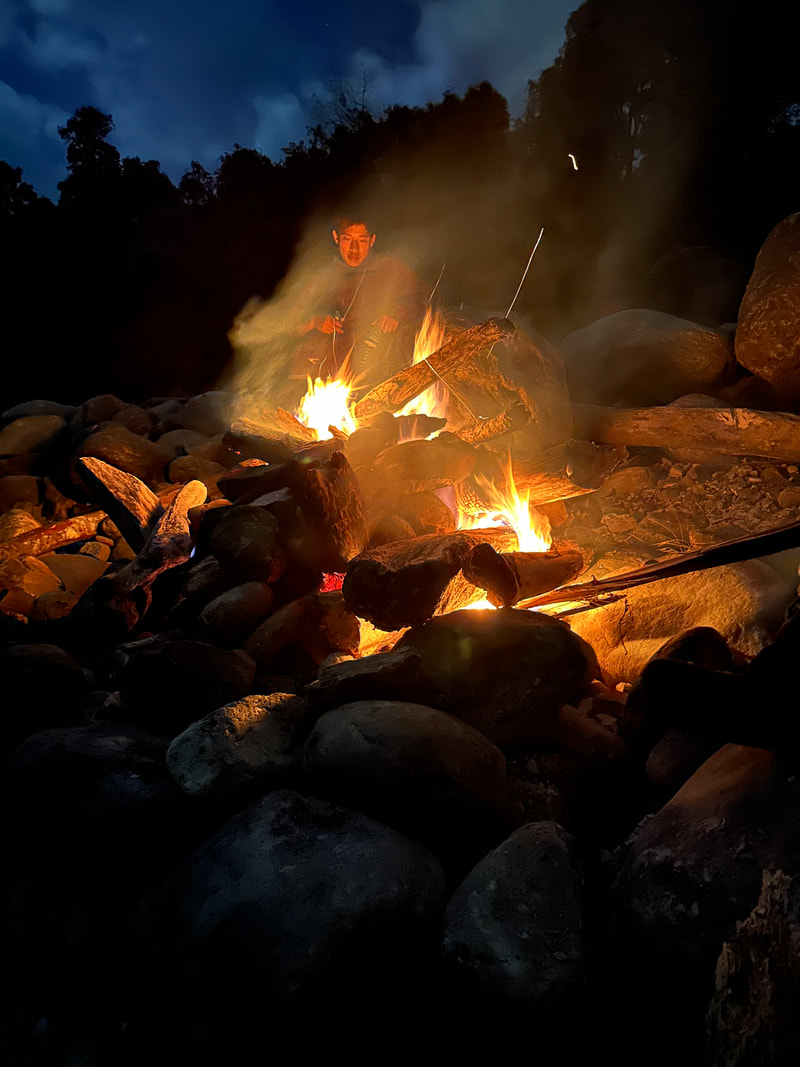
Later, Kinley, the owner of the homestay, took me to watch her husband compete in the tournament. Two targets are placed 140 meters apart, one at each end of the range. After every shot, the opposing team signals whether the arrow hit the small target—about 30 centimeters wide—or missed, often teasing the shooters before retreating behind a barricade. I found this ritual both fascinating and lively. Meanwhile, women gathered along the side of the range, drinking ja oma(milk tea) and eating zao (roasted rice). Some began singing and dancing traditional dances and invited me to join. Without knowing the steps, I simply followed along as best I could. The tournament ended around 5 p.m. as darkness fell, and the home village won—much to Kinley’s husband’s delight. Back at the house, we had dinner, and Tsering had prepared something special for me: a hot stone bath by the river. Sitting in warm river water heated by stones from the fire, listening to the river and watching the bright moon and stars, was deeply relaxing. The bath is also considered medicinal, as minerals are released from the heated stones. It was a perfect way to end a beautiful day spent with Kinley’s family.
Last week, I spent two days doing fieldwork in Punakha. The gup (local leader), whom I had met at the Laya festival, was very eager to support children and young adults with disabilities in his community and invited me to visit if I had time. As work at the office was relatively quiet, I went on Thursday and Friday. This time, the people I visited were older (15–24 years) than the children I usually work with, and the difference was striking. Their bodies were far less able to respond to therapeutic input and needed much more time to adapt — if they could adapt at all. One 24-year-old woman I visited had severe extensor hypertonicity: her body was constantly stretched into hyperextension, with her neck thrown back and her spine arched into a position that would be painful for most of us. My goal during the session was to reduce this tension and bring her into a more flexed, neutral posture. Despite trying many techniques I had learned, I was unable to reduce her tone or even achieve a neutral spine position during the entire hour. Her mother is deeply committed to caring for her daughter but lacks the necessary knowledge. Had the girl received therapy earlier, and had her mother been taught proper positioning instead of keeping her lying flat on the bed, the severe extensor tone might have been prevented. This hyperextension now limits any purposeful movement and has led to pronounced scoliosis. She is not even able to sit independently. While regular therapy could lead to some improvement, she has no access to it. I tried to explain to the mother how to work step by step toward a more neutral position, but without being able to demonstrate it physically, this remained largely theoretical. 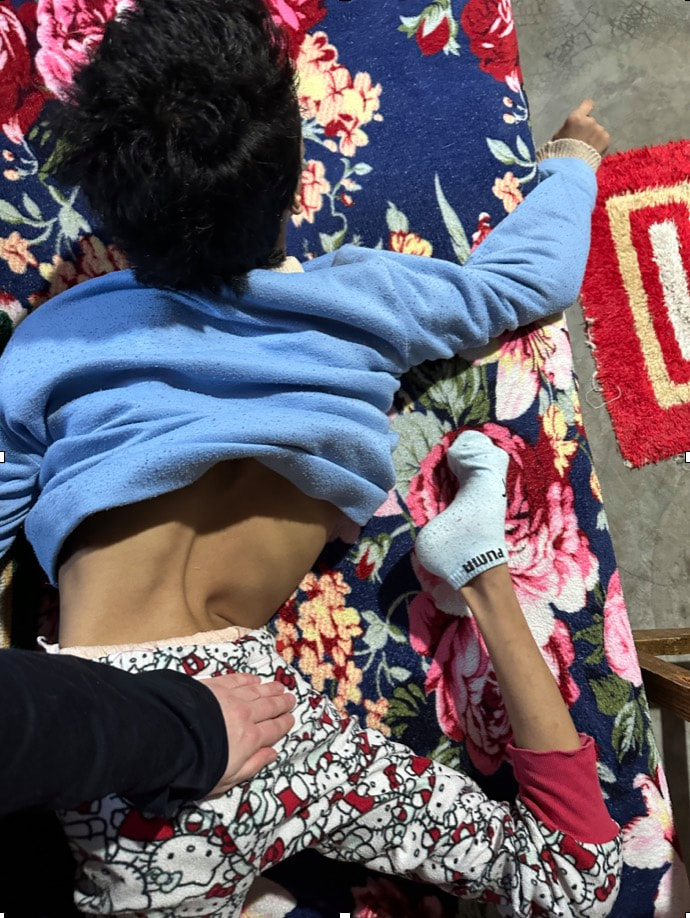 The second visit was to a 19-year-old woman who was able to respond to and adapt to the techniques I showed. In her case, however, the main issue is social rather than physical. Her mother must work to support the family, leaving the grandmother as the primary caregiver. The grandmother openly expressed her exhaustion and even said she would not mind if the girl passed away. This deeply shocked and saddened me. At the same time, I can understand how overwhelming it must be to care for someone with special needs around the clock while struggling to earn enough to survive—especially without external support.
It was encouraging that the gup witnessed these situations firsthand and recognized the need to do more for these families. They urgently need political leaders who are willing to truly understand their realities and offer concrete support, rather than looking away. Finally, stigma remains a serious issue in rural areas. Disabilities are still often explained through karma, with the belief that individuals are being punished for past actions and therefore do not deserve special care. This belief makes life even harder for people with disabilities and their families. 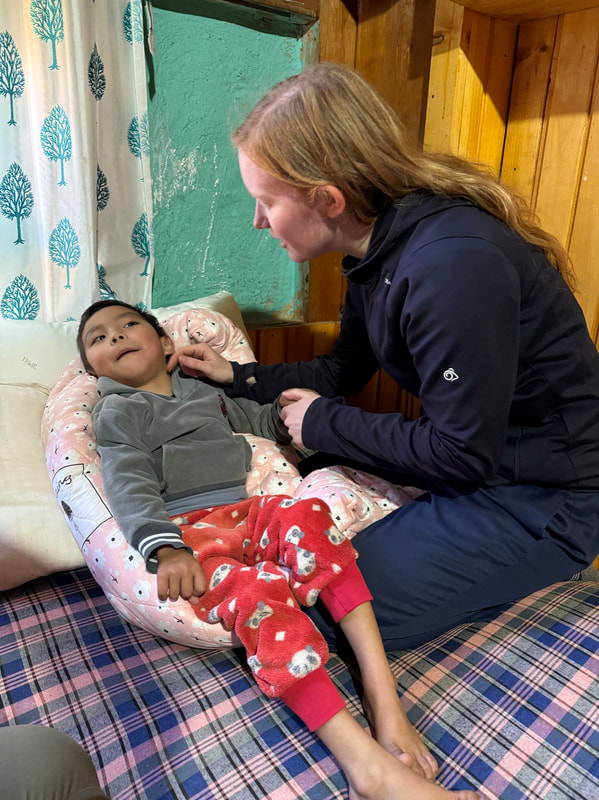 On Friday morning, after arriving in Phobjikha the previous day, we visited one of the two local health-care units to speak with a health-care provider about children with disabilities in the area. He told us about four children—diagnosed with cerebral palsy, autism spectrum disorder, meningitis, and severe speech delay—and we decided to visit them. What we encountered was both deeply moving and profoundly sad. Each of these children showed significant, often hidden potential, yet it is unlikely to be fully realized. Access to therapy is virtually nonexistent, and while the families do everything they can, they simply lack the knowledge and guidance needed to support their children effectively. One moment, in particular, stood out. A young boy with cerebral palsy spends most of his day lying flat on his back on a mat. Because the family had never been shown alternatives, this position had become his default. Over time, it had led to pronounced extensor tone: his entire movement pattern was dominated by extension. Whenever he tried to turn onto his side, he extended his head, trunk, and limbs, making the movement impossible. Turning, of course, requires flexion. To help the father understand this, I asked him to try the same movement himself—extending his head backward and attempting to roll. He looked at me and said, quite simply, “I can’t do it.” That moment made the problem immediately tangible. I then showed him how to support his son into flexion to enable a more active turn and demonstrated alternative positioning while lying on his back. We rolled a blanket into a nest-like support around the boy’s body and positioned him at about a 40-degree angle using cushions. In this position, he became noticeably more active: his knees flexed, he pushed his heels into the floor, and his feet frequently moved from persistent plantar flexion into a more neutral position. When we explored the prone position, we were all astonished. With minimal support to unload his upper body, he began to lift his hips and crawl with his legs. He was clearly delighted—smiling broadly, eager to continue, and reluctant to stop even when both his father and I grew tired from supporting him. When placed on his side to rest, he immediately tried to turn back onto his stomach to keep going. It was as if discovering this new way of experiencing his body—and a means of moving forward, even with assistance—was profoundly meaningful to him. His father watched in fascination as I showed him how to support these movements himself. The grandparents, who had been observing quietly, were visibly moved and close to tears. Their gratitude was palpable. The family has now agreed to come to Thimphu for a month during the winter break specifically to receive therapy and learn how to better support their son. Since the other children will not be present during this period, I will be able to work with him several times a week and make the most of this limited time before he returns home. I am very much looking forward to it. 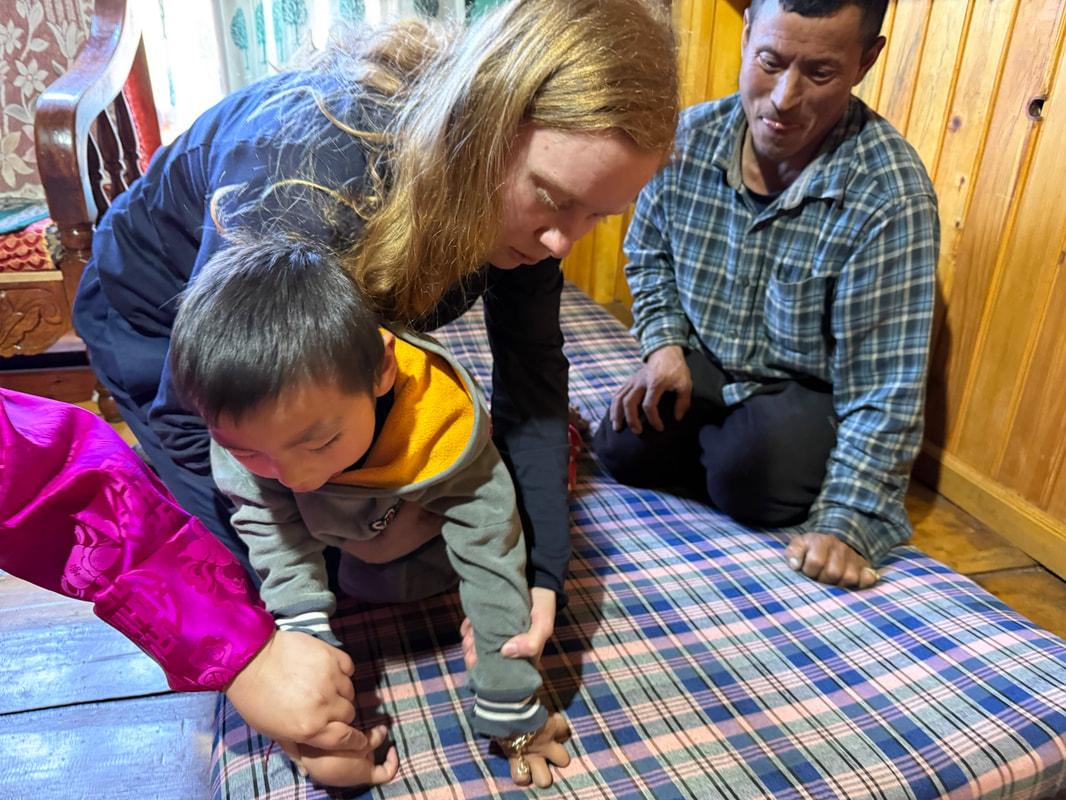 Unfortunately I was sick on the International Day of Persons with Disabilities and missed the programme. But Sumitra, one of the social workers, agreed kindly to write a blog post about her experience during that day. Thank you so much Sumitra : )
The International Day of Persons with Disabilities 2025 was celebrated with great joy, energy, and togetherness at Ability Bhutan Society. This year’s celebration was especially meaningful as it brought together 27 parents and children in an atmosphere filled with laughter, learning, and inclusion. Truly, this time it was more fun than ever before. A Joyful Beginning with Integrated Games The program began with exciting integrated games where both parents and children participated together. Action songs and group dancing in a circle, including popular songs like “Yu Yu Yu” and “If You’re Happy”. The smiles on the children’s faces and the enthusiastic participation of parents made this session truly heartwarming. This was followed by the highlight of this session, The parachute game, which created a beautiful moment of teamwork and shared happiness. Sensory Activity Rooms – Learning Through Play After the group activities, the children were divided into small groups of 5 to 6 children and rotated through four different sensory activity rooms. Each group spent 10 minutes in each room, guided by one dedicated social worker to ensure support, safety, and engagement. The four sensory rooms included: 1. Sensory Bin Play – for tactile exploration and fine motor development 2. Throw Ball Play – for coordination and gross motor skills 3. Foam Play – for sensory stimulation and relaxation 4. Balancing Play – for improving balance and body control These activities were thoughtfully designed to support children’s sensory needs while making learning fun and engaging. Special Experience for Parents, Guardians, and Siblings One dedicated room was set up exclusively for parents, guardians, and siblings. This experiential activity helped them better understand the daily challenges faced by persons with disabilities. Participants wore thick gloves to do beading and were also blindfolded to build a tower using blocks. This powerful activity created deep awareness, empathy, and appreciation for the efforts and strengths of children with disabilities. Celebration Through Dance and Fellowship Following the activities, the joyful energy continued with group dances by parents, adding a beautiful cultural and emotional touch to the celebration. The program concluded with a warm tea and snacks session, allowing everyone to relax, share experiences, and strengthen community bonds. A Day to Remember The celebration of the International Day of Persons with Disabilities 2025 at Ability Bhutan Society was not only fun-filled but also deeply meaningful. It strengthened the bond between children, parents, and professionals while promoting understanding, inclusion, and acceptance. Every smile, every laugh, and every shared moment reminded us that together, we are stronger when we embrace ability in every form. We extend our heartfelt gratitude to all the parents, children, Ms. Eleanor, Ms. Leanna and social workers who made this day a great success. We look forward to creating many more inclusive and joyful moments together. 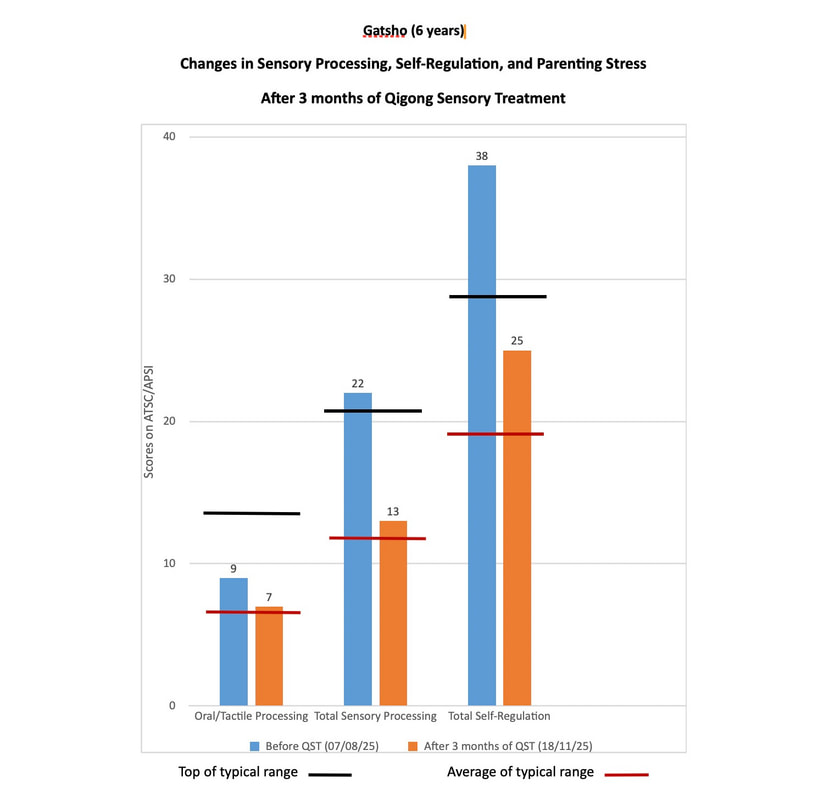 In mid-August 2025, I began Qigong massage therapy with Rigwang Gatsho (six years old, diagnosis ASD) and instructed his father on how to perform the massage at home every day for his son. He has been practicing very diligently, and once a week we also had joint therapy sessions together (Gatsho, his father, and me). Already at the beginning of September, his father told me that the massage was helping a lot and had truly made a difference. From a behavioral perspective at school, there has been significant improvement. He rarely teases the other children anymore, no longer pulls their ears, and no longer makes disturbing vocalizations. He is also less hyperactive, can concentrate better in school, and his language skills have improved. The massage makes him very relaxed, and he sometimes even falls asleep during the therapy sessions. At home, they now do the massage just before bedtime, as he is so calm afterward and sleeps soundly through the night. He also enjoys the massage very much, as he often asks for it. A few days ago, when class had finished and I was speaking with his father, Gatsho said, “Gatsho massage,” meaning that he wanted to come to therapy and receive the Qigong massage. Unfortunately, class time was already over and he had to go home. This clearly shows that the children themselves also notice that the massage is good for them. On the graph, you can see that in the pre-assessment before starting the Qigong massage, his sensory processing and self-regulation scores were above the typical range for children. In the post-assessment, however, he moved into the typical range and close to the average line (the lower the score the better). This is a very positive sign and shows that the massage has helped him greatly. As the winter break will start next week, this term is now coming to an end. This week I had the final therapy sessions with some of the children, as they will be entering school afterward and will no longer attend the ABS center. 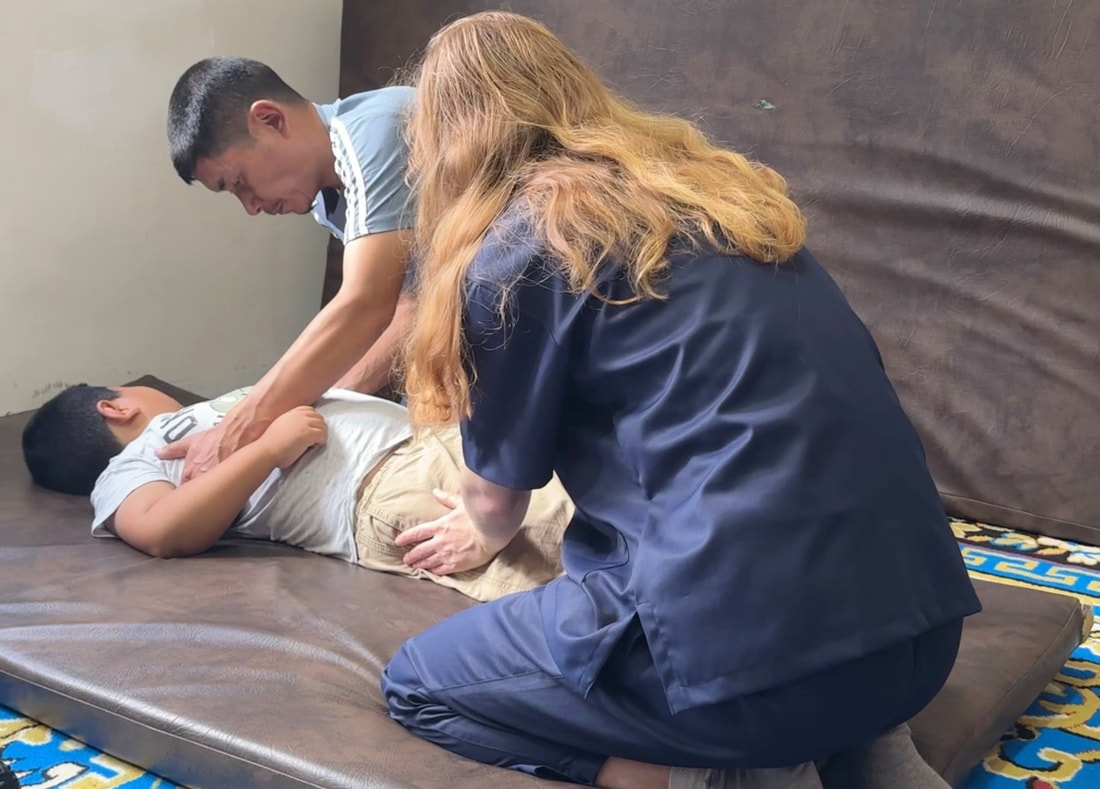 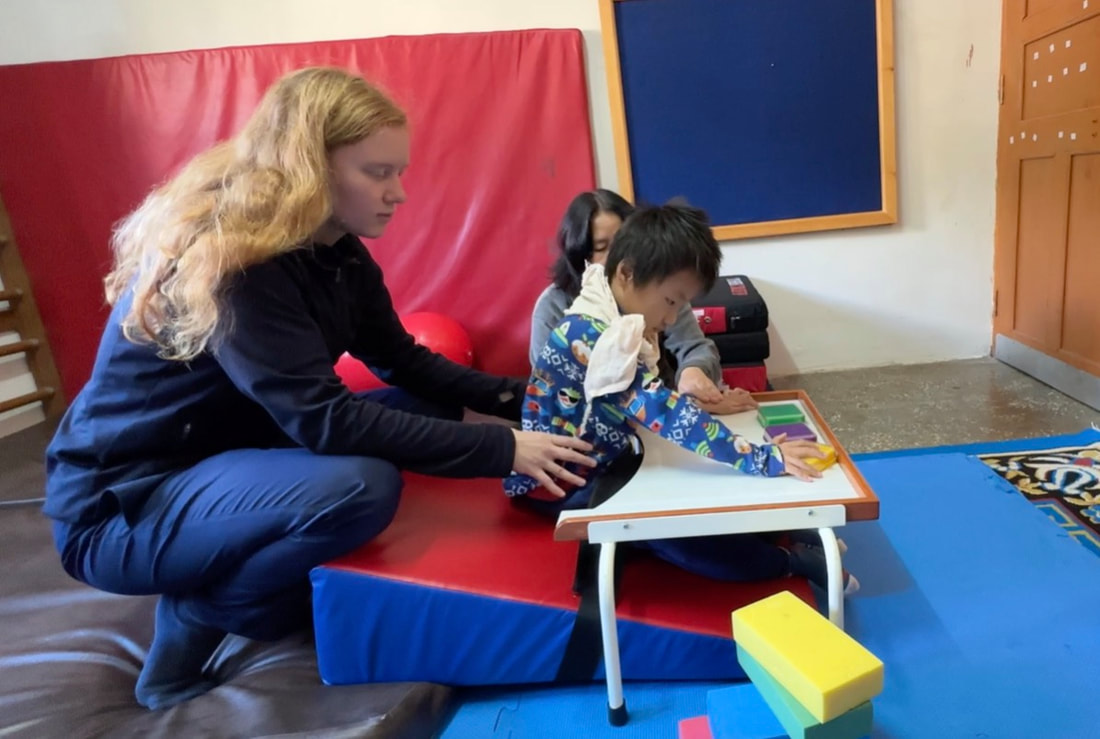
talking buttons to apps like MetaTalk, where they can communicate by tapping on pictograms. I was honestly amazed at how quickly some of the recognised the pictograms and remembered how to navigate through the menus to express their thoughts. Their potential is enormous if they’re given more effective ways to communicate, not only with their parents but also with people who don’t know them well. Communication is so essential, and when we practise with my iPad, some of the children become incredibly motivated and visibly proud to have a tool that finally lets them express themselves. You can really feel how this boosts their sense of self-efficacy — their “Selbstwirksamkeit”.
I’m also trying to figure out better ways for parents to transport their children outside the home. Many families simply carry their children, which works for a while, but as the kids grow older and heavier, it becomes harder and more limiting. Sadly, once many of these young people reach adulthood, they often remain indoors and only leave the house for hospital visits because there is no practical solution for mobility. As I mentioned in an earlier blog post, I’m planning a project in Punakha where I’ll visit families with children and young adults in similar situations and assess what kinds of assistive devices could make a real difference in their daily lives. Once those assessments are done and I have a clear picture of what’s needed, I can start organising the necessary devices using the funds you’ve so generously donated. Thank you so much to everyone who contributed — it truly means a lot! 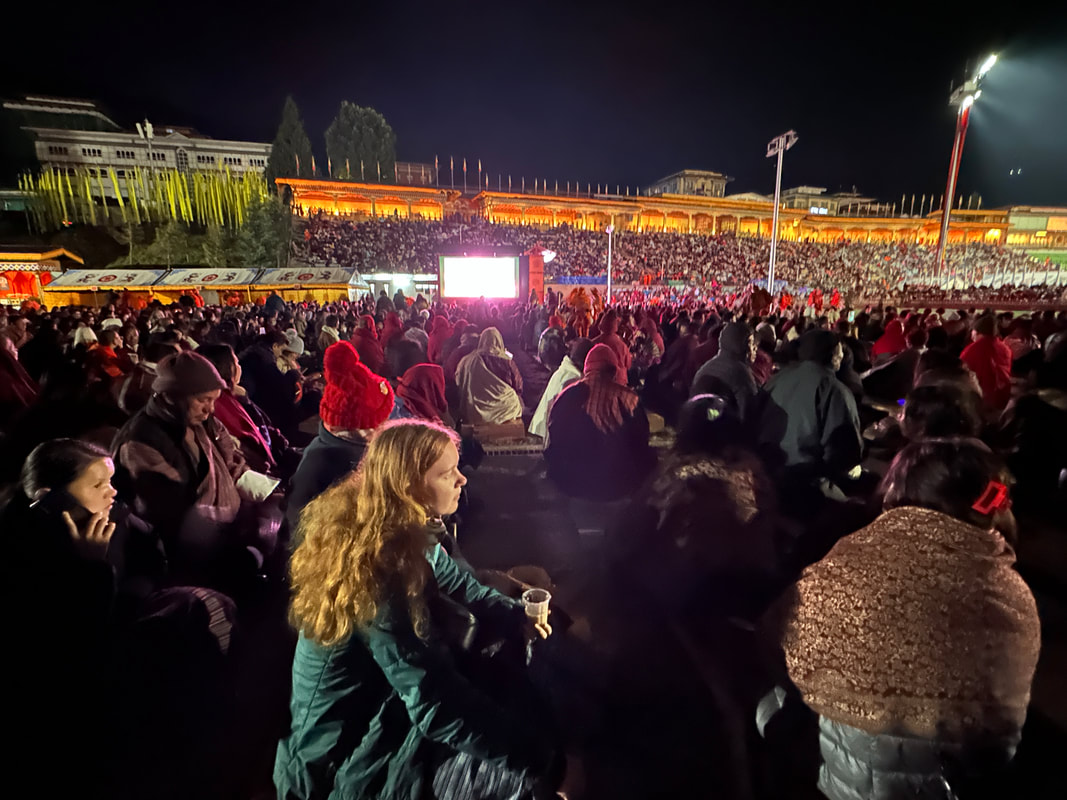 The past few days have felt incredibly auspicious. Alongside the global peace prayers, Bhutan celebrated a major national event: the 70th birthday of the King’s father, former King Jigme Singye Wangchuck — deeply loved for his dedication to the people, the introduction of Gross National Happiness, and guiding Bhutan into democracy. We got up at 3:45 a.m. and put on our kiras so we’d be properly dressed. At 4:30 a.m. we left the house and began walking toward town, hoping to catch a taxi. For a moment I wondered if any taxis even ran at that hour, but thankfully one appeared, and by 5 a.m. we reached the stadium. The front gate was already closed because that section was full, so we were told to enter through the back. There we found a spot on wooden boards on the ground. Unfortunately, we couldn’t see the ceremony directly, only on the big screens. I heard that some people had started queueing the night before just to get good seats. The level of devotion is truly incredible. We waited about four hours for the main ceremony to begin. Early on, volunteers brought us some thukpa (Bhutanese porridge). It was still freezing and pitch-dark, so I was very grateful for the blanket and even the hot water bottle I had brought. I nibbled on a dried plum and offered some to the friendly people sitting next to us, though they only spoke Dzongkha, Sharchopkha, or perhaps another dialect — they didn’t seem to understand the Dzongkha sentences I tried. A little later the man in front of us offered us an entire cucumber, and around lunchtime a family with two girls shared potatoes and chilli salad with us, serving some on a Tupperware lid. This is what I love so deeply about Bhutanese people: their kindness, their openness, and the simple joy they take in sharing something with you — even if only for a moment of connection. Just before 9 a.m., the ceremony began. Their Majesties arrived in a rare and very beautiful Chipdrel procession, performed only for the most special occasions. And because the King’s birthday coincided with the day of the Buddha’s descent, the event carried even more significance. After the flag hoisting and several rituals, the 5th King gave a speech for his father. The Bhutanese around us nodded along, clearly touched. I found myself wishing I understood more — I really need to learn more Dzongkha. By this time, the sun had become intense. After shivering in the early morning cold, we were suddenly trying to shield ourselves from the burning heat. Even though we watched everything on the big screens, it was absolutely worth getting up so early. Being part of the atmosphere, waving the flags, singing with everyone, and just sharing the moment with the Bhutanese made it unforgettable. 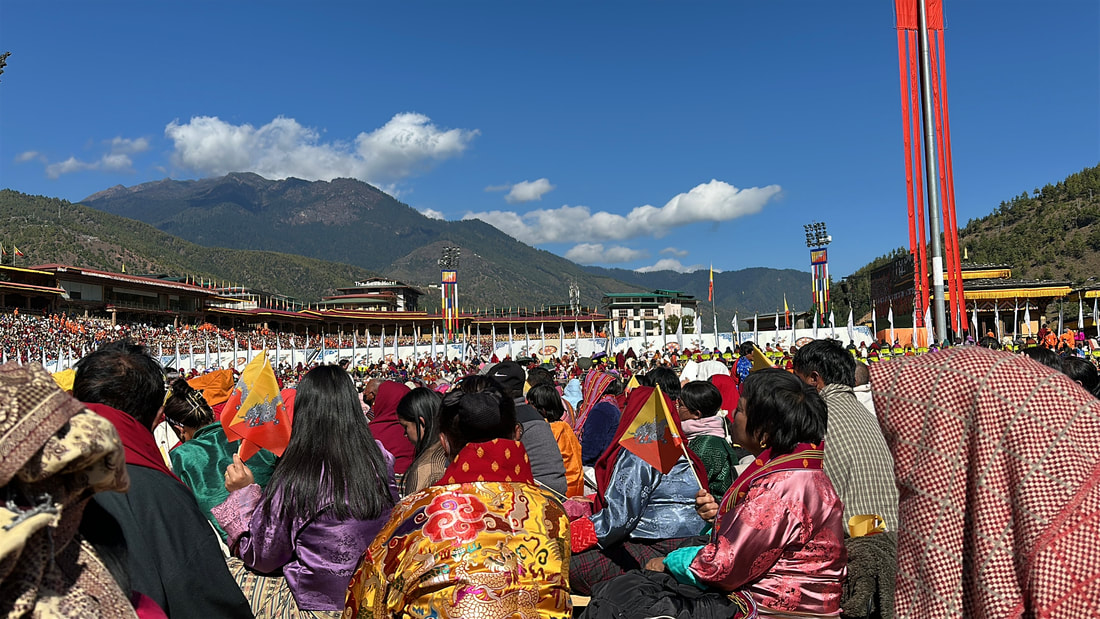 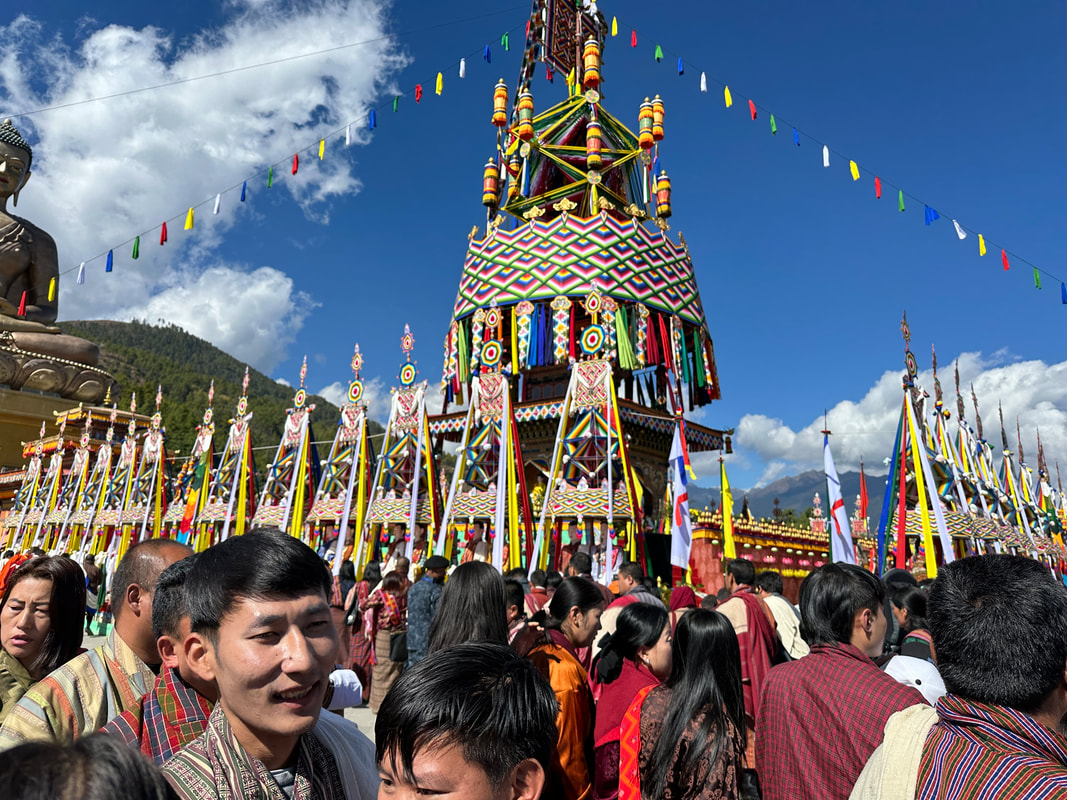 Coinciding with the 4th King’s 70th birthday celebrations, the King of Bhutan initiated global peace prayers in Thimphu from 4–19 November. The purpose is to unite people around the world in a shared aspiration for peace, harmony, and compassion. He called on the nation to “gather the world in prayer… at a time when humanity faces mounting conflict.”
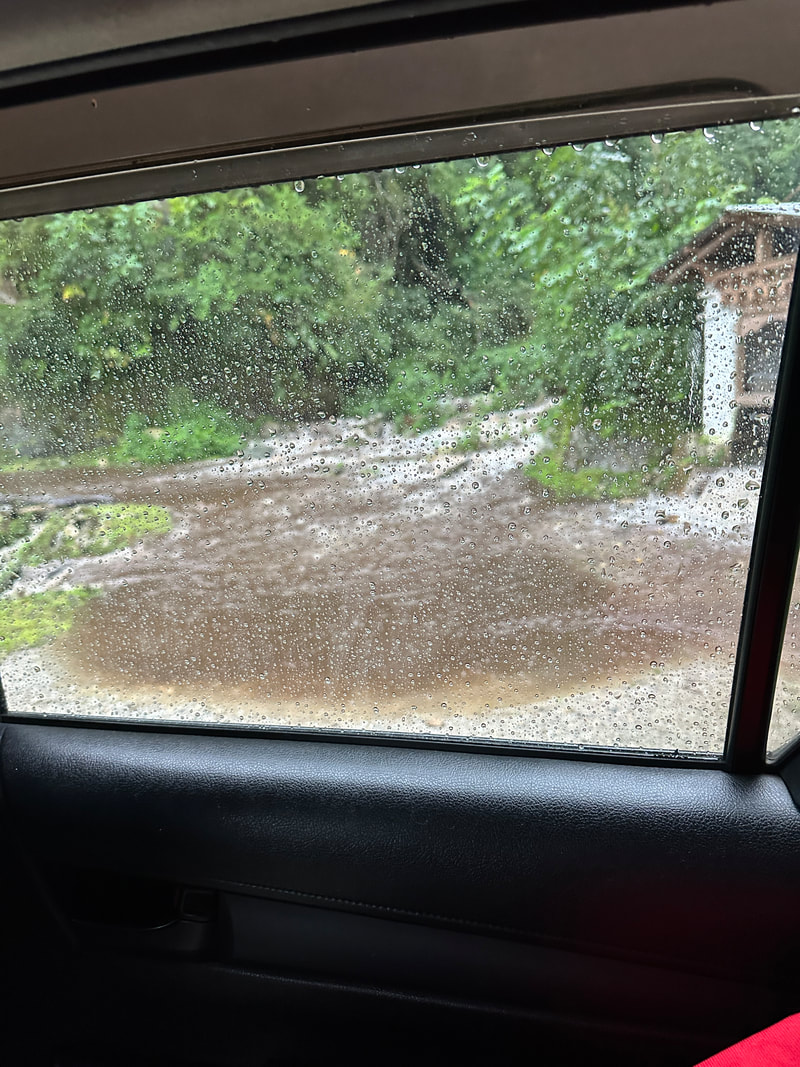
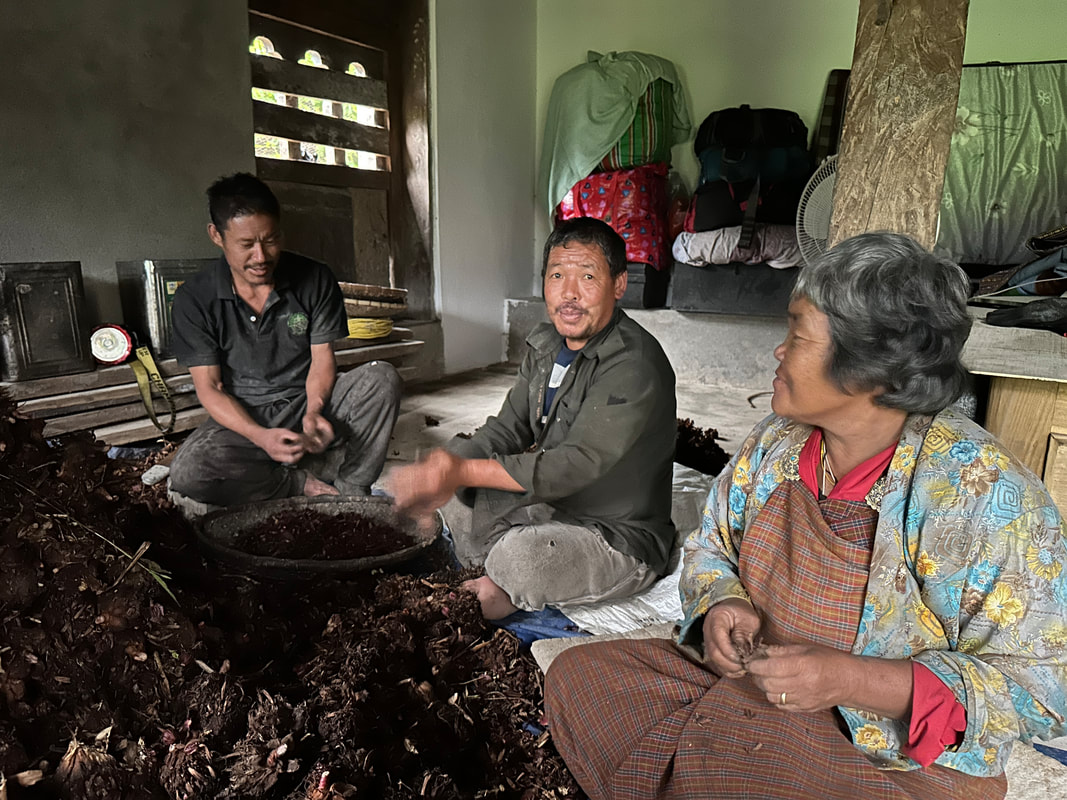
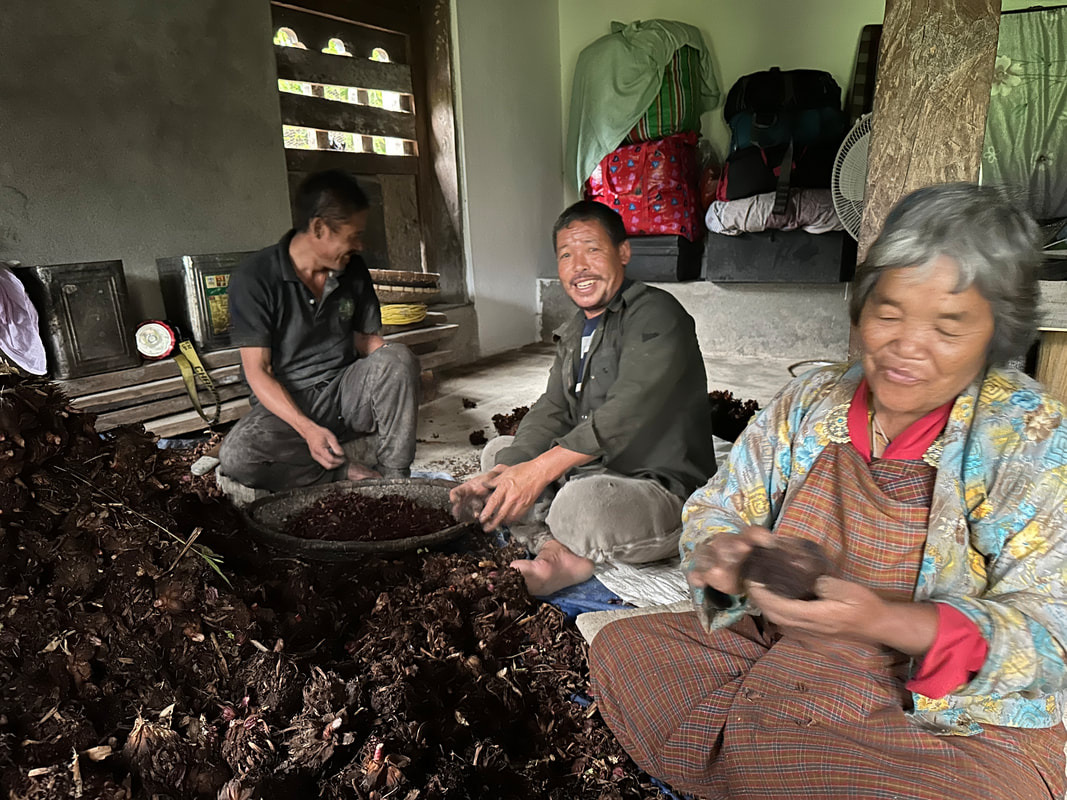
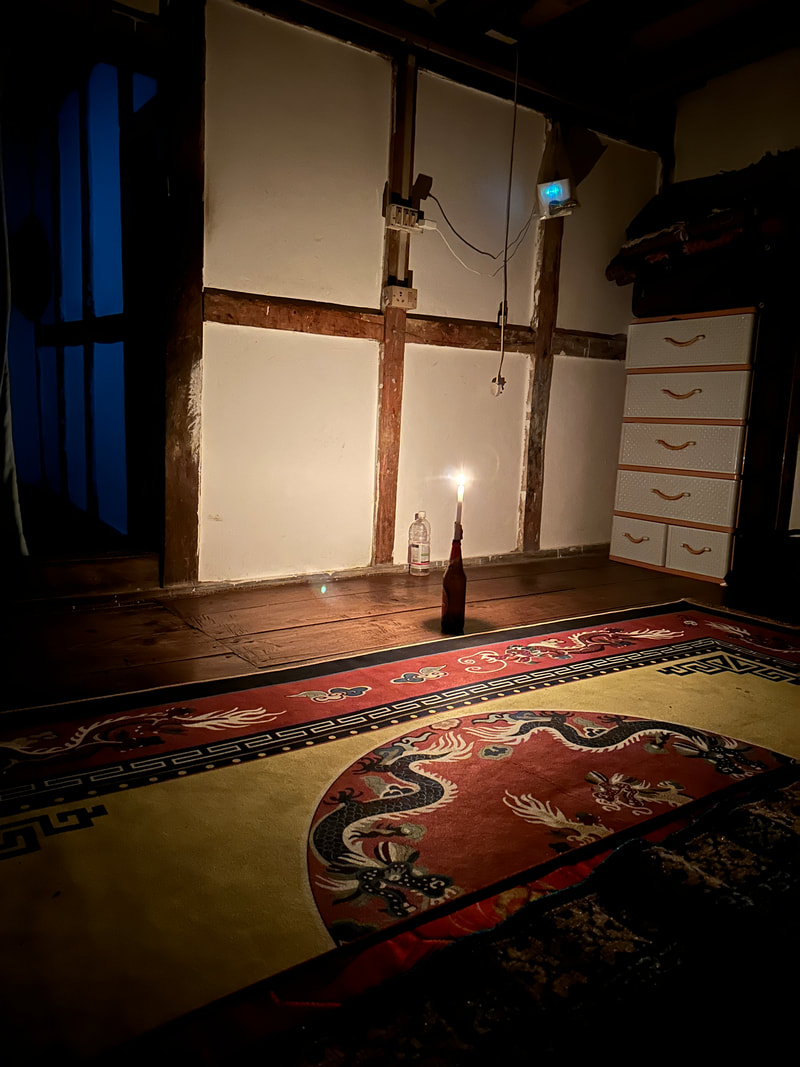
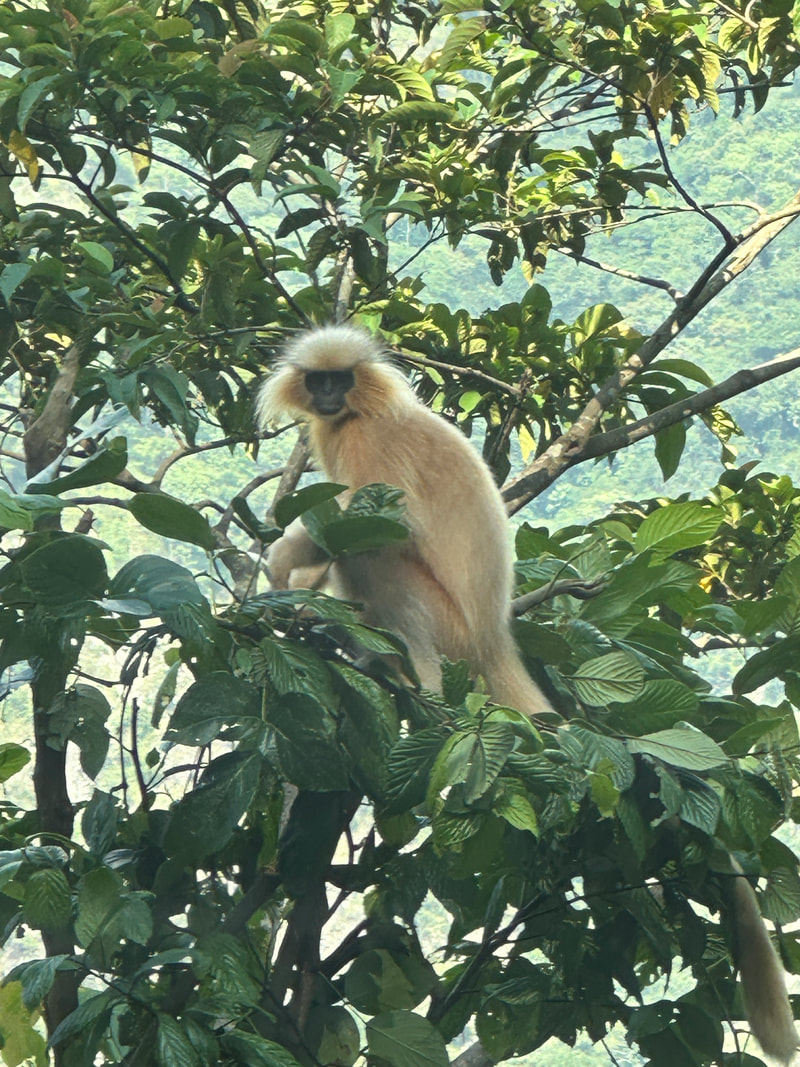
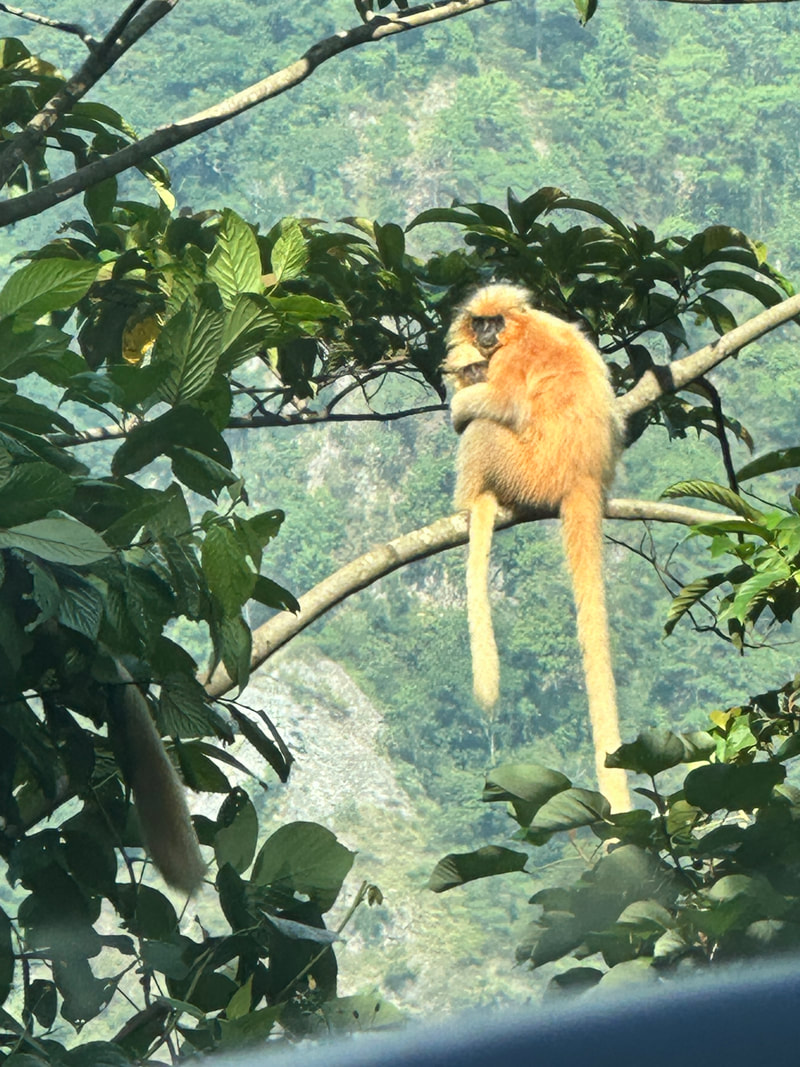
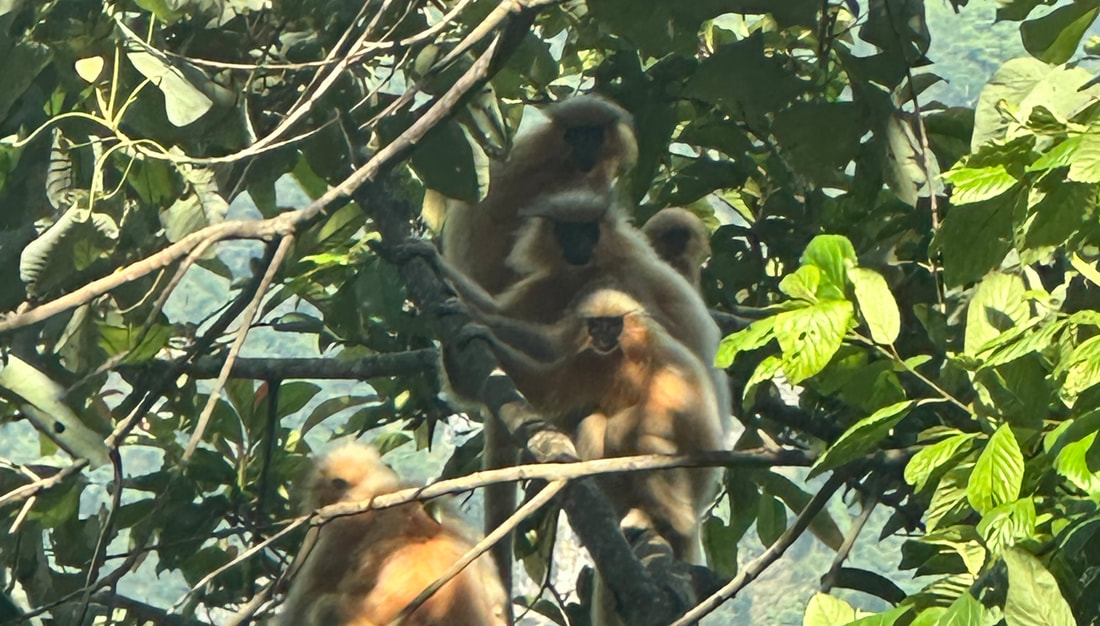
Last Saturday I had the honour of joining my friend from Punakha and his group of officials to attend the global peace prayers at Buddha Point. When we arrived, we saw an incredibly long queue stretching down the road — so many people come from all districts just to receive this blessing. Luckily, since we were special guests, we could drive directly up to the temple and park in the reserved area. We sat in a covered tent, were offered tea and zao (puffed rice), and then it was our turn to approach the ritual site. We went to what I believe is called the mandala ritual tower, surrounded by statues. I noticed people were offering money to each statue — 1, 10, or 20 Ngultrum at a time. I only had large notes and a few hundreds, so at first I was unsure what to do. Then I saw people exchanging big notes for smaller ones by taking the offerings others had left, so I did the same. Like that, I could make my round and offer something to nearly every statue. I was really struck by how devoted people were, and how meaningful the ritual is for them. 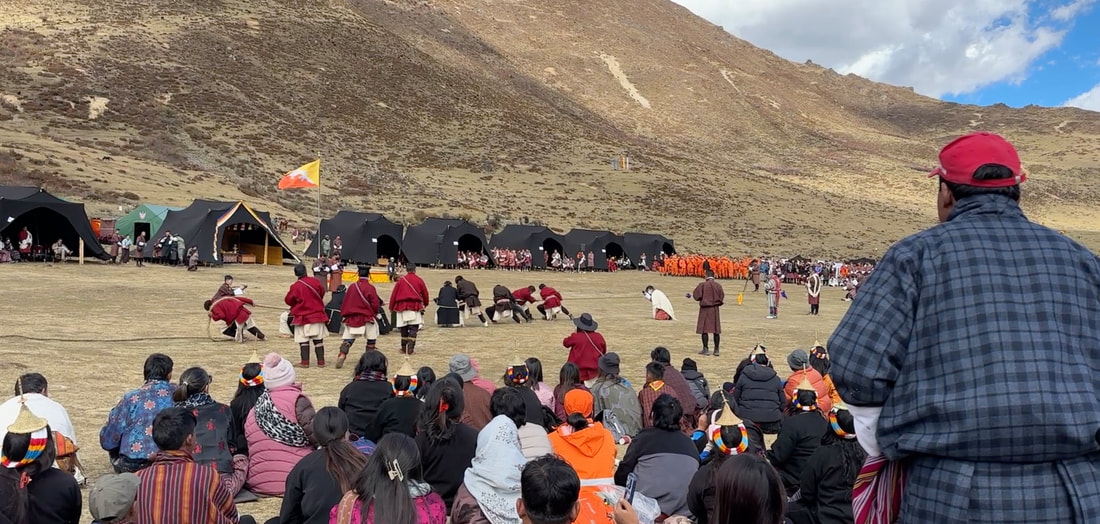 I was really lucky that a Bhutanese friend asked if I wanted to join him for the Royal Highland Festival in Laya — an opportunity I would’ve completely missed otherwise. Getting there was an adventure: one and a half days on the road, ending with two hours on a steep, bumpy gravel track with no barriers, and then a three-hour hike up to Laya at about 4,000 meters. Many people struggled with the altitude — pounding hearts, headaches, the usual symptoms. Reaching Laya was breathtaking. The snow-covered Himalayan peaks towering above 7,000 meters were stunning, and I spent ages just staring at them. They reminded me a bit of the Swiss Alps — only nearly twice as high. The festival itself was fascinating: mask dances, horse races, a 2 km run, tug-of-war, a tombola, and even a fashion-style show of traditional clothing for people aged 50+. Toward the end, there was a parade of yaks, horses, and dogs with traditional music. Around the grounds, many stalls sold Bhutanese handicrafts and food, and in the evenings there were bonfires and concerts at the school campus. During the festival, I also met the community leader of Punakha and had a great conversation with him. He was very interested in supporting children with disabilities in his district, and we agreed to start a project together to visit families and see how we can help. So even my leave from work turned into something meaningful. 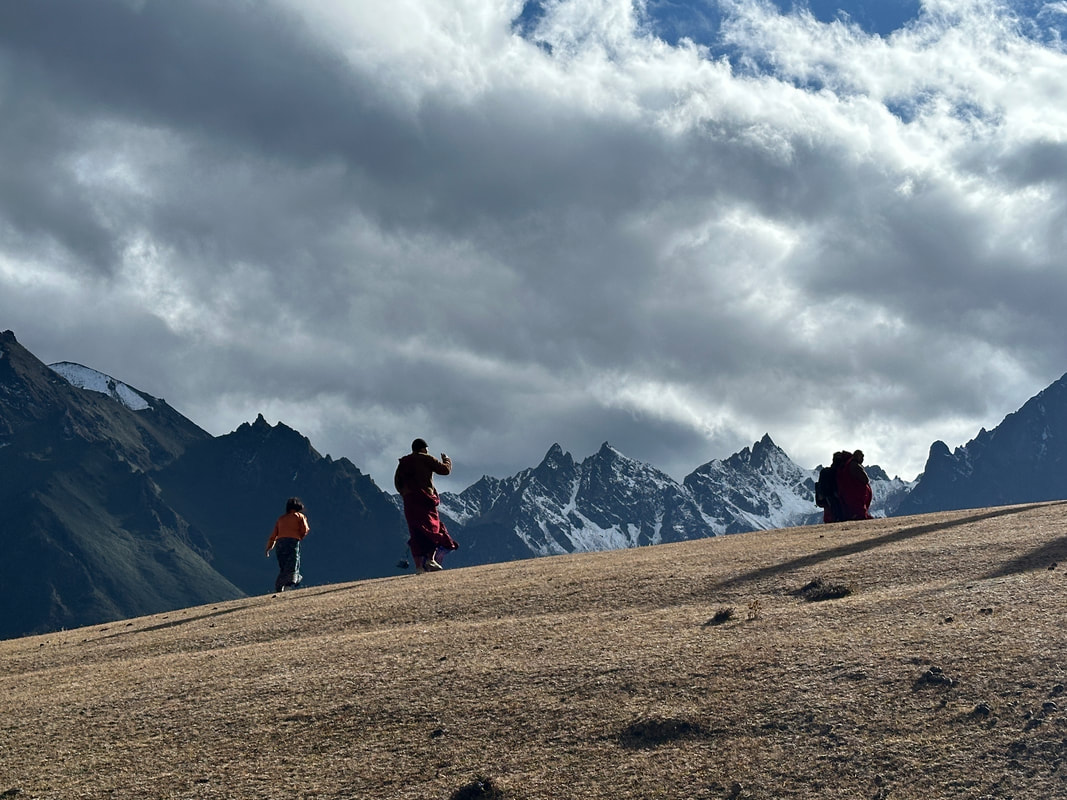 Staying at the home of the audiologist’s wife gave me a real glimpse into village life. It is a simple life, yet people seem happy with what they have and generous in sharing it. Heavy rain during the night prevented us from visiting the next village to see a child with CP—streams had overflowed across the road, making it impassable. Instead, we arranged a video call with the family, but midway the power cut out and did not return until the following day. That afternoon, with the rain pouring and thunder rolling, we stayed indoors. The family was busy separating freshly harvested cardamom, and since I had nothing else to do, I joined in. I enjoyed the rhythm of the work under the sound of the rain. The workers spoke almost no English, just a few words like “madame” or “America,” while I couldn’t understand their dialect. Still, they tried to chat. One man kept asking, “madame… bored?” and I explained as best I could that I wasn’t bored at all—I found the work fascinating. By 5 p.m. it was already getting dark inside. After three hours of cardamom work, I went upstairs, but without electricity the rooms quickly grew dim. The project manager suggested finding candles, so we set off to nearby shops. The first two had none, though one offered us Ara, the local grain spirit. We declined at first but later accepted a small sip at another shop, where I was quickly offered apple juice instead. At last we found the last pack of candles in stock, along with some toilet paper. By then night had fallen. Using torches, we made our way back through dark lanes where stray dogs barked and blocked our path, forcing us to take a detour. After nearly an hour we reached the house safely. That evening, everyone gathered in the living room by candlelight, talking and enjoying freshly harvested corn—a memorable close to a long day. 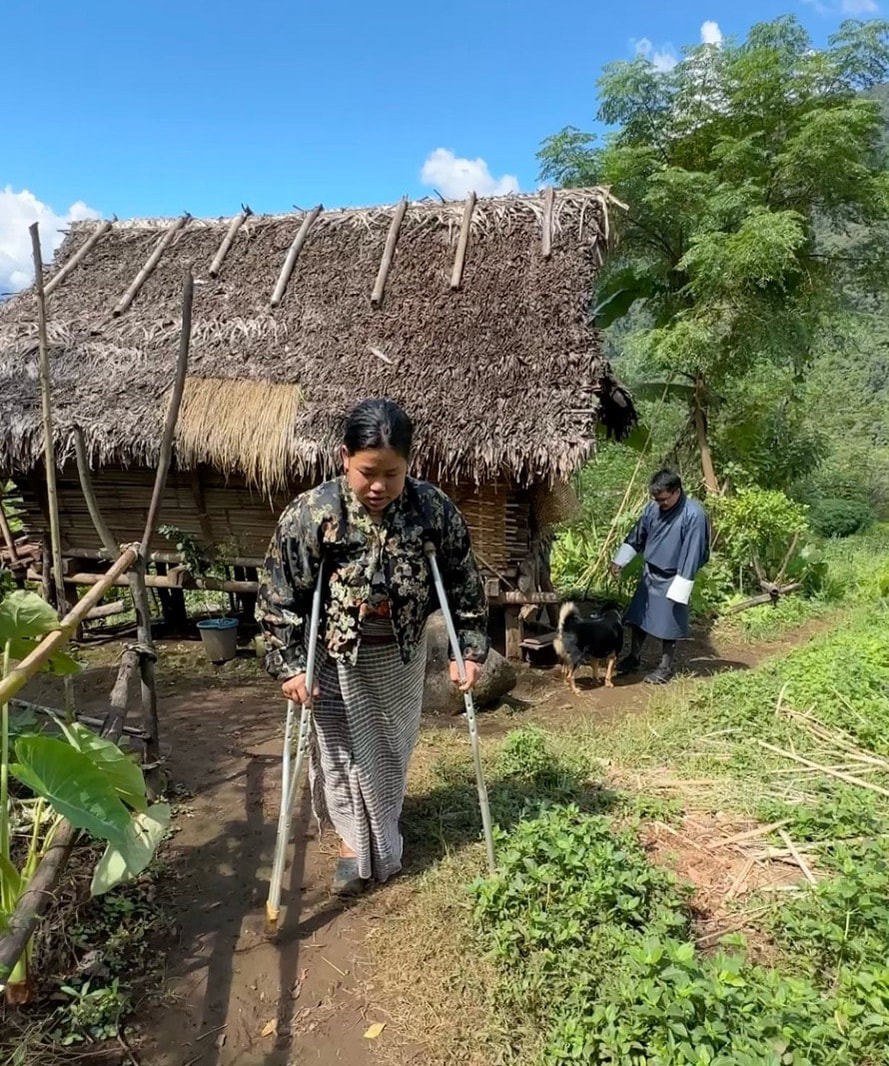 During our fieldwork in Zhemgang I was struck by how children live in remote areas, and I now better understand why many families of children with disabilities move to Thimphu for their care. I want to share the story of two siblings, a 17-year-old sister and 13-year-old brother with cerebral palsy, who attend school in a tiny village an hour from Panbang. Since their home is even more remote with no school, the parents built a temporary hut near the village so the children could study until they enter boarding school next March. Both siblings have CP and struggle to stand and walk because of muscle weakness and poor coordination, and the hut’s uneven entrance makes falls frequent. I assessed their environment and saw that neither wheelchairs nor walkers with wheels could work on the rough paths and thresholds. After a while of examining and discussions they suddenly mentioned that the girl has axilla crutches for outside and that with those she falls much less often. But they didn’t think of mentioning it earlier when I asked how she moves around inside and outside. In the end we decided that for outside those crutches are the best option with what is applicable and what is available. But for inside the house we gave her and her brother a walker. Which they could try out. Both of them could walk well with it, but found it very strange as they aren’t used to it and therefore were a bit sceptical. For the boy we will also get crutches in his size so that he won’t fall so often and be at risk of a severe injury. The boy didn’t think it is necessary to get an assistive device for him. He want’s to do it by himself. But he doesn’t see the risk of what happens if he falls once and injures himself seriously. With time he will also get used to using the crutches and see their benefits. The audiologist also noticed that their hearing decreased drastically because of a genetic reason but no one has really noticed because they adapted so well. Therefore the audiologist equipped them with hearing aids. I marvelled at how well those two children just adapted to their situation even though they never had therapy or any professionals to show them what to do. They fight through their challenges with their family and also have a lot of support from their peers. The teacher told us that their friends always come very early to help the two siblings get to school. These children just adapt and make the best out of the situation with the resources they have and they all truly have a fighters spirit! 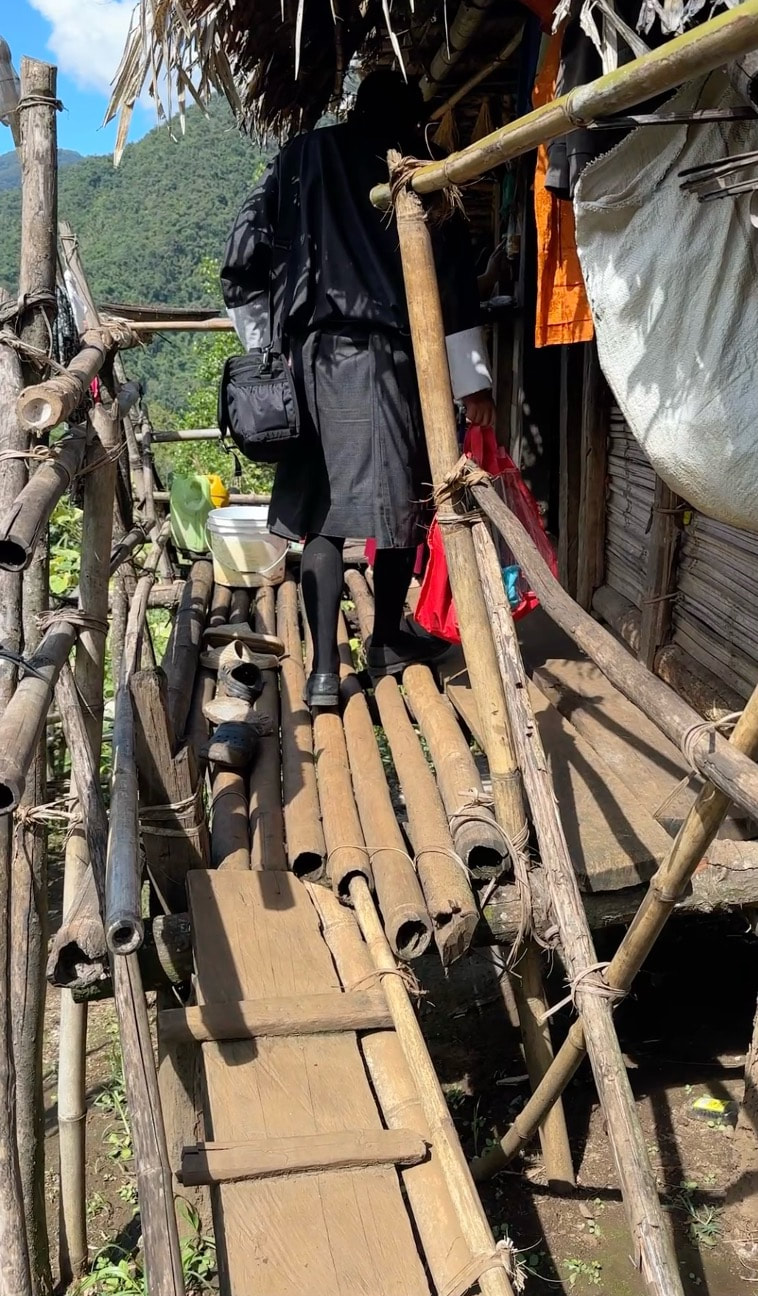 Last week the program manager plus an audiologist from Thimphu hospital and me started a week long trip to do field work in one of the most remote districts in Bhutan, in Zhemgang. From Thimphu it took us about 8 hours by car just to get there - even though the actual distance on the road is just a bit over 250 kilometers! We went to Zhemgang to finish a program which had started in 2022, visiting remote places and assess the children with disabilities and figure out what assistive devices could really help them. Most of them have no access to therapies of any kind and no assistive devices to help get through their daily life. Children with CP often just lie on their back the whole day as the parents have no knowledge of what would be important for them and have no means to get assistive devices. The places we went to in the district were even more remote and often we had to drive over an hour just to reach the next small village. As soon as you leave the main road there are only gravel paths. Therefore it took us 2 hours to cover 42 km to get to one village where we stayed for two nights. The first places we stayed at had a similar climate like Thimphu, but as soon as you went a bit higher up it got colder especially in the mornings and evenings. But for the second part we were just a bit more in the south and at a lower altitude so the climate immediately got more tropical. I loved the beautiful and wild nature and couldn't get enough of watching it slowly passing by in the car. The forests we passed were in most parts still untouched. Once we even saw some golden langurs. This is a rare opportunity as they are very endangered and very shy creatures. Now I understand why so many parents come to Thimphu for therapy of their children even though they had to leave their families and familiar surroundings behind: it's the only chance for their children to reach more of their potential. In the next blogs I will tell you more about my experiences during the field work and about the situation of the children with disabilities there.
|