Swissphysiobhutan
  • Home
  • How to support
  • Partners
  • Weekly Blog
  • Contact & About
  • Home
  • How to support
  • Partners
  • Weekly Blog
  • Contact & About

Bhutan Physio

and culture blogs

Assessing children in the east of Bhutan

10/5/2026

0 Comments

 
Picture
During our field trip to eastern Bhutan (Mongar, Trashiyangtse, and Lhuentse), we assessed children with disabilities in a range of remote communities. The first stop was an assessment camp at a central school in Mongar, where several specialists worked together: an optometrist checked vision, an audiologist assessed hearing and speech-related issues, and a physiotherapist evaluated mobility and assistive device needs. Children requiring further support were referred to Mongar Hospital for regular therapy. Families from across the region brought children listed for assessment to the school.

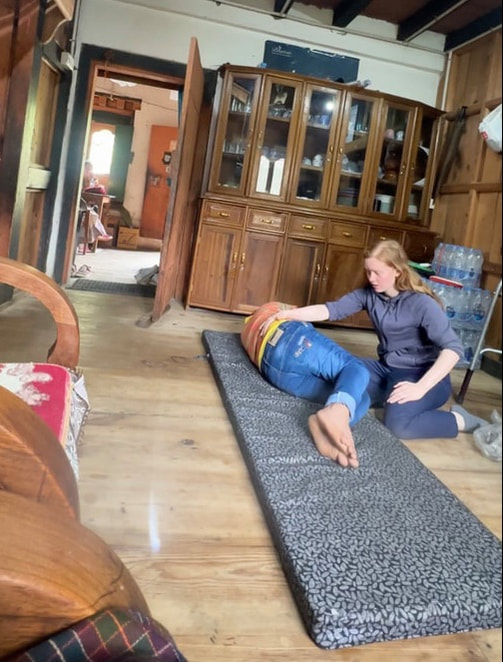
In Bumdeling, Trashiyangtse, assessments took place in the local Gewog (community) centre. As there was no treatment bed, we improvised by placing sofa cushions on the floor so I could assess children with Cerebral Palsy (CP) who could not walk. Some families travelled extraordinary distances to reach us. One family carried their child on the sister’s back for an hour to the Gewog centre as they live far away and have no road access to their house. After the assessment, our project manager drove them home as far as possible.

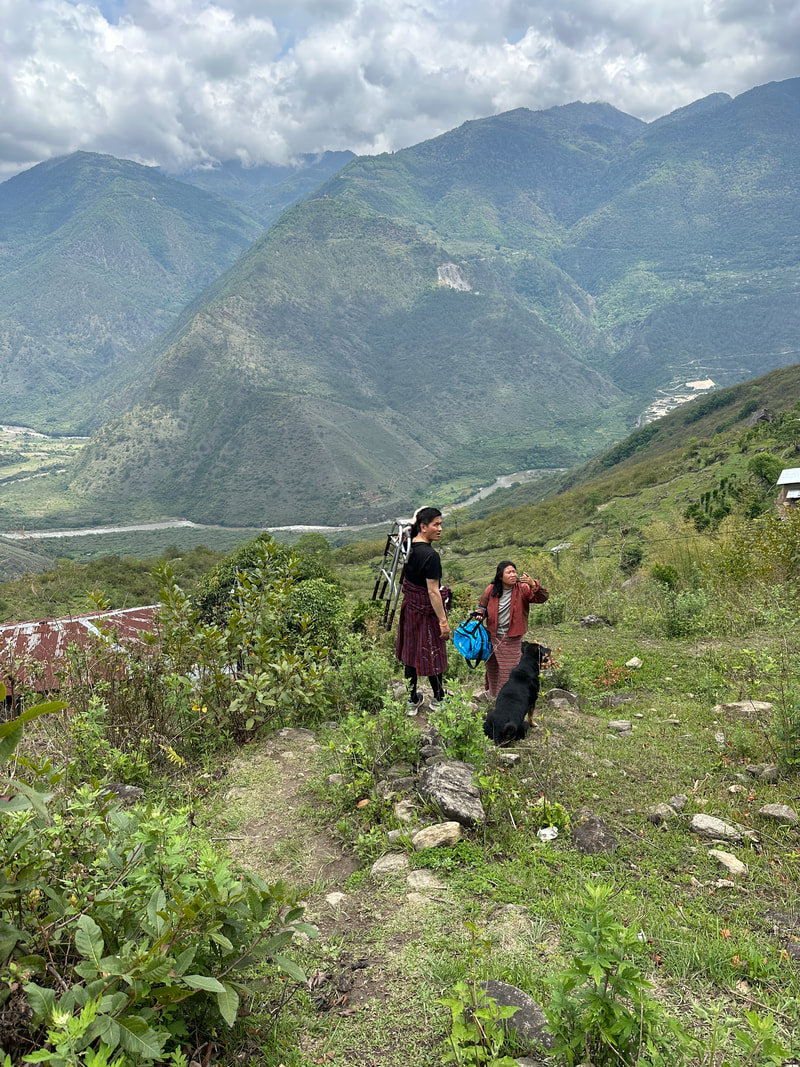
The following day we conducted home visits in more remote areas. Reaching one family required a 20-minute walk along narrow muddy paths through agricultural fields. Their 18-year-old daughter, who has CP and can only walk short distances with heavy assistance, can only reach the road if her father carries her uphill on his back. Although the family hopes for road access, extending the road through the scattered farmland would be difficult and would damage valuable agricultural land. In Switzerland, a family in such circumstances might relocate, but here people are deeply attached to ancestral homes and depend on the surrounding farmland for their livelihood.

At other locations we visited schools directly, which allowed me to demonstrate exercises to teachers who could continue supporting the children, particularly in boarding schools. In one case, a family met us halfway because reaching their village was impossible for us. By the time they arrived it was already dark, and I was expected to assess a child with CP on the roadside. The child remained seated in the car during the assessment, limiting what I could properly evaluate. Through speaking with the parents, I realised the boy spent most of his days alone in a room with little stimulation, which was difficult to witness.
​
Conditions often required flexibility and improvisation. In another village, after waiting over an hour at the Gewog centre, we were asked to meet families further down the road instead. I insisted on having at least a suitable place for assessments, so we eventually arranged to use a small roadside café, whose owner kindly provided mats and blankets from his personal space. Two children arrived after another long wait, but for the final child we waited almost three additional hours due to transport problems, bad weather, and roadblocks. When the family finally arrived, I felt a strong responsibility to provide advice that would genuinely help, knowing how much effort they had made to reach the assessment. Fortunately, I believe we were able to give them practical support they could continue using at home.
Picture
0 Comments


Leave a Reply.

Copyright by schochworks gmbh. All rights reserved.